Once contracts move into one system, security stops being a background concern.
A contract repository holds sensitive terms, pricing, obligations, and signatures (to name a few), so how that information is protected matters just as much as where it’s stored. This is why contract repository software cannot rely on basic file protection alone.
Security shows up in the details. Who can access a contract? What happens when files change? How does data stay protected during sharing? And how quickly can issues be traced if something goes wrong?
Some repositories treat security as a feature. Others build everything around it.
So, in this guide, we'll focus on the elements that define a secure contract repository in real use. You’ll see how access controls, encryption, tracking, and recovery work together to protect contracts while keeping them usable for the people who need them.
A contract repository is the place where your agreements live. Every document gets stored here and serves as the one place to store your contracts, as opposed to being scattered in shared drives or email inboxes.
If you’re part of a business managing multiple contracts, you already know how frustrating it gets when no one is sure which version is final or where the signed copy ended up.
A digital contract repository pulls everything into one organized space. Contracts, amendments, and supporting documents stay connected, searchable, and easy to access.
More importantly, the contract data inside those files becomes usable. Dates, obligations, and ownership details are no longer buried in PDFs.
A contract repository acts as a single source of truth. You spend less time tracking documents down and more time working with information you can trust.
Most contract repository tools claim to be secure, and on some level, that’s true. Any system that stores contracts will offer basic protections. The difference shows up in how those protections actually work day to day.
Of course, not all tools treat security with the same level of care. Some focus on storage alone, while others think through access, visibility, and long-term control of contract data. If you’re evaluating a contract repository, a secure setup goes beyond a locked folder.
Below are the key elements worth paying attention to:
Role-based access controls decide who can see, edit contracts, or take action inside your contract repository software. Not everyone needs the same level of access, and a modern contract repository system reflects that reality.
With role-based access controls, contracts stored in the system stay visible only to the right people. Legal may need full editing rights. Sales might need view access. Finance could focus on pricing and renewal details. These access controls reduce risk but keep work moving as it should.
For example, a sales manager can open a signed agreement to confirm pricing and term length, but cannot edit contracts or change legal language.
At the same time, legal can update clauses or approve revisions without exposing draft edits to the wider team. That balance is what makes role-based access one of the most practical key features in a secure contract repository.
Encryption at rest and in transit protects contractual documents at two key moments: when they are stored and when they move between systems or users.
If a repository handles critical agreements, this protection matters from upload to access.
Together, these safeguards help keep critical agreements protected without adding friction to everyday contract work.
Audit trails and activity logs show you what’s happening inside your contracts after they’re uploaded.
In a cloud-based contract repository, every action tied to legal documents gets recorded, from views and edits to downloads and approvals. Visibility like this helps legal teams manage contracts effectively without relying on guesswork.
Here’s how it plays out in practice: A renewal deadline is approaching, and someone asks who last reviewed the agreement.
The activity log shows exactly who accessed contracts, when changes were made, and which version included the updated key dates. If questions come up later, there’s a clear record to point to rather than a chain of emails.
Over time, these logs build trust in the system. You can track how contracts move through review, spot unexpected access, and answer questions quickly.
Version control is what keeps contract revisions from turning into a mess. If you’ve ever opened two similar files and wondered which one is current, this feature solves that problem fast.
Inside contract management software, version control saves every update in a centralized contract repository.
That means nothing gets overwritten or lost. You can see how a contract evolved, who touched it last, and what changed along the way. This is especially helpful when you work with sensitive agreements or need to revisit a decision later.
From a contract risk management perspective, version control adds breathing room. Older language stays in the background where it belongs, and the active version stays clearly marked.
The biggest benefit is peace of mind. You get complete visibility, and you can move forward knowing you are working from the right version every time.
How often have you needed a contract quickly and found yourself clicking through folders, second-guessing file names, or asking someone to send the “right” copy?
Secure search and retrieval are meant to remove that friction. With a contract repository tool built as a centralized system, finding contract documents feels simple. You search using terms that make sense to you, and results show up relatively quickly.
Behind the scenes, access rules stay intact. The repository is a centralized space, but visibility still depends on who you are and what you are allowed to see.
Here’s a real-world moment. A sales lead pulls up an agreement minutes before a call to check the notice period. The signed version appears immediately. Internal drafts and legal notes never surface, so nothing sensitive gets exposed.
That experience marks the shift away from manual contract management. You spend less time hunting and more time trusting the system to deliver the right document at the right moment, quietly and securely.
Backup and disaster recovery protect your contracts when something goes wrong that sits outside day-to-day work.
Systems fail, files get deleted, and accidents happen, but a reliable contract repository solution plans for those moments so your business contracts stay safe.
Disaster recovery may stay invisible most of the time, but when you need it, having a plan already in place makes all the difference.
Compliance readiness speaks to how well a contract system supports legal and regulatory expectations without turning everyday work into a checklist exercise. When you manage growing contract portfolios, this becomes less about perfection and more about staying prepared.
A digital repository built with contract compliance in mind helps keep contracts organized, traceable, and protected.
Secure storage, access controls, and clear records all work together so you can answer questions when they come up, not scramble after the fact. That matters for both internal reviews and external audits tied to legal and regulatory requirements.
Compliance readiness also gives you flexibility. As rules change or contract volumes grow, the system continues to support consistent handling of agreements instead of forcing manual workarounds.
Key compliance-related capabilities often include:
When these pieces are in place, compliance becomes part of how the repository works and not something you chase separately.
By now, you know what features to look for, but choosing the right contract repository still takes a bit of judgment. The best option supports your contract management process in ways that feel practical day to day.
Here are a few things to focus on when narrowing it down:
Remember: A good repository earns trust quickly. Contracts stay easy to find, updates stay visible, and the system supports your team as contract storage needs expand.
A contract repository does more than hold files. It supports how contracts move, change, and stay relevant long after they are signed. And when contract lifecycle management is handled well, teams spend less time tracking documents and more time working with clear information.
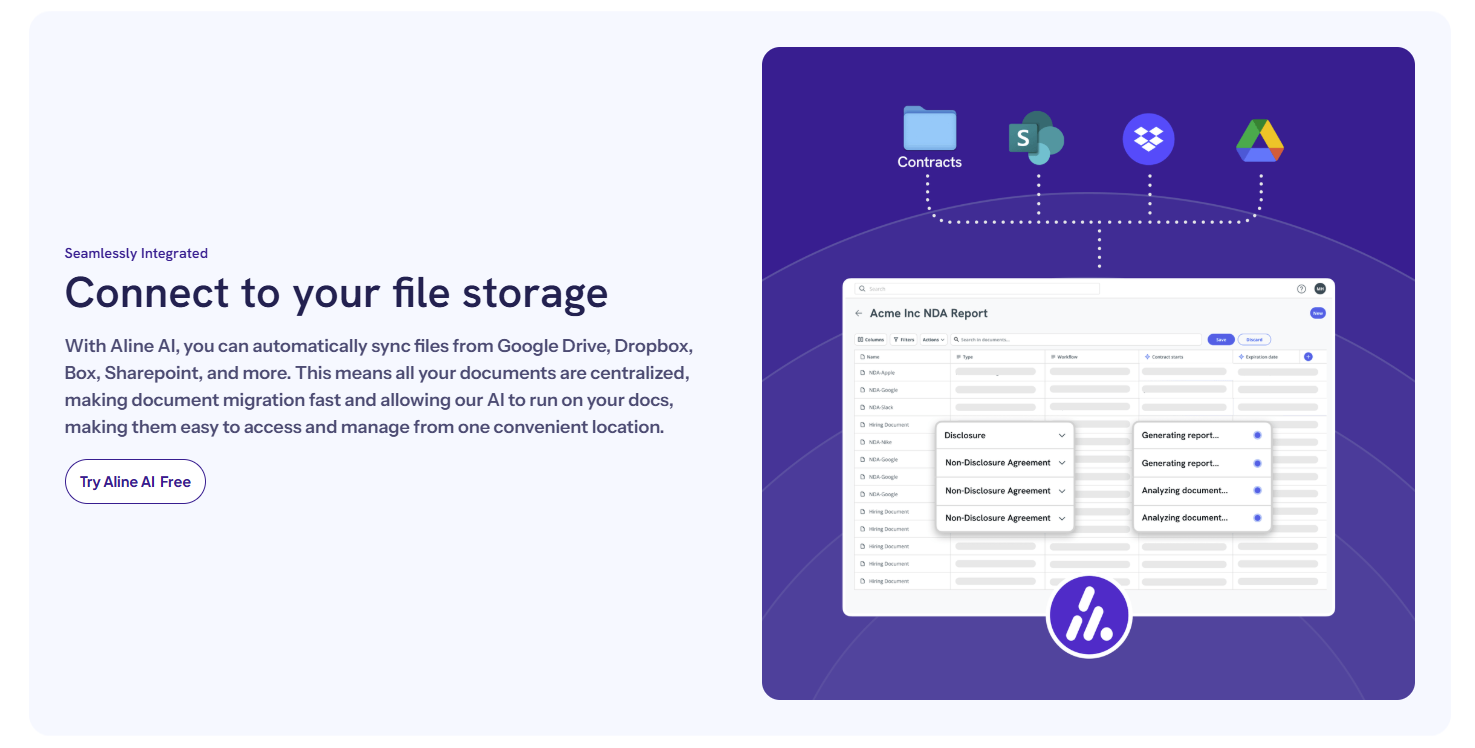
Aline approaches the contract management repository as a living system. Existing contracts from tools like Google Drive, Dropbox, Box, and SharePoint flow into one searchable space.
From there, Aline AI identifies key dates, values, and obligations so nothing important stays buried. Reporting pulls insight from thousands of agreements without manual review, and reminders keep deadlines visible with less effort.
What sets Aline apart is how the AI Repository connects to the rest of the workflow:
If you want a contract repository that stays useful after signing, Aline brings structure, visibility, and intelligence into one place.
A contract repository is a central place where contracts are stored, organized, and accessed throughout their lifecycle. It supports contract creation, keeps related documents together, and makes it easier to review the same contract over time without relying on scattered files.
A secure repository protects contracts through controlled access, tracking, and safeguards that limit who can view or change sensitive information. A strong contract repository focuses on protecting contractual obligations while keeping contracts accessible to the right people.
The most reliable approach combines structured data, approval workflows, and automated alerts. This setup helps teams approve contracts, monitor renewal dates, avoid missed renewals, and pull a contract instantly when questions come up. It also improves contract cycle time and visibility into contract performance.
The 4 C’s typically refer to clarity, compliance, consistency, and control. Together, they support clear contract obligations, protect contract value, and reduce risk tied to renewals, approvals, and long-term management.