Does this sound like you: one document is buried in an email thread, another is lost in a shared drive, and that critical vendor agreement? Nowhere to be found when you need it most.
Managing contracts manually isn’t just frustrating. It’s risky. Missed deadlines, outdated versions, and security gaps can lead to costly mistakes.
Contract repository software solves this problem by keeping everything in one secure, searchable, and organized system.
No more wasted time searching for files, key dates, or chasing approvals. With built-in automation, version control, and role-based access, you can quickly find contracts, track every update, and avoid critical errors.
In this guide, we’ll break down what a contract repository is, why manual methods don’t cut it, and how the right software can save time, reduce risk, and improve collaboration across your organization.
If you’re ready to manage contracts effectively, let’s dive in.
A contract repository acts as a centralized place where all your contracts are stored, managed, and organized. Think of it as your contract headquarters (whether digital or physical) where every agreement, NDA, or vendor contract lives.
If you’re still using scattered email chains, desktop folders, or even physical filing cabinets, you already know the pain of tracking down an old contract.
A proper contract repository solves that by keeping everything in one place, which should make it easy to search, retrieve, and manage contracts whenever you need them.
However, a manual contract repository, like spreadsheets, shared drives, or filing cabinets, might work for a while, but it quickly becomes messy and hard to manage. As contracts pile up, tracking renewals, approvals, and updates gets complicated.
A manual contract repository might seem fine at first, but as your business grows, it creates more problems than it solves.
Here’s why it’s not ideal:
Manual contract storage might work, but as your business scales, it becomes inefficient and risky. Upgrading to intelligent contract repository software saves time, reduces errors, and keeps everything secure.
Let’s talk more about it.
Contract repository software is the central storage hub inside a contract management system. It gives you a secure contract repository where all your existing contracts live in one organized, searchable place.
Rather than flipping between folders, inboxes, and shared drives, you can manage contracts from a system built specifically for that purpose.
Plus, each agreement sits in a structured environment with tags, folders, and custom fields, so key details like renewal dates, contract value, and involved parties are easy to spot.
There’s also some nuance. Some platforms focus mainly on storage and search. Others include a repository as part of a broader contract management system that handles drafting, approvals, and signing.
In both cases, a centralized contract repository system creates visibility and control, so you know what you’ve signed, where it lives, and who can access it.
If you’ve ever wasted time searching for an agreement, worried about missing a renewal, or struggled with outdated versions, you know how frustrating poor contract management can be.
A contract repository software takes the stress out of the process by keeping everything organized, secure, and easy to find.
If you’re not convinced yet, take a look at these advantages it can give to your contract management process.
Ever spent way too much time searching for a contract you know exists but just can’t find? Maybe it’s buried in an email thread, lost in a cluttered shared drive, or misfiled somewhere you’ll never think to look.
That’s the frustration that contract repository software eliminates.
Instead of wasting time hunting through folders or scrolling endlessly through emails, you can find any contract instantly with a simple search. Just type in a keyword, company name, or contract date, and it pops right up.
Essentially, everything stays in one secure, organized location, so retrieval is quick and painless. Whether you need a client agreement from last year or a vendor contract that’s about to expire, you’ll have it in seconds without the stress of digging through digital chaos.
Forgetting about a contract renewal might not seem like a big deal until it is.
Imagine you have a key business contract that expires at the end of the month. You miss the deadline because the reminder was buried in someone’s inbox, and now you’re scrambling to renegotiate terms or, worse, looking for a new supplier at the last minute.
That kind of oversight can delay projects, increase costs, and even damage relationships.
A contract repository tool prevents these avoidable mistakes by tracking every contract renewal, expiration, and deadline for you. Automated alerts notify the right people well in advance, so you always have time to review terms, renew agreements, or renegotiate if needed.
Not every contract is meant for every employee’s eyes. A vendor agreement might be fine for the legal and procurement teams, but do your junior employees really need access to sensitive client deals or executive agreements? Probably not.
Without proper controls, contracts can end up in the wrong hands, leading to unauthorized changes, leaks, or even security breaches.
A modern contract repository system puts you in control with role-based permissions. You decide who can view, edit, or approve each document, ensuring sensitive contracts stay protected.
A junior employee can access standard agreements, while only legal and business teams handle high-stakes contract negotiations.
Aside from security, this level of control also prevents accidental edits or deletions. No more worrying about someone mistakenly altering a contract or sending the wrong version. Everything stays organized, secure, and only accessible to the right people.
Keeping contracts up to date is important, but when multiple people are involved, things can get messy fast. Without a clear system, you might not know who made changes, when they happened, or what was modified. That’s where version control comes in.
Waiting on contract approvals can slow everything down. According to Weshare, the average time just for approval is 3.4 weeks, and that doesn’t even include contract drafting, revisions, or negotiations. That’s a lot of time wasted, especially when multiple teams need access to the same contract.
3.4 wks average contract approval time — and that’s before drafting, revisions, or negotiations are even counted (Weshare / Procurement Tactics).
A contract repository removes bottlenecks by keeping everything in one central location, which makes it easy for legal, procurement, and sales teams to access and review documents without delays.
Instead of tracking down the latest version or waiting for email approvals, contracts move through the process faster.
Audits don’t have to be a nightmare. If you’ve ever scrambled to pull together contracts for an internal review or compliance check, you know how frustrating it can be. Digging through emails, shared drives, or old paper files wastes time and adds stress.
A contract repository makes things so much easier by keeping everything in one place and fully searchable. Need to find all vendor agreements from last year? Just filter by date.
Want to see which contracts are up for renewal? Sort by expiration. Every edit, approval, and access is tracked, so you always have a clear audit trail without chasing down documents.
When it’s time for an audit or report, you won’t be left scrambling. Everything you need is right there, ready to go.
A contract repository should make your agreements easier to see, sort, and act on. To make that happen, you need to find these features:
Everything starts with contract storage. If your agreements live in five different tools, your contract lifecycle management process never feels fully under control.
Strong contract repository software gives you a true central location for every agreement. In-house legal teams can upload, tag, and categorize contracts in a structured way to make sure nothing feels buried or disconnected.
Instead of scrolling through generic folders, you can organize contracts by type, department, counterparty, region, or any custom field that matters to your business.
Good organization also means capturing meaningful data. Contract value, effective dates, renewal terms, and key contacts should sit alongside the document itself. That way, you’re not opening PDFs just to answer simple questions.
Structure becomes even more important as volume grows. A clean, consistent setup allows you to scale without losing visibility. So, for instance, when someone asks for a vendor agreement from three years ago, you know exactly where to look.
That level of order builds confidence in your contract management process and saves legal teams hours every week.
Storing contract documents is one thing. But being able to find contracts in seconds is what separates the best contract management software from average tools.
Advanced search lets contract managers and other users move beyond basic file names. You can search inside the text of agreements, filter by metadata, and narrow results using specific criteria.
Strong search and discovery tools often include:
For example, if your CFO asks for every agreement tied to a particular vendor before renewal discussions, you should be able to pull that list instantly. That means no manual sorting or guessing which version is final.
Remember: Search is one of the key features that turns a repository into a working system. If you cannot find contracts quickly, everything else slows down.
Metadata gives context to each agreement. Instead of treating contracts as flat files, the system records structured information that makes reporting and oversight possible.
That might include contract value, effective date, renewal window, department owner, or risk category. When those details are captured up front, you are not forced to re-review documents later just to answer basic questions.
Intake plays a big role here. A defined submission process sets expectations before a contract even enters the repository.
For example, a procurement agreement might require a vendor name, term length, and internal owner before it can be saved. A customer agreement might require a revenue amount and a region.
Key features often include:
Version control becomes important the moment a contract leaves its first draft.
During contract creation and contract authoring, documents move through multiple hands. For instance, legal may edit language, and leadership may step in for approvals. Without a clear record, it is easy to lose track of what changed and when.
A strong repository helps you maintain version control throughout the entire contract lifecycle. Every revision is stored, time-stamped, and tied to a specific user. You can also compare versions, review redlines, and confirm which draft became the executed agreement.
The audit trail adds another layer of visibility. It logs contract approvals, comments, uploads, and signature activity in one continuous record. That history supports risk management because you can verify decisions and demonstrate compliance if questions arise later.
This level of transparency also builds internal trust. Teams work from the same current version, and past edits remain accessible. You stay organized without slowing down negotiations or adding manual tracking.
As your contract volume increases, it gets harder to keep track of who owns what. In fact, research shows that 40% of organizations cannot clearly identify who is responsible for specific contract obligations. That kind of confusion can quietly disrupt your contract management process.
Access control helps you stay in control. With role-based access, you decide who can view, edit, approve, or download contract data.
For example, legal might need full access, sales may only need customer agreements, and finance might focus on payment terms. You set the rules so sensitive data does not end up in the wrong hands.
This also matters when working with external parties. Vendors or outside counsel can get limited access to a specific agreement without seeing everything else in your system.
Look for features like:
Clear permissions protect sensitive data and help enforce compliance, while making responsibilities visible inside your contract management process.
Renewal dates and ongoing obligations can create real risk if they are not tracked properly. A strong repository keeps contract renewals visible, so you are not surprised by automatic extensions or missed renewal deadlines.
Good contract management tools surface renewal dates clearly and send alerts before notice periods expire. You can review contract terms in advance and decide your next move with enough time to act.
Obligations matter just as much. Many agreements include payment schedules, service levels, reporting duties, regulatory requirements, and other compliance requirements that continue throughout the life of the contract.
Tracking those commitments in the system helps you monitor contract performance and stay aligned with key terms.
Look for capabilities like:
A contract repository should help you see what’s happening, connect with the tools you already use, and keep sensitive information protected. If it cannot support your entire process, it ends up creating extra work.
Reporting tools give you a clear view of contractual obligations, upcoming deadlines, and overall contract activity. You should be able to pull insights on contracting processes without building spreadsheets from scratch.
Look for capabilities like:
Once the fundamentals are in place, a few additional features can make your contract repository far more practical day to day.
Consider features like:
Note that these features may not define the system on their own, but together they strengthen how you manage contracts as volume and complexity increase.
Legal AI can make a noticeable difference, but it depends on how it’s used.
In a traditional setup, manual contract management means opening documents one by one, reviewing key terms, and relying on manual processes to track changes or extract data. That adds manual effort at every stage.
On the other hand, an AI-powered repository helps reduce that friction. It can scan agreements, pull out important clauses, and surface risks without someone reading every page line by line.
Still, that does not replace judgment during contract drafting or contract approvals, but it can speed up the groundwork.
For example, if you upload 300 vendor agreements, AI can automatically identify renewal dates, payment terms, and liability clauses. Instead of building a spreadsheet from scratch, you start with structured data already in place.
Common AI capabilities include:
At the end of the day, AI matters when it reduces repetitive manual effort and supports smarter decisions. If it simply adds complexity, it becomes another feature no one uses.
Switching to contract repository software doesn’t have to be complicated. A smooth transition ensures your contracts stay organized, secure, and easily accessible. Here’s how to get started.
Before jumping into contract repository software, take a step back and figure out what’s not working in your current system.
If your team is constantly struggling to find contracts, dealing with security concerns, or missing key deadlines, those are clear signs you need a better solution. The right software should solve your specific problems, not just add another tool to manage.
Ask yourself these questions:
Identifying these pain points upfront helps you choose software with the features that actually matter to your business.
Not all contract repository software is built the same, so you need to pick the right one for your business. Some are simple contract storage solutions, while others offer full contract lifecycle automation, handling everything from drafting and approval to signing and tracking.
The best choice depends on your needs, business size, and existing tools. If contracts are a major part of your operations, you’ll want a platform that does more than just store documents.
Look for software that integrates seamlessly with your existing systems, whether it’s Microsoft Word, CRM tools, or legal databases. A user-friendly interface is also a must. If it’s too complicated, your team won’t use it.
Features like AI-powered contract analysis, automated workflows, and e-signatures can save time, reduce errors, and improve compliance.
This is where Aline stands out. It’s an AI-powered contract lifecycle management platform designed to help businesses draft, negotiate, and sign contracts 5–10x faster.
5–10x faster drafting, negotiation, and signing with Aline vs. manual contract workflows.
Aline customer benchmark
Instead of juggling multiple tools, Aline brings automation, AI-driven insights, and secure collaboration into one place. This smart contract management solution even gives you contract routing, built-in compliance checks, and automated reminders.
Switching to a contract repository software starts with getting all your existing contracts into the system. This step might take some time, but doing it right ensures better organization and faster retrieval later.
Start by gathering every contract from emails, shared drives, desktop folders, and even physical filing cabinets. Before uploading, take a moment to clean up outdated, duplicate, or unnecessary files to avoid cluttering the new system.
Once everything is ready, tag each contract with key details like dates, contract types, parties involved, and renewal terms. This makes searching and filtering much easier down the line.
If your contracts exist in different formats, use optical character recognition (OCR) tools to make them searchable. Setting up a structured system from the start will save time and frustration later.
Not everyone in your company should have full access to every contract. Sensitive agreements, like high-value vendor deals or employee contracts, need proper restrictions to prevent unauthorized changes or security risks.
Setting up role-based permissions makes sure the right people can view, edit, and approve contracts without exposing critical information to the wrong hands.
Here’s how to manage access effectively:
With a structured permission system, you can work efficiently while keeping sensitive contracts safe and controlled.
A contract repository is only useful if your team knows how to use it. Without proper training, employees might struggle with the system, leading to mistakes, delays, or resistance to adoption.
Setting up a structured training plan helps make sure everyone can navigate the software with confidence.
Here’s how to get your team up to speed:
If your team is constantly switching between platforms to draft, approve, and sign contracts, you’re adding extra steps that slow everything down.
Connecting your contract repository with the tools you already use, whether it’s a CRM, e-signature platform, or document editor, makes the entire process smoother.
If your sales team works in Salesforce or HubSpot, wouldn’t it be easier if contracts were accessible right there?
If legal teams prefer drafting in Microsoft Word, integration lets them edit contracts without downloading and re-uploading files. And when it’s time to sign? E-signature tools like AlineSign or DocuSign can eliminate delays.
Bringing everything together means fewer headaches, less manual work, and a contract process that moves as fast as your business does.
Implementing contract repository software isn’t a set-it-and-forget-it process. Once everything is up and running, take a step back and see how well it’s working for your team.
Are employees actually using it? Are contracts easier to find? Is it improving contract performance, or are there still bottlenecks?
Gather feedback from the people using the system daily. If they’re struggling with search functions, access controls, or workflows, small adjustments can make a big difference. Maybe some permissions need tweaking, or a few extra training sessions would help adoption.
Pay attention to how contracts move through the system and identify areas where things could be smoother and more efficient.
Regular check-ins help ensure the software is actually solving problems instead of creating new ones. The goal is to keep improving the process so contracts stay organized, deadlines aren’t missed, and your team can work without unnecessary slowdowns.
Most repositories store documents. Aline AI Repository turns them into something usable.
You can sync contracts from Google Drive, Dropbox, Box, SharePoint, or local storage and bring everything into one intelligent system.
Once uploaded, Aline’s AI reads your agreements and pulls out key details like renewal dates, contract value, termination clauses, and other critical terms.
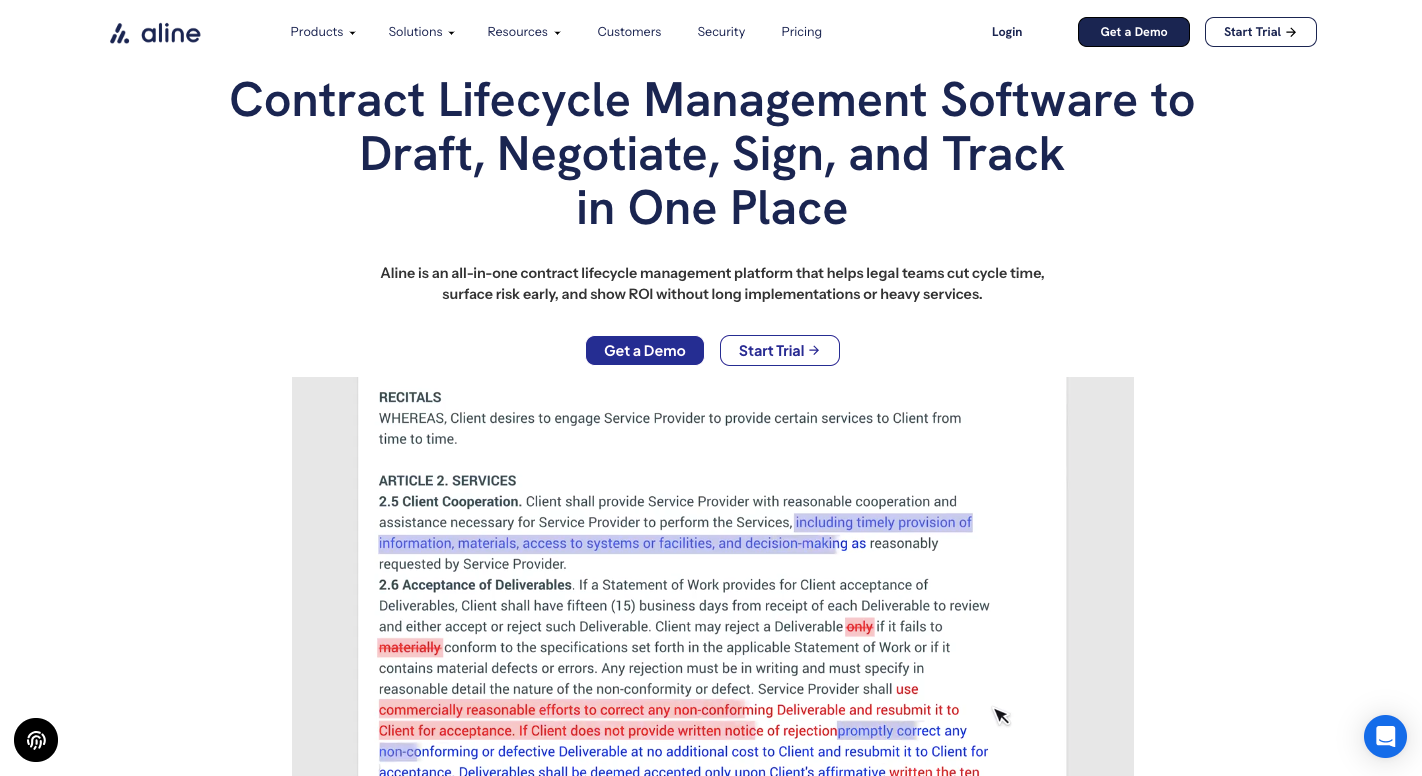
From there, you can analyze your portfolio instantly. Run custom AI reports across hundreds or thousands of agreements. Surface obligations. Spot upcoming renewals. Identify risk patterns without opening every document.
And because Aline sits inside a full AI contract lifecycle management platform, the repository connects directly to contract drafting, AI redlining, automated workflows, AlineSign, and contract reporting.
Your contracts are not frozen after upload. They stay active and connected to the rest of your process.
If you want a repository that gives you clarity the moment you log in, start your free trial of Aline today.
A contract repository focuses on organizing documents, tracking renewal dates, storing metadata, and helping you find contracts quickly during reviews or audits.
The best software for contract repository management depends on your company’s size and agreement volume. You can use Aline when you want AI review, automated workflows, and compliance tools in one platform.
No. CLM software manages contracts, approvals, renewals, and signatures. CRM software manages customer relationships, sales activity, and deal tracking.
CLM software handles the contract lifecycle from drafting to renewal. ERP systems, on the other hand, manage business operations like finance, inventory, procurement, and accounting.