Most companies still manage contracts using a patchwork of tools.
A sales agreement might start as a Word document, move through redlines in email, get signed in DocuSign, and then end up stored in a folder on Google Drive. Renewal dates are often tracked in a spreadsheet somewhere, assuming someone remembered to log them.
This approach works when contract volume is low. Once companies start closing more deals, the gaps become obvious.
A contract stuck in an inbox delays revenue. In many companies, inefficient contract workflows add 3 to 4 weeks of delay to deals and hiring cycles.
A vendor agreement that quietly auto-renews adds unexpected costs. When leadership asks for renewal exposure or contract obligations, legal and operations teams often spend hours searching folders, email threads, and spreadsheets just to piece together the answer.
These inefficiencies add up quickly. Companies lose around 9% of annual revenue because of missed obligations, compliance gaps, and delayed agreements.
The operational workload is just as heavy. In-house counsel dedicate 25–40% of their working hours to administrative tasks that do not require legal expertise, including contract review, document management, and reporting.
Advanced contract lifecycle management platforms address these issues by consolidating the entire contract workflow into a single system. Drafting, negotiation, approvals, signatures, and contract analytics happen in one place instead of across 5 to 7 disconnected tools.
This shift allows companies to move contracts faster while giving finance and leadership real visibility into contract data, obligations, and renewals.
To help you choose the right platform, we reviewed the 9 best contract lifecycle management software solutions for 2026.
Who this guide is for
This guide is designed for teams that regularly handle contracts but don’t have the resources of a large enterprise legal department. Specifically:
In-house legal counsel and paralegals at 10–500 person companies
Founders, CFOs, and operations leaders at early-stage and scaling startups
Legal operations or RevOps managers at scaling mid-market companies
Each tool is evaluated based on features, scalability, integrations, and how well it supports legal and operations teams managing growing contract volume.
Why This List Includes Two Types of CLM Platforms (And How They Differ)
Not every platform labeled as contract lifecycle management software solves the same problem.
Some platforms focus on specific stages of the contract process, such as drafting, collaboration, and execution. Others are designed to manage the entire lifecycle of a contract, from the initial request through negotiation to ongoing contract management.
The difference becomes important when evaluating how much of the contract workflow a platform can manage.
Point solutions for document workflows
Some platforms work for contract drafting, collaboration, and execution processes.
These platforms manage the full lifecycle of contracts within a single system.
Common capabilities include:
Contract intake and request workflows
Clause libraries and automated drafting
Negotiation and approval routing
Electronic signatures
Contract analytics and obligation tracking
Renewal alerts and compliance reporting.
The platforms in this guide include both types, giving you a clear view of tools that support specific contract workflows as well as those designed to manage the entire contract lifecycle in one place. It helps you choose the option that best aligns with your needs.
9 Top Contract Lifecycle Management Software Today
Tool
AI features
Workflow automation
Integrations
Ease of use
Pricing model
Strength
Best fit
Aline
AI drafting, redlining, clause intelligence
Full lifecycle automation
CRM, storage, collaboration tools
Modern UI with fast onboarding
Transparent SaaS pricing
End-to-end contract lifecycle management
Startups, legal teams, and B2B companies automating contract workflows
Icertis
AI contract analytics and compliance monitoring
Enterprise lifecycle workflows
ERP, CRM, procurement systems
Complex enterprise configuration
Enterprise licensing
Compliance-heavy contract management
Multinational companies with complex compliance needs
DocuSign CLM
Clause analysis and contract insights
Approval routing and lifecycle workflows
DocuSign ecosystem, CRM integrations
Familiar interface for DocuSign users
Enterprise subscription
Integration with e-signature ecosystem
Mid-market and enterprise teams expanding from DocuSign
Juro
AI-assisted drafting and contract suggestions
Lightweight approval workflows
CRM and collaboration tools
Very user-friendly
Tiered SaaS pricing
Speed and usability
Startups and scaling teams needing a lightweight CLM
PandaDoc
AI document generation
Sales-focused document workflows
CRM and payment tools
Highly intuitive interface
Tiered SaaS pricing
Sales document automation
Revenue teams managing high document volume
DealHub CLM
AI pricing and deal intelligence
Sales deal workflows
CRM-centric ecosystem
Sales-focused UX
Enterprise SaaS
Revenue operations alignment
Revenue operations and sales organizations
CobbleStone
Basic AI contract search
Contract approval workflows
Enterprise IT systems
Traditional enterprise interface
Enterprise licensing
Regulatory contract tracking
Government, healthcare, and regulated enterprises
Conga
Contract analytics and clause intelligence
Salesforce-based lifecycle automation
Salesforce ecosystem
Strong for Salesforce users
Enterprise SaaS
Deep Salesforce integration
Mid-market and enterprise Salesforce users
Agiloft
AI contract analysis and clause extraction
Highly customizable workflows
Wide enterprise integrations
Flexible but complex setup
Enterprise SaaS
Customizable enterprise CLM
Enterprises needing flexible CLM configuration
With artificial intelligence and automation, modern CLM tools eliminate the manual work involved in drafting, reviewing, and signing contracts. Whether you're scaling a startup or optimizing legal operations in a large company, choosing the right CLM platform can save time, reduce risks, and keep contracts secure.
Below are some of the best CLM platforms businesses and law firms are using today.
1. Aline
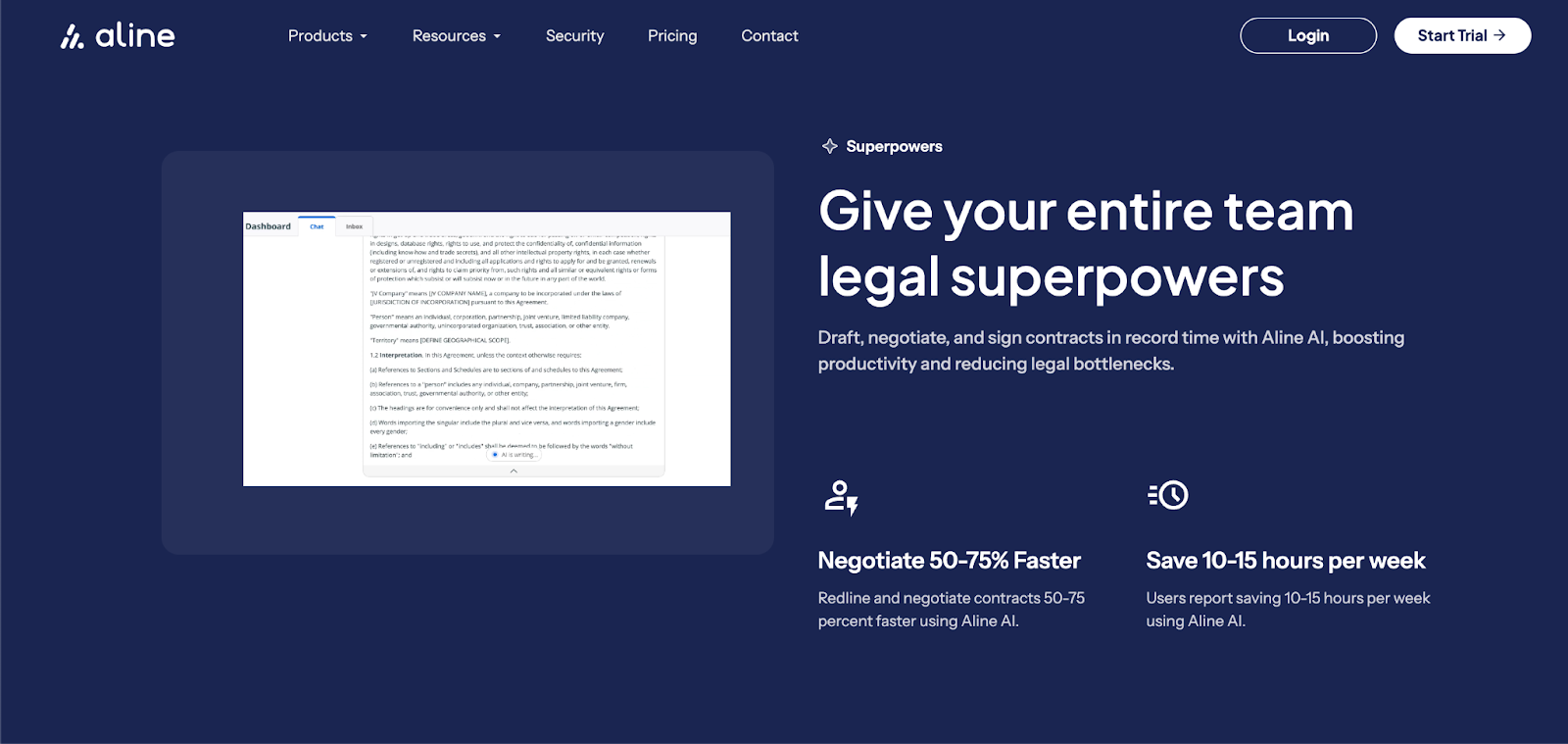
Aline is an AI-driven contract lifecycle management platform that centralizes drafting, negotiation, approvals, signing, and contract analysis in one system. By automating tasks like redlining, clause checks, and approval routing, teams can move contracts through the entire lifecycle faster while reducing manual review.
Organizations using Aline report measurable improvements in contract turnaround time and operational efficiency.
“Aline is like having a lawyer on call for redlining. It’s incredibly valuable. The ability to use AI to draft new documents instantly, analyze legal language, and redline contracts brought unmatched speed and accuracy.”
Collin Clifford, Head of Legal at Superhuman
Superhuman saved about $40K annually, recovered 15+ hours of legal work each week, and reduced contract redlining time by around 50%.
Aline is designed for startups, legal teams, and B2B companies that want to automate contract workflows, reduce manual errors, and speed up deal closures. With AI-assisted drafting, smart approvals, and built-in e-signatures, Aline makes managing contracts faster and less frustrating.
Best Features
Contract automation: Automate contract generation, review, and approvals within a single workflow, reducing manual drafting and coordination. AI-assisted workflows help teams complete contract drafting and review up to 10× faster than manual processes.
AI-powered contract analysis: Analyze contracts with AI to identify risky clauses, missing terms, and compliance issues before agreements are finalized. Identify contract insights in under 10 minutes instead of 1–2 hours, improving risk visibility across agreements.
Smart approvals: Route contracts automatically to the right stakeholders based on predefined rules, preventing delays caused by manual follow-ups and email approvals. Automated approval workflows can reduce internal contract approval delays by weeks.
Pre-built contract templates: Generate standardized contracts quickly using ready-to-use templates while ensuring approved legal language is used consistently. Template-driven contract generation can reduce drafting time by 50–70% for frequently used agreements.
AI-assisted drafting: Generate and refine contract language automatically using GPT-4 supported drafting tools. Create and review agreements up to 20× faster than traditional manual drafting workflows.
Automated redlining: Flag risky clauses and suggest revisions instantly during negotiations. Reduce contract review time by 50–75% compared to manual clause review.
No-code template builder: Build and customize contract templates using a drag-and-drop interface without developer support. Reduce template creation and update time by 3–5 hours per template update.
Microsoft Word integration: Draft and negotiate .docx contracts while keeping approvals, audit trails, and collaboration workflows connected within Aline’s web-native editor. Reduce document version confusion and complete internal contract reviews 30–40% faster.
Built-in e-signature (AlineSign): Execute legally binding contracts directly within the platform with ESIGN and eIDAS-compliant signatures. Shorten contract execution timelines by 60–80% compared to manual signing processes.
Contract tracking and notifications: Track renewal dates, obligations, and contract milestones automatically with reminders and alerts. Retrieve contract insights in under 1 minute instead of the 1–2 hours typically required to manually search across folders and email threads.
Compliance tools: Maintain detailed audit trails for contract edits, approvals, and signatures to support regulatory compliance and audits. Reduce compliance investigation time by 40–50% with centralized contract records.
Collaboration features: Enable teams to assign tasks, leave comments, and track edits in real time. Reduce version errors and internal contract review cycles by 30–40%.
Best For
In-house legal teams, founders, and legal ops leaders at growing startups and mid-sized B2B companies (10–500 employees) who want to replace the Word → email → DocuSign contract workflow with a single AI-powered platform that can be up and running in days instead of long implementation cycles.
Pros
Handles high-volume contract negotiations much faster.Xevant's legal team began redlining agreements 10× faster, recovering 20+ hours per week previously spent on manual contract edits.
Turns contract reporting from a slow manual task into a quick query.Bison Transportation moved reporting from days to minutes, saving 10+ hours per week previously spent searching through agreements and reclaiming $30K annually.
Identify obligations and risk data instantly across large contract sets.DailyPay cut the cost of manual contract analysis by $60K per year while saving 20+ hours each week on reporting and document searches.
Makes large contract repositories searchable in real time. Teams using Aline have analyzed 1,000–10,000+ agreements in real time, replacing hours of manual clause searches with contract insights.
Saves hundreds of hours on large-scale contract analysis.Sophos reported reclaiming hundreds of hours annually when analyzing thousands of contracts using Aline’s AI contract reporting.
Will this plug into Slack, Salesforce, and DocuSign without a six-month IT sprint?
Yes. Aline integrates with file storage and business tools like Google Drive, Dropbox, Box, and SharePoint to centralize contracts and synchronize workflows across systems without heavy IT lift — so teams can get up and running quickly.
Is AI accurate enough for real legal documents?
Aline’s AI operates inside structured contract playbooks and clause logic defined by your legal team — not free-form generation. Redlines and suggestions are constrained by approved templates, fallback positions, and organizational standards, keeping outputs aligned with your preferred legal language and risk thresholds.
We already use DocuSign and Ironclad; why switch?
Most teams start by running Aline alongside their existing tools. Because Aline is modular, you can replace one workflow at a time — starting with redlining or contract intelligence rather than a full rip-and-replace. Most customers fully transition within about 30 days once they see the time savings.
We don't have an in-house legal team. Is this still right for us?
Aline is specifically built for teams without large legal departments. Most users are live within 3–4 days with no IT involvement. WarehouseNow's CEO (not a lawyer) went from draft to signature in a single sitting.
Is our data really secure and compliant?
SOC 2 Type II compliant and GDPR-ready, with encryption in transit and at rest, role-based access controls, and a complete audit trail. Aline also undergoes regular penetration testing to maintain rigorous security standards.
2. Icertis
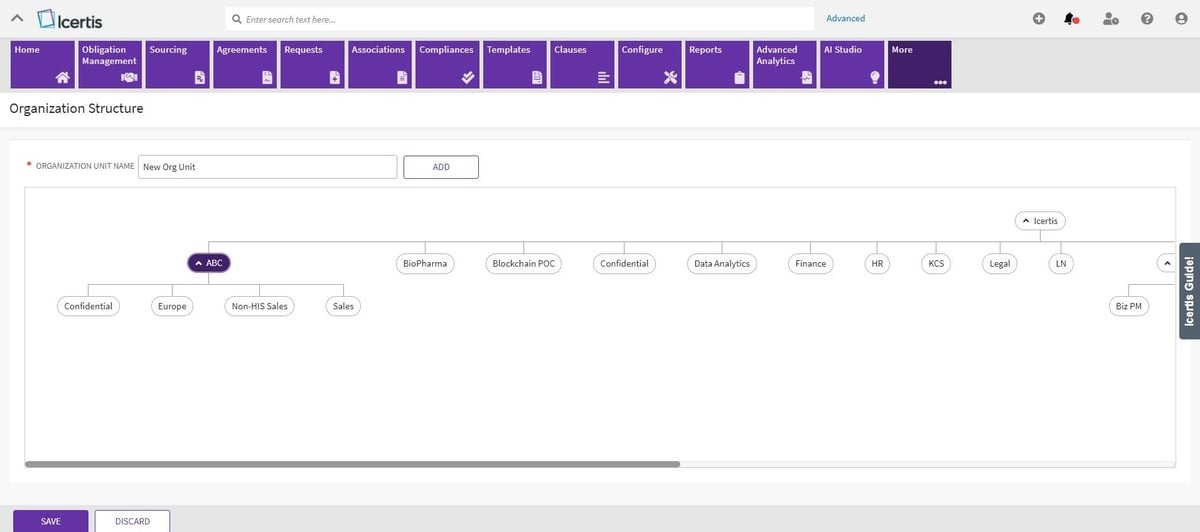
Icertis is a contract lifecycle management platform designed for large enterprises that need strong compliance, risk management, and automation features. It helps businesses draft, approve, and track contracts at scale while ensuring legal and regulatory compliance.
Obligation management: Tracks contract commitments and ensures follow-through
Multi-language support: Handles contracts across global teams
ERP and CRM integrations: Connects with platforms like SAP, Salesforce, and Microsoft Dynamics
Audit trails: Tracks every contract change for transparency and compliance
Advanced reporting analytics integration: Provides insights into contract performance and risks
Best For
Large enterprises that manage complex contracts, operate in multiple regions, or need strong compliance and risk management tools.
Pros
AI-powered risk assessment reduces legal exposure
Deep compliance tracking keeps contracts aligned with regulations
Scales easily for companies with high contract volumes
Integrates with ERP and CRM systems for seamless contract management
Comprehensive analytics provide contract performance insights
Cons
Can feel overwhelming for smaller teams due to its extensive features
Pricing may be high for businesses that don’t need enterprise-level tools
3. DocuSign CLM
DocuSign CLM builds on DocuSign’s e-signature technology to offer a full contract lifecycle management solution. It helps businesses automate contract creation, approvals, and compliance tracking, making it easier to manage agreements at scale.
Automated contract workflows: Routes contracts to the right people for faster approvals
Pre-approved contract templates: Speeds up document creation while reducing errors
Clause library: Stores legal-approved language for consistent contract terms
AI-powered contract insights: Analyzes terms, risks, and obligations automatically
Audit trails and compliance tracking: Ensures contract changes and approvals are documented
CRM and ERP integrations: Works with Salesforce, SAP, and Microsoft Dynamics
Renewal and obligation tracking: Sends alerts for expiring contracts and commitments
Best For
Businesses that already use DocuSign for e-signatures and want a fully integrated contract management system with automation and compliance tracking.
Pros
Seamless integration with DocuSign e-signatures makes contract execution seamless
Automated workflows help speed up contract approvals
AI-driven insights help identify contract risks and obligations
Strong compliance and audit tracking keep contracts legally sound
Scales well for both mid-sized businesses and enterprises
Cons
Can get expensive compared to other CLM tools
May require training to maximize automation features
4. Juro
Juro is a contract lifecycle management platform built for fast-moving businesses that need a simple, intuitive, and automated way to manage contracts efficiently.
Designed for legal, sales, and HR teams, Juro focuses on speeding up contract creation, approvals, and e-signatures without relying on multiple tools.
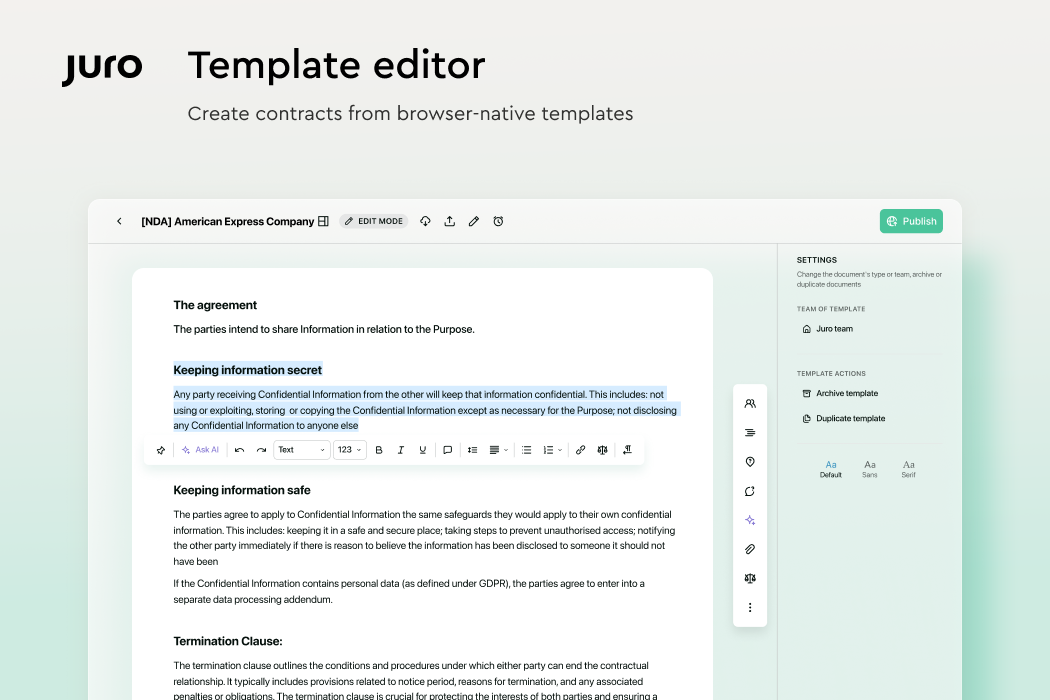
With its browser-based editor, no-code automation, and AI-powered insights, Juro helps teams draft, review, sign, and manage contracts all in one place. No need to switch between Word, email, or PDF files.
Best Features
All-in-one contract workspace: Draft, edit, approve, and sign contracts in a single browser-based platform
No-code contract automation: Create contract workflows without needing IT support
Built-in e-signatures: Sign contracts instantly without third-party integrations
AI-powered contract analytics: Extract key contract data and track obligations automatically
Real-time collaboration: Teams can comment, suggest edits and track changes live
Dynamic templates: Standardize contracts with reusable, pre-approved language
Smart reminders: Get alerts for contract renewals, deadlines, and key dates
Secure document storage: Centralized contract repository with full-text search
Best For
Startups, scale-ups, and mid-sized businesses that need a fast, no-fuss contract management solution with built-in e-signatures and automation.
Pros
User-friendly interface that doesn’t require legal expertise
No-code automation makes it easy to set up workflows
All-in-one platform removes the need for separate e-signature tools
Suitable for scaling businesses with growing contract needs
Affordable compared to enterprise-level CLM tools
Cons
Limited customization options compared to enterprise-focused platforms
Not ideal for businesses with highly complex contract workflows
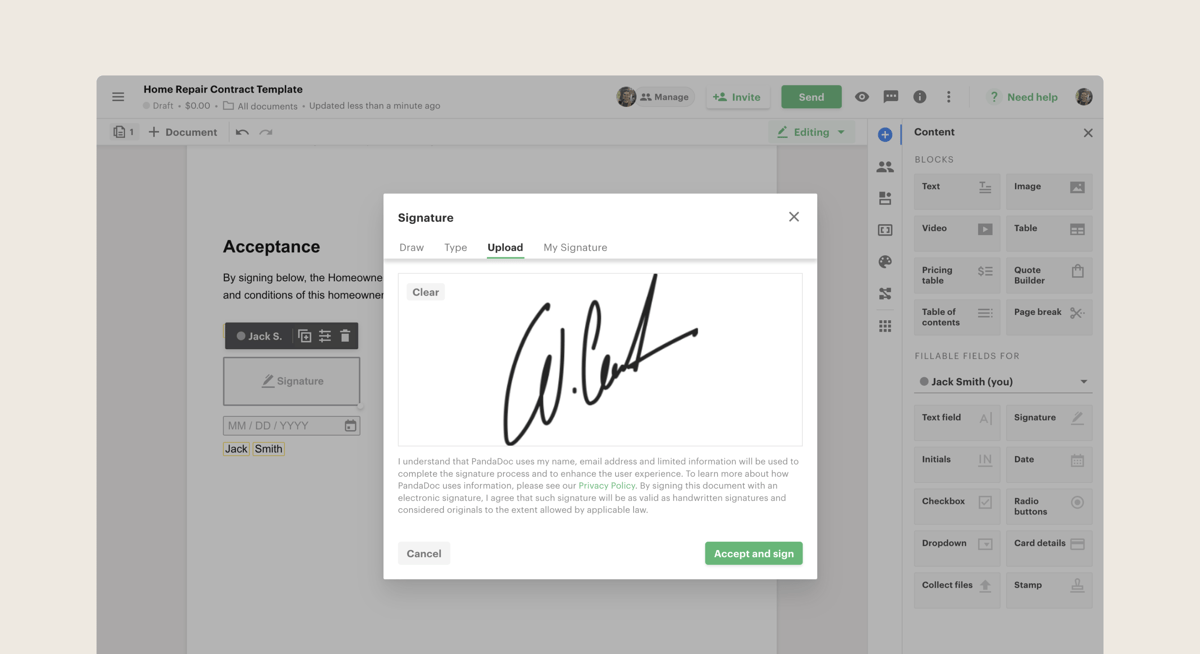
5. PandaDoc
PandaDoc is a contract lifecycle management system designed for sales teams, HR, and businesses that need an easy way to create, send, and sign contracts.
It’s known for its document automation features, making it a good choice for teams that frequently handle proposals, quotes, and contracts.
Pre-built contract templates: Reduces drafting time with customizable templates
Built-in e-signatures: Eliminates the need for third-party signing tools
Approval workflows: Automates contract approvals to prevent delays
Collaboration tools: Allows real-time comments, edits, and approvals
CRM integrations: Connects with Salesforce, HubSpot, and other sales tools
Contract tracking: Sends notifications when contracts are viewed, signed, or expire
Payment collection: Allows businesses to collect payments directly through contracts
Best For
Sales, HR, and business teams that frequently send proposals, contracts, and agreements need a simple, automated solution with built-in e-signatures.
Pros
User-friendly interface with drag-and-drop contract creation
Great for sales-driven workflows with a proposal and quote management
Real-time tracking shows when contracts are opened and signed
Affordable pricing compared to enterprise-level CLM tools
Seamless CRM and payment processing integrations
Cons
Limited legal-focused features compared to enterprise CLM tools
Not ideal for businesses handling complex contract negotiations
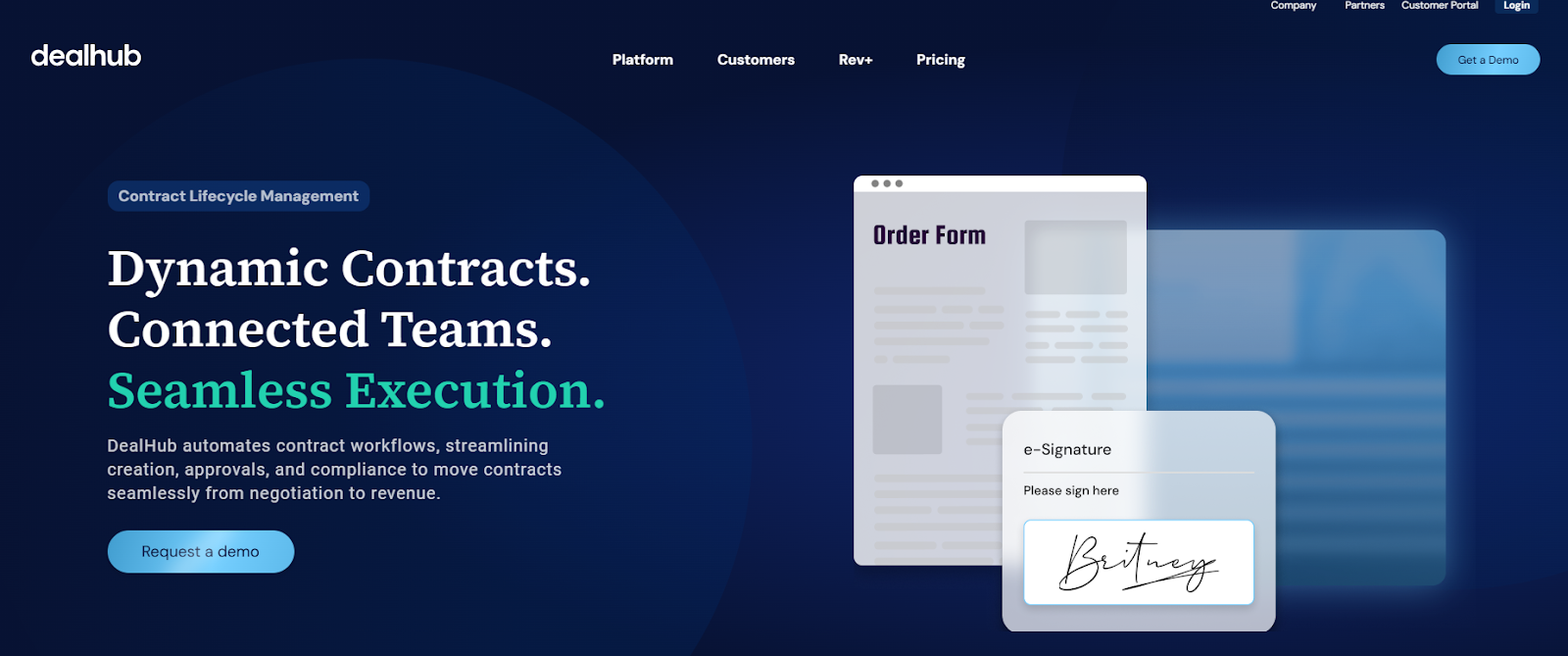
6. DealHub CLM
DealHub is a contract lifecycle management platform suitable for sales teams that need an all-in-one solution for contract automation, pricing, and deal tracking.
Source: DealHub.io
Unlike traditional CLM tools, DealHub integrates contract management with Configure, Price, Quote (CPQ) software, making it suitable for businesses looking to streamline processes from proposal to closing.
Best Features
Sales-focused contract automation: Generates sales contracts and quotes automatically
CPQ integration: Connects contract workflows with pricing and quoting tools
Approval workflows: Automates approvals based on pricing, terms, and stakeholders
Built-in e-signatures: Enables quick and secure contract signing
Real-time collaboration: Allows teams to edit, comment, and approve contracts in one workspace
Customer engagement tracking: Notifies sales teams when contracts are viewed or signed
CRM integrations: Syncs with Salesforce, HubSpot, and Microsoft Dynamics
Renewal and obligation tracking: Sends reminders for contract renewals and obligations
Best For
Sales teams and revenue operations teams need a seamless contract management solution integrated with CPQ and CRM tools.
Pros
Great for sales teams that manage complex pricing and contract workflows
CPQ integration makes quoting and contract generation faster
Built-in e-signature eliminates the need for third-party signing tools
Strong CRM integrations help keep deal data centralized
Cons
Not ideal for legal teams needing deep compliance tracking
Limited flexibility for non-sales contract workflows
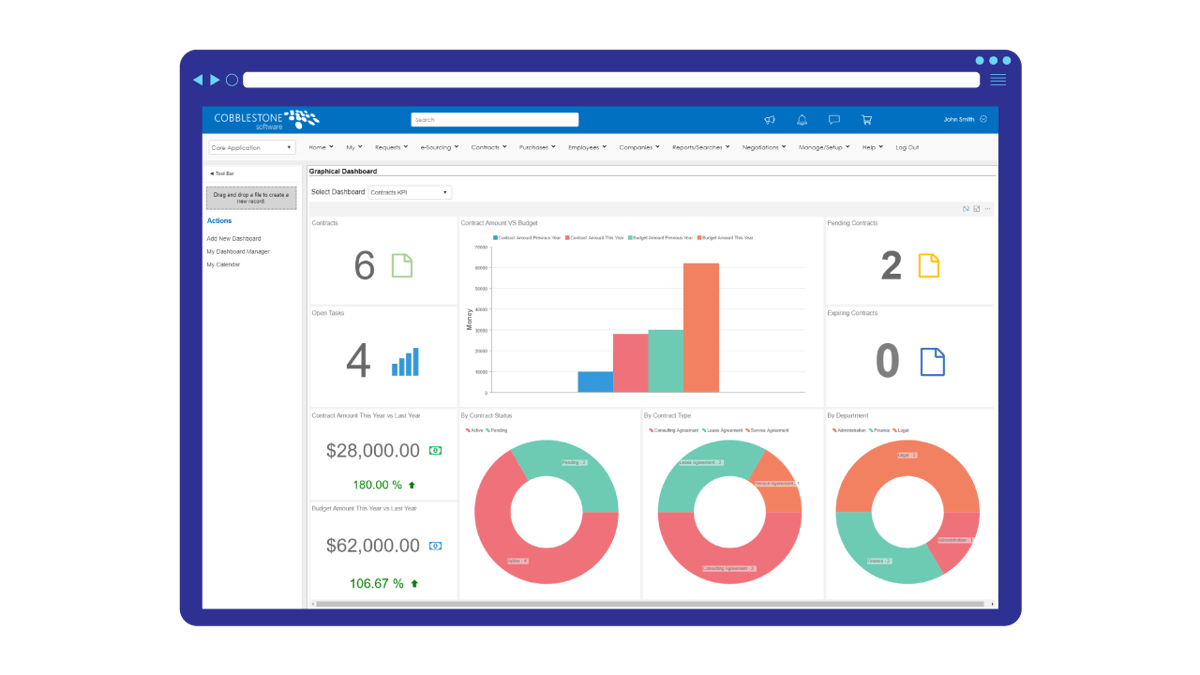
7. Cobblestone
Cobblestone is another contract lifecycle management platform built for businesses, government agencies, and enterprises that need a highly secure and customizable contract management solution.
It offers strong compliance tracking, contract automation, and advanced analytics, which make it a good fit for organizations handling high contract volumes and strict regulatory requirements.
With AI-powered contract analysis, automated workflows, and a centralized contract repository, Cobblestone helps businesses organize, track, and manage contracts more efficiently.
Best Features
AI-powered contract insights: Identifies risks, key terms, and compliance issues
Customizable contract workflows: Automates approvals and contract routing
Electronic signature integration: Supports secure digital contract execution
Centralized contract repository: Stores and organizes contracts so you can access contracts quickly
Obligation and renewal tracking: Sends alerts for key contract deadlines
Audit trails and compliance tools: Ensures transparency and regulatory adherence
Third-party integrations: Connects with ERP, CRM, and procurement systems
Best For
Enterprises, government agencies, and organizations that need a secure, AI-powered CLM platform with strong compliance and reporting features.
Pros
Robust security and compliance tracking for regulated industries
AI-driven contract insights help reduce legal risks
Highly customizable workflows to fit different business needs
Centralized contract storage makes document retrieval easy
Comprehensive reporting tools provide valuable contract data
Cons
User interface feels outdated compared to newer CLM platforms
Can be complex to set up for businesses without dedicated legal teams
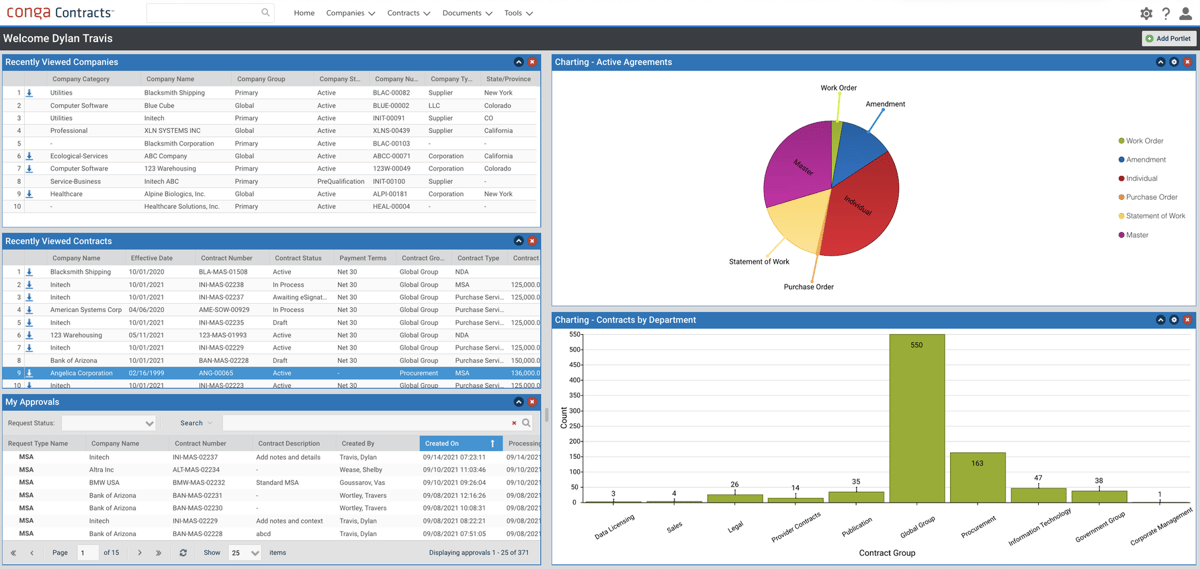
8. Conga
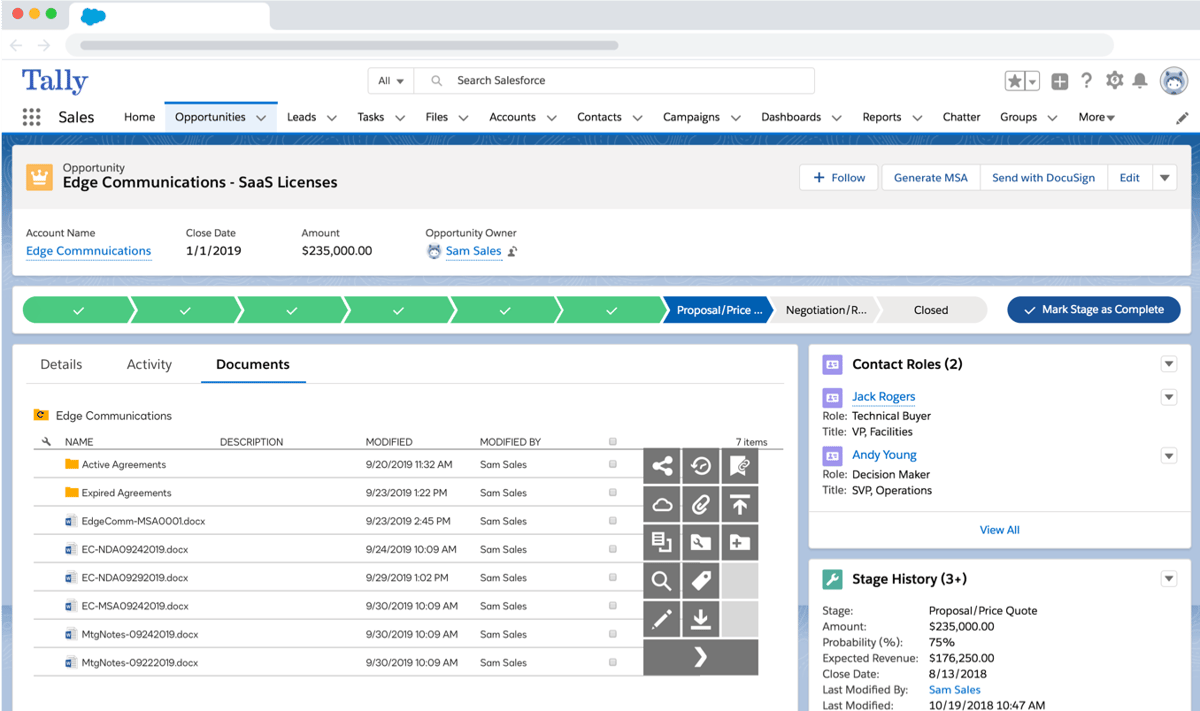
Conga is a hybrid contract lifecycle management tool designed for businesses that need a flexible, scalable solution for contract automation, approvals, and compliance tracking.
Salesforce integration: Works directly within Salesforce for a smooth contract workflow
Automated contract generation: Creates contracts based on predefined templates and data
AI-powered contract analysis: Identifies risks, missing terms, and compliance gaps
Approval workflows: Automates contract routing and stakeholder approvals
E-signature integration: Supports secure signing and multi-party approval processes
Obligation and renewal tracking: Sends alerts for key contract deadlines
Clause library: Ensures consistent legal language across contracts
Advanced reporting and analytics: Tracks contract performance and compliance metrics
Best For
Businesses that use Salesforce and need a CLM solution that integrates seamlessly for automating contract workflows, approvals, and compliance tracking.
Pros
Deep Salesforce integration simplifies contract management for sales teams
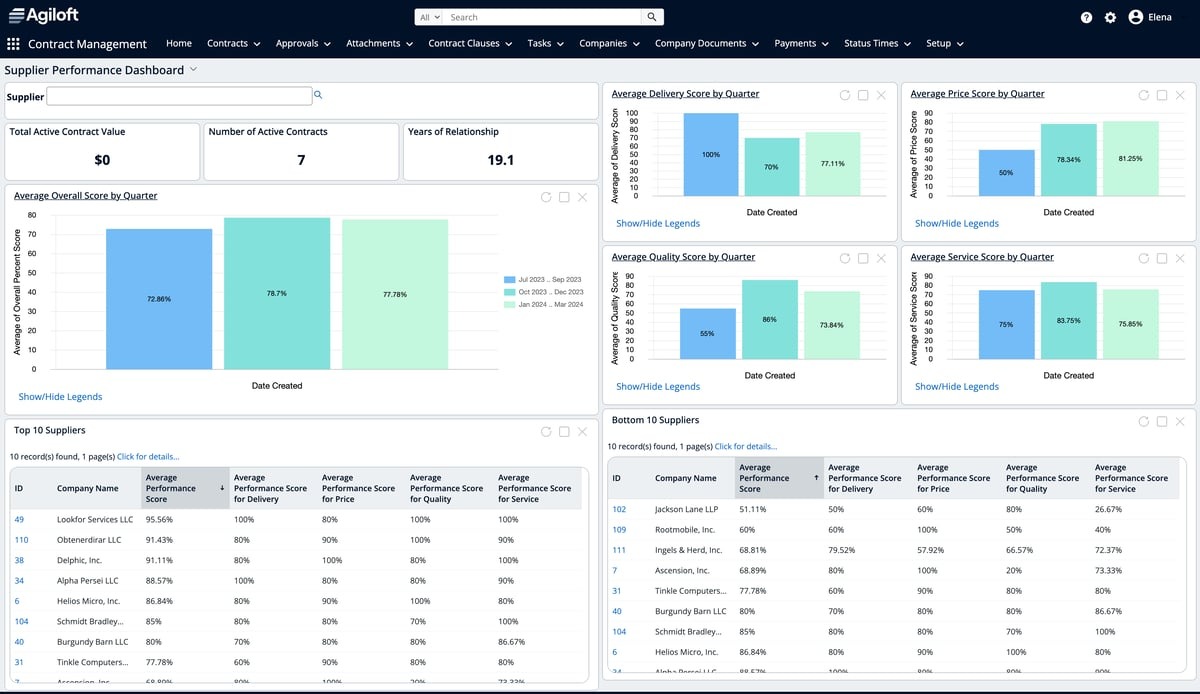
Designed for legal, procurement, and enterprise teams, Agiloft helps businesses automate contract creation, approvals, compliance tracking, and reporting without the need for coding or complex integrations.
Best Features
No-code contract automation: Allows businesses to customize workflows without IT support
AI-powered contract analysis: Identifies risks, missing clauses, and compliance gaps
Automated approvals: Routes contracts to the right stakeholders based on predefined rules
Obligation and renewal tracking: Sends alerts before key deadlines
Electronic signature integration: Works with DocuSign, Adobe Sign, and other e-signature tools
Advanced reporting and analytics: Tracks contract performance and risk factors
Role-based access controls: Ensures security and compliance with permissions management
Third-party integrations: Connects with CRM, ERP, and legal software
Best For
Organizations that need a flexible, highly customizable CLM platform with strong AI-powered automation and no-code workflow management.
Pros
No-code customization allows businesses to adapt workflows easily
Integrates with multiple e-signature and enterprise tools
Scales well for mid-sized and large enterprises
Cons
User interface can feel complex for first-time users
Customization options may require training to fully utilize
The CLM Decision: Which Platform Is Right for Your Team in 2026?
CLM platforms are built to solve different parts of the contract workflow.
Some platforms focus on one part of the workflow, such as drafting, redlining, or collecting e-signatures. If your team only needs to improve a specific step in the process, a point solution like PandaDoc or Juro can help optimize document creation and execution.
But if your team is trying to replace the entire contract stack: Word → email → DocuSign → shared drives → renewal spreadsheets, a full contract lifecycle platform like Aline is more practical.
Instead of switching among multiple tools, a full CLM platform centralizes drafting, negotiation, approvals, signing, and contract data in a single system, giving legal, finance, and operations teams clear visibility into obligations, renewals, and risks.
That’s where Aline can make a difference.
The platform is designed as an AI-native contract lifecycle tool that replaces 5–7 separate tools used in traditional contract workflows, helping teams reclaim $40K annually while keeping all the processes AI-driven.
With 100+ companies across 10+ countries, 2,000+ users, and a 97% customer retention rate, Aline continues to gain adoption among organizations transforming their contract management.
If you're ready to move beyond fragmented contract workflows, explore Aline today and see how an AI-based CLM platform can optimize your entire contract lifecycle.
FAQs About the Best Contract Lifecycle Management Software
What is the best contract lifecycle management software?
The best contract lifecycle management software depends on your business size, workflow complexity, and integration needs, but platforms like Aline, Icertis, and DocuSign CLM consistently stand out. These tools help eliminate inefficient contract management by automating approvals, tracking compliance, and organizing all your contracts in one secure system. With features like AI-assisted drafting, e-signature integration, and real-time collaboration, they turn contracts into valuable corporate assets that support business growth.
How do you manage the contract lifecycle?
To manage the contract lifecycle effectively, businesses should use a centralized CLM platform that covers every stage, from contract creation and negotiation to approval, execution, and renewal tracking. This enables efficient contract management by automating tasks, maintaining visibility into contract status, and ensuring compliance through built-in workflows and audit trails. It also allows teams to collaborate easily and keep everything aligned with existing systems like CRM and ERP tools.
How do I choose a CLM?
When choosing a CLM, start by assessing your contract volume, team workflows, and the types of agreements you manage. Look for a platform that reduces inefficient contract management, integrates with your existing systems, and gives clear visibility into contract status and deadlines. The ideal CLM should help protect your valuable contract assets while making the entire process faster, more accurate, and easier for everyone involved.
What types of contracts can a CLM system manage?
A CLM system can handle a wide range of documents, including contract requests, sales agreements, vendor contracts, NDAs, and more. It streamlines each step, from drafting to approval, helping businesses manage high volumes without losing track of key terms or deadlines.
Contract negotiations can be a rough process, but they don't have to be. Learn more about the most effective tips for a smooth negotiation process here.