Every business reaches a point where contracts feel scattered. Some live in email threads, others hide in old folders, and a few seem to disappear right when someone needs them. When documents move this way, even simple tasks take longer than they should.
That’s why a contract repository solution matters more than ever.
In its simplest form, a contract repository pulls everything together so your team can find what they need and stay on top of every task. A setup like this brings order to the chaos and gives you a clear starting point for healthier contract management processes.
If you’ve ever wished your agreements lived in one place, worked consistently across teams, and felt easier to manage each day, a digital contract repository solves that problem right away.
And the best part? Once everything is centralized, it becomes much easier to simplify contracting processes and build something scalable.
So, let’s walk through how a modern contract repository software setup works and why it’s such a foundational part of keeping your business running smoothly.
A central contract repository is simply a single, organized place to keep every agreement your business relies on. This means you can access contracts without bouncing between inboxes, old folders, or multiple shared drives.
It's essentially a contract hub that follows the entire contract lifecycle. Early drafts, final versions, renewals, edits; every step lands in one system.
Plus, a good contract repository system stores files and gives your team clarity at the same time. You always know which version is current, who last touched it, and what deadlines are coming up next.
Once you have this in place, the daily scramble to track down documents fades away. More importantly, you spend less time searching and more time actually working with the information that matters.
Decentralized contract storage creates confusion the moment your contract portfolio starts to grow.
This happens often with traditional contract storage systems, and it turns simple tasks into ongoing contract management challenges.
Here are the issues that show up most often:
A central contract repository tool keeps everything in one organized place, but its real value shows up in the way it supports day-to-day work. Once your team has a single source of truth, your core tasks start to feel a lot smoother.
Here’s how the core functions of a contract repository fit together.
A good repository gives your contracts a permanent home instead of letting them drift across email threads or scattered folders.
All existing contracts, drafts, redlines, and supporting files sit together in a clean digital contract repository. This helps legal departments and business teams avoid the back-and-forth hunt for documents.
Over time, you can build a dependable contract database that stays tidy no matter how many agreements move through the business.
Once everything lives in one place, finding a contract becomes much simpler. You can search by date, party name, keyword, or even clause type and get what you need in seconds.
This kind of quick retrieval makes a noticeable difference during audits, contract renewals, or any moment where someone needs fast answers.
Updates tend to happen constantly during negotiation. And without a system that records each change, it’s easy to lose track.
A central repository keeps every version lined up in order, so legal teams can see who made edits, when they happened, and how the terms evolved.
Contracts hold sensitive information, so access needs to be handled thoughtfully. Strong contract repository management software lets you assign permissions to make sure that only the right people can view or edit certain documents.
This keeps confidential details protected and reduces the chances of someone making accidental changes. It also helps maintain better structure in your overall contract repository management process.
A contract keeps influencing the business long after signing. With that in mind, renewals, expirations, and obligations all need attention at the right time.
A central repository highlights upcoming dates and gives you enough lead time to prepare. This connects smoothly with contract creation, negotiation, and every stage of the contract lifecycle, which can give the team a clear picture of what’s coming up.
When contract details are captured as structured data, your repository becomes a powerful source of insights. You can filter by spend, renewal window, type of agreement, risk level, and more.
As a result, contract management reporting gets easier, leadership gets clearer updates, and the team has quicker access to contract information.
As you can see, a central contract repository removes a lot of the friction that slows teams down. Once everything moves into a centralized digital system, contracts become easier to manage, track, and understand.
Here are the benefits you’ll feel right away:
The right setup helps you organize contracts effectively, support multiple departments, and keep information accurate as your contract volume grows.
With that in mind, it helps to have the following features:
A solid contract management repository lets you find what you need quickly, regardless of the number of agreements that come through the business each year.
You should be able to pull up relevant contracts by party name, contract value, dates, or specific clauses. This kind of search makes it easier for legal, sales, and procurement teams to work from the same information without losing time.
When a cloud-based contract repository stores everything in one place, day-to-day questions feel lighter because the answer is usually only one or two clicks away.
Contracts hold information that shouldn’t be open to everyone, so a good repository needs flexible, reliable access settings.
Strong access controls let you decide who can view, edit, or approve each document, which keeps your system organized and protects sensitive contract data as your team grows.
A secure contract repository software setup also lowers the chance of accidental edits and creates clear accountability for every action taken in the system.
Here’s what to look for:
Negotiation brings edits, comments, redlines, and revisions from several people. Without proper version control, the process becomes confusing fast.
A modern repository keeps every update in order, shows who made changes, and links all drafts together. If you ever need to reference existing contract provisions or compare earlier language, you can step back through the timeline easily.
This kind of structure supports smoother contract collaboration across your business processes and makes legal reviews far less stressful.
Staying on top of key contract dates matters for managing renewals, renegotiations, and long-term obligations.
A repository with automated alerts keeps these moments visible so nothing gets overlooked. You can track expirations, renewal windows, notice periods, and other key data points without relying on manual reminders. This helps your team stay prepared and respond ahead of schedule.
Key features include:
Contracts can contain terms that affect legal operations, spending, and compliance. A strong repository highlights obligations, deadlines, and unique clauses so teams don’t have to scan line by line each time.
Features for risk and obligation management help you see what needs attention and which agreements carry higher exposure. This is especially valuable when your library grows, and you need quick visibility into your broader risk profile.
A modern platform can make your repository feel a lot easier to manage. Once automation and legal AI tools step in, your centralized contract repository system moves from simple file storage to something that actively supports the way you work.
With an AI-powered platform like Aline, this shows up in small but noticeable moments. The tool reads your agreements, highlights key terms, and gives you quick summaries so you can move through reviews faster.
Search feels smoother because the system understands what you’re looking for, not just the name of a file. And since drafting, routing, and signing all connect through one place, you’re not bouncing between tools trying to figure out where something stands.
As your library grows, the system helps your digital repository stay tidy. You’ll see clearer audit trails, easier version tracking, and fewer surprises around dates or obligations.
It supports effective contract repository management by keeping information in the right place and giving you the context you need without a lot of digging.
If you’ve ever wanted a well-organized contract repository that stays that way, even as the business moves faster, a modern platform gives you that extra lift.
A central repository already gives you a cleaner, more reliable way to handle your agreements, but Aline takes things further.
If your team wants contracting processes that run smoother and faster (without relying on scattered document management tools), Aline’s AI Repository brings everything into one organized system and adds intelligence on top of it.
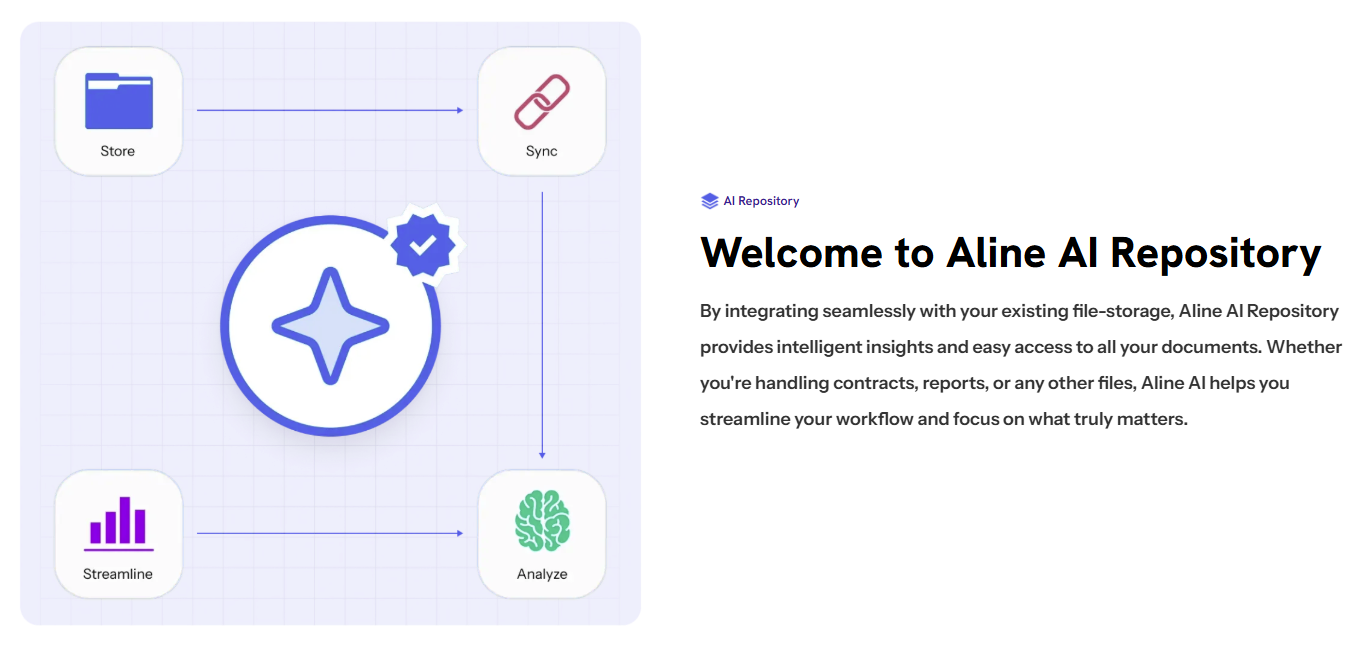
You can upload files from the storage platforms you already use, and Aline immediately extracts contract terms, obligations, values, and dates.
From there, you can run custom AI reports, search across thousands of agreements instantly, and stay ahead of renewals with simple reminders. It’s a setup that keeps your information tidy, supports better decision-making, and gives you quick visibility into details that used to take far too long to uncover.
If you’re ready for a repository that does more than hold files, Aline makes that possible right away.
A contract repository is a system that stores, organizes, and tracks your business contracts in one place. It keeps documents easy to find, supports version history, and helps your team manage contracts without digging through scattered folders or email archives.
A central repository gives your organization one dependable location to store agreements, track updates, and access important information. A contract repository acts as a single reference point for your contracts, helping teams stay aligned and avoid confusion about the latest version.
A central data repository stores the structured information pulled from your documents; things like dates, obligations, values, and vendor names. It helps with reporting, tracking performance, and identifying current vendor relationships without manual searching.
A centralized digital contract repository keeps documents organized across departments and supports smoother workflows for legal, sales, and procurement. With a reliable document repository, contract professionals and contract managers gain quick access to past agreements, renewal timelines, and key details that help them work confidently.
A modern contract repository focuses on giving teams faster visibility into agreements, clearer version control, and easier collaboration. It simplifies approving contracts, supports standardizing common sales agreements, and replaces scattered document management systems with one platform.