If you're looking into CLM tools for the first time, you're probably comparing options and trying to understand what changes once you move to a structured system.
On paper, contracts already get drafted, reviewed, and signed. In practice, the process can feel fragmented as volume grows or more teams get involved.
That's why many companies start researching contract lifecycle management (CLM) and evaluating what the best contract management software might look like for their needs.
If you're not sure where to start, the sections below break down what to expect from CLM solutions, why businesses adopt them, and how to decide which platform supports effective contract management for your workflow.
Every contract your business signs moves through a series of stages. It begins with a request or draft, passes through internal review and negotiation, receives approval, gets signed, and then continues to matter long after execution through renewals, obligations, and reporting.
The contract lifecycle management process refers to the structured oversight of that entire progression.
Rather than treating contracts as isolated documents, effective contract lifecycle management connects all related contract processes into one coordinated system.
Usually, it covers drafting standards, approval routing, version control, storage, key date tracking, and visibility into contract performance.
CLM solutions, often described as contract management software, provide the technology that supports this structure.
Essentially, they bring contract drafting tools, automated workflows, centralized repositories, reporting dashboards, and sometimes e-signature functionality into a unified platform. Clause libraries sit underneath much of this, giving teams pre-approved language to pull from during contract drafting.
Many modern systems also incorporate AI to assist with tasks like redlining, clause alignment, and extracting structured data from executed agreements. That extracted data is what turns a pile of PDFs into usable contract intelligence.
When contracts move through a defined system instead of disconnected tools, you gain visibility into how work gets done in reality. And once that visibility exists, it becomes clear why so many businesses are rethinking how they manage agreements in the first place.
The way companies handle contracts has changed. What worked with a small team often breaks down at scale, which is why contract lifecycle management systems are gaining traction.
These are some of the biggest benefits you can expect by adopting a CLM solution:
Contract delays rarely come from one major obstacle. More often than not, they build gradually when drafts sit in inboxes, approvals lack clarity, or teams wait on version confirmation. Over time, those small pauses extend timelines in ways that are easy to underestimate.
In B2B SaaS, for example, the median sales cycle is 84 days. That figure varies depending on deal size, pricing model, and industry, but it gives context for how long revenue can remain in motion before a contract is finalized.
If the review and approval stage adds friction, the cycle stretches even further.
When contract management processes are structured within a CLM solution, each agreement follows a defined path that keeps reviews moving in the right order. Contract negotiation also gets easier to manage, since every proposed change is tracked in one place instead of scattered through email.
Legal teams spend less time checking status and more time focusing on language and risk, while sales can see exactly where their sales contracts stand. The manual effort drops on both sides.
Execution is not the end of a contract's relevance; the terms continue to shape revenue forecasts, vendor performance, and internal planning decisions.
CLM software keeps that information accessible and organized so you can track contracts long after they are signed. Key dates such as renewals, pricing adjustments, and performance obligations remain searchable within CLM tools, which makes reporting far more reliable.
For example, finance teams can review upcoming contract renewals well in advance and adjust projections accordingly, and operations can monitor obligations tied to active agreements.
Centralizing contract data this way also opens the door to contract analytics. With consistent access to structured records, contracts become a dependable source of valuable insights rather than static documents stored away, and contract visibility stops depending on who happens to remember a detail.
If contract approvals feel unpredictable, the issue is usually the flow, not the people involved.
Clear routing inside a CLM platform gives your agreements a defined path. Legal reviews the language, finance checks the numbers, leadership signs off, and each step is recorded without anyone having to manually coordinate it.
Picture a new agreement that touches procurement, compliance, and operations. In a structured system, it moves forward in sequence and doesn't restart every time a small edit is made. You streamline contract workflows because the workflow logic handles the order and tracking, routing each contract to the relevant stakeholders automatically.
As a result, new agreements move steadily, even within complex workflows, and contract approval timelines become easier to forecast. That predictability is a quiet but real gain in operational efficiency.
A contract management system helps you review contracts with consistency and keeps compliance requirements visible throughout the lifecycle.
Approval history, version records, and audit trails stay attached to each document, which makes it easier to confirm that internal standards were followed. Built-in compliance tracking means you can show that work was done, not just claim it.
That documentation matters if legal disputes arise or if regulators request records. It also reduces the risk of financial losses tied to missed clauses or expired terms, and helps you meet legal and regulatory requirements without a separate paper trail.
Some similar solutions stop at storage, but a comprehensive CLM platform keeps compliance and risk management embedded in day-to-day contract activity. That gives you a clearer line of sight into compliance risks before they turn into problems, and makes it far easier to ensure compliance at scale.
Traditional document storage systems usually grow piece by piece. A few contracts live in a shared drive, others sit in inboxes, and some end up saved locally on someone's computer.
Over time, it becomes harder to answer basic questions like which version is final or when a renewal is coming up.
In other words, manual storage leaves too much room for uncertainty.
On the other hand, CLM software brings everything into one organized contract repository so you can effectively manage contracts with more visibility and less backtracking. Built-in version control settles the "which draft is current" question for good, and agreements are indexed and searchable from the start.
That difference shows up in practical ways:
With centralized contract storage, contracts become structured records rather than just scattered files, and that clarity makes everyday work far easier to manage.
A signed contract still carries deadlines, payment terms, and performance commitments that continue long after contract execution. For that reason, visibility cannot stop at the signature stage.
But without a reliable system, renewal dates approach quietly, and contract obligations resurface only when someone happens to notice.
Clear obligation management keeps those details integrated into everyday legal processes rather than relying on manual reminders.
Within a structured platform, oversight becomes part of the workflow:
Monitoring contract performance this way is how teams maximize contract value rather than simply filing agreements away. Over time, the same data helps you optimize contract performance by showing which terms consistently work and which ones cause friction.
CLM software makes the biggest difference in organizations where contracts are part of everyday decision-making. If multiple teams rely on agreements to move work forward, a structured system quickly becomes useful.
You'll see the most impact with:
In practice, the strongest results come when legal and procurement teams work from the same records and when legal and business teams stop maintaining separate versions of the truth.
Choosing a CLM platform is a long-term decision. A system that looks good in a demo can fall short once real contract volume and internal complexity come into play.
To avoid that scenario, here are common missteps to watch for.
It's easy to get distracted by feature lists and overlook what is slowing you down today. If your main pain points involve approval delays, reporting gaps, or version control, make sure the platform directly addresses those areas.
Different solutions prioritize different strengths, so clarity upfront prevents frustration later.
A CLM tool rarely operates alone. It needs to connect with CRM platforms, document editors, and other existing systems your teams already use.
Keep in mind that weak integrations create duplicate work and reduce adoption, which limits long-term value. For larger organizations, check how the platform handles enterprise systems like ERP alongside the everyday tools.
Contracts often contain sensitive data, including pricing, personal information, and confidential terms. With that in mind, security standards, permissions, and audit trails should be part of your evaluation process from the beginning.
Industry research shows that a single data breach can cost organizations $4.9 million globally and even more in the United States when you factor in downtime, legal fees, regulatory penalties, and damage to brand reputation.
Contracts often contain the exact type of data that makes those incidents expensive.
That's why, at a minimum, you should look for:
Enterprise-level depth can look impressive, but overly complex interfaces slow adoption. If daily users struggle, the system won't deliver the smoother workflows you're paying for.
A platform that fits today's volume may not support tomorrow's expansion. Look for flexibility, reporting depth, and scalability that match where your business is headed.
The cost savings from consolidating tools only materialize if the platform still fits in two years, so weigh long-term flexibility alongside the initial price.
If you are evaluating CLM solutions, the feature list can start to blur together. What matters is how well the platform supports key steps like contract creation, review, and long-term oversight inside one contract management system.
At the very least, the right CLM tool should help you create contracts quickly, move them through contract review without friction, and keep data accessible after signature so agreements deliver full value over time.
Most modern platforms include:
Knowing the core features is one thing, but deciding which platform actually fits your team is another.
There are plenty of CLM vendors, and most of them promise similar results. The key is to step back and focus on what would genuinely make your contract work easier and more reliable.
As you evaluate your options, keep these considerations in mind:
Start with your real workflow. How are contract drafts created? Where do approvals slow down? Which steps feel repetitive?
If drafting takes too long, strong contract templates may matter most. If visibility is the issue, contract reporting and tracking should be front and center.
A good system should solve the problems you already see, not introduce new ones.
A strong CLM platform uses structured workflows and rules-based logic to move agreements forward automatically. That means the software recognizes the type of contract, routes it to the right reviewers, and records approvals without someone manually coordinating every step.
Many platforms also use AI to scan contract drafts, identify key terms, and flag missing language.
Look for automation that feels practical and grounded in daily work:
Automation of this kind is where significant cost savings usually show up, since fewer hours go into coordination that software can handle.
Your CLM system should connect directly with the tools your team already uses. Without that connection, people end up copying data between platforms, which ultimately slows work and increases errors.
For example, a deal created in your CRM should automatically generate a contract draft with customer details already populated. Once signed, key terms like contract value or renewal dates should sync back to the CRM for reporting.
Then, legal should be able to review and redline in a familiar document editor while the CLM platform tracks changes and stores the final version. E-signature integration should also allow contracts to move to execution without downloading and re-uploading files.
Remember: Clean integrations reduce manual entry, keep data aligned, and make adoption much easier for every team.
Regulatory requirements shift over time, and your contract system needs to keep up. A platform that works for today's policies should also handle updates without requiring a full rebuild.
For example, if new regulations require additional disclosure language, you should be able to update contract templates once and apply those changes going forward. Or if approval thresholds change based on deal size or risk level, the workflow should adjust without complex reconfiguration.
Strong compliance management should also scale with you, so risk management doesn't become a manual exercise as volume climbs.
On the other hand, growth brings its own pressure. A system that feels manageable with 50 contracts a month may struggle at 500.
So, look for reporting depth, flexible user permissions, and the ability to handle higher contract volume at the pace you need. As your business expands into new markets or adds product lines, the platform should scale with you rather than force another transition later.
Some contract lifecycle management software focuses on storage. Others focus on workflows.
Aline was built around legal AI from the start, which shows up in how the platform handles drafting and review rather than as a feature bolted on later.
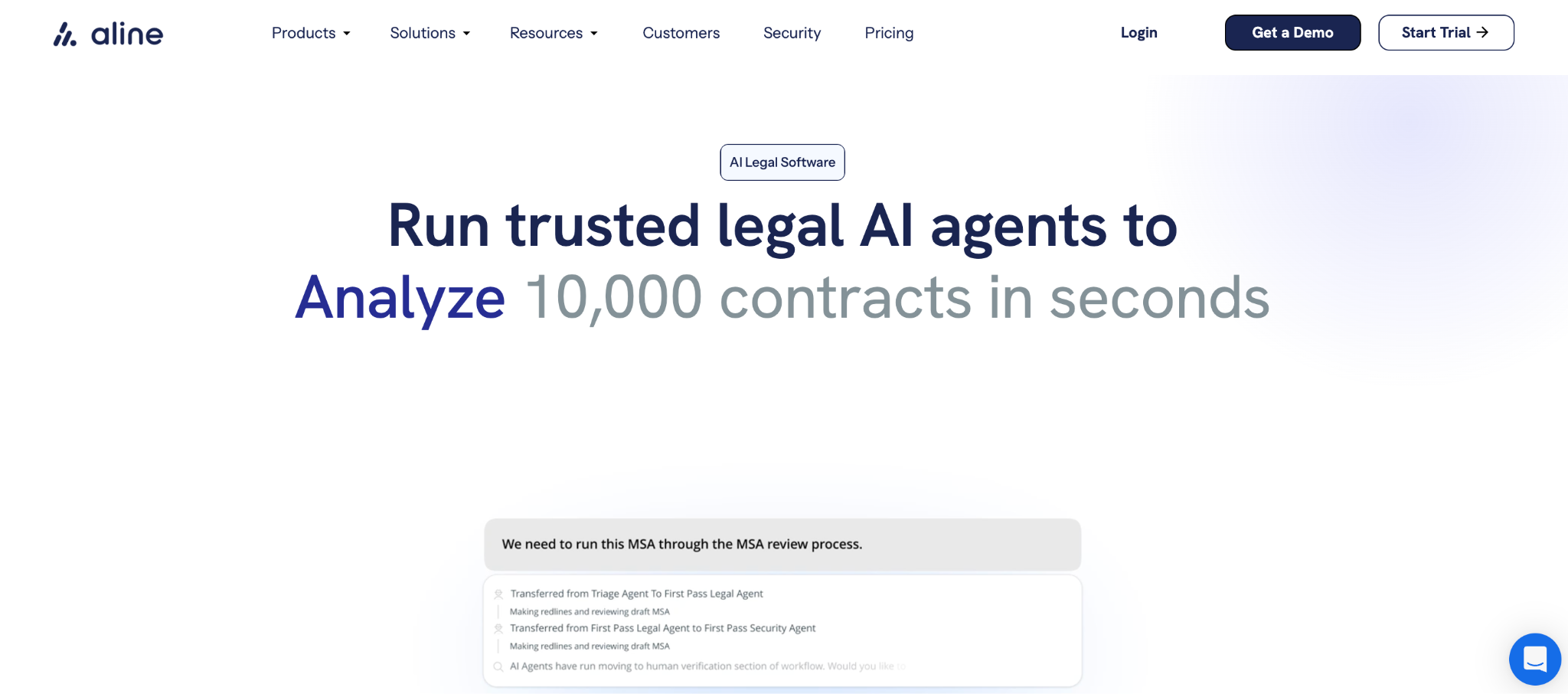
You can run AI agents that draft and redline agreements using prebuilt playbooks tied to your preferred positions.
Drop in a 100-page agreement and receive a structured first pass in minutes. Compare terms against the approved language automatically. Apply fallback clauses without manually editing every section.
Aline also connects drafting, negotiation, signature, and reporting inside one system, so the entire contract process runs in a single place. AI workflows route intake requests to the right reviewers based on logic you define.
AlineSign keeps execution in the same environment, so signed agreements remain searchable and connected to reporting. Then, the AI repository ingests contracts from Google Drive or SharePoint, extracts metadata, and classifies them without manual tagging.
Reporting is another differentiator. You can surface renewal dates, indemnities, and risk terms from thousands of agreements instantly, then generate board-ready summaries in a few clicks.
For modern teams handling serious contract volume, Aline positions legal AI as the engine of the platform, not just an add-on layered onto traditional software. That is what smarter contract management looks like when the entire contract lifecycle sits in one system.
Start a free trial to see how it works.
Contract lifecycle management refers to the structured process of creating, reviewing, approving, signing, and tracking agreements from start to finish. It covers everything from early contract drafts to renewals and reporting. A CLM platform helps automate tasks within that lifecycle so agreements move forward in a consistent and traceable way.
CLM stands for contract lifecycle management. The term covers both the process itself and the software category built to support it. When someone refers to a CLM platform or CLM tool, they mean a system that handles contracts from request through renewal rather than a single-purpose tool for storage or signing.
The CLM market includes AI-native platforms like Aline alongside established names such as Ironclad, Icertis, Agiloft, DocuSign CLM, Conga CLM, and Juro. They differ mainly in implementation time, pricing, and how much of the lifecycle each one covers. The right choice depends less on market position and more on whether the platform fits how your team already works.
Most CLM platforms are sold as a suite of connected modules rather than one feature. Typical products include contract authoring and templates, workflow and approval automation, a centralized repository, e-signature, and reporting or contract analytics. Some vendors sell these separately, so it's worth checking what's included in a base plan before comparing prices.
In financial services, CLM usually means client lifecycle management rather than contract lifecycle management. It refers to onboarding clients, running KYC and anti-money-laundering checks, and maintaining those records over time. The two share an acronym and a similar structure, but they solve different problems, so it's worth confirming which one a vendor means.