Contract negotiation software combines AI redlining, approvals, version control, and signing so deals move without endless email chains.
The platforms that win in 2026 cover the full lifecycle — not just review — and use multiple AI models with playbook scaffolding.
Match the tool to the workflow: Aline for full CLM, Ivo and Spellbook for Word-based AI review, Harvey for enterprise legal research.
A contract negotiation can start with a simple redline and still take weeks to close. Legal is waiting for business approvals, sales is following up on revised terms, procurement is reviewing pricing changes, and multiple stakeholders are commenting on separate document versions.
In most organizations, this is not a quick process. The average contract review cycle now stretches to 3.4 weeks, slowing down deal cycles, vendor onboarding, and internal approvals.
3.4 weeks
Average contract review cycle in 2026 — the delay slowing deal cycles, vendor onboarding, and approvals.
Industry benchmark, WorldCC
As contract volumes increase, the pressure spreads across teams:
Legal spends 60–80% of the time reviewing repetitive clauses and managing contract edits
Sales lose momentum waiting for approvals and redlines
Procurement struggles to track vendor obligations consistently
Finance and RevOps lack visibility into commercial terms and renewals.
Poor contract management practices, in fact, reduce realized contract value by nearly 8.6% annually through missed obligations, inefficient approvals, and limited visibility into agreements.
8.6%
of realized contract value is lost annually through missed obligations, inefficient approvals, and limited visibility. — WorldCC, 2025
At the same time, businesses investing in Contract Lifecycle Management (CLM) platforms have reported reducing contract process time by up to 83% after centralizing reviews, approvals, and negotiation workflows.
However, not all contract negotiation platforms are built the same. The key differences come down to three factors: whether they function as drafting assistants or full workflow systems, whether they cover negotiation alone or the full contract lifecycle, and whether they rely on a single AI model or multiple models like Claude, ChatGPT, and Gemini.
In this article, we’ll explain the 4 best contract negotiation software platforms, including Aline, and compare how they support end-to-end contract workflows.
What Most Negotiation Tools Still Get Wrong
Most contract negotiation tools are good at helping teams review and redline documents faster, which is also where most of them stop. Here are a few areas where that starts becoming a problem:
Approvals still end up living in inboxes. Most negotiation tools help you move through redlines faster. But the moment a contract needs input from finance, procurement, sales, or operations, you are usually back to chasing approvals across inboxes and Slack messages.
That workload keeps growing, too. Nearly 79% of corporate legal teams say contract and legal workloads are increasing, even as headcount stays flat or declines. In practice, that means the same people are handling more contracts, approvals, and follow-ups.
Signed contracts still disappear after the deal closes. Lots of tools work great while you’re negotiating the contract. The problem usually starts later, when you need to check a renewal clause, pricing commitment, or liability term from an agreement signed months ago.
Instead of getting a quick answer, you end up digging through PDFs, shared drives, and email attachments to figure out what was agreed to. In many businesses, contract data still sits across 24 different systems, making obligations much harder to track.
Renewals still rely on someone remembering to follow up. Most negotiation tools will remind you that a contract renews in 30 days. After that, you are mostly on your own. Is the pricing still acceptable? Did procurement renegotiate the terms already? Does legal need another review? Or is the business even using the vendor anymore?
That gap gets expensive quickly. In 2025, 50% of organizations reported revenue leakage tied to unintended auto-renewals and poorly tracked contract obligations. For many businesses, renewals still run on spreadsheets, reminders, and scattered follow-ups.
Faster negotiations do not always mean better contracts. A contract getting negotiated in two days instead of two weeks looks great on a dashboard. The harder part is understanding what the business agreed to in order to move that quickly.
Over time, small changes start adding up across contracts. Payment terms get adjusted for one customer. Liability clauses get tweaked for a vendor. Commercial terms get approved differently across regions or business units. Negotiations may move faster, but keeping contract standards consistent becomes a challenge as your volume grows.
The Best Contract Negotiation Platforms in 2026
Contract negotiation platforms are evolving beyond traditional CLM systems. Some focus on AI-assisted drafting and redlining in Microsoft Word, while others combine negotiation, approvals, e-signatures, and contract management in a single platform. Here are the top tools to consider.
TL;DR — A Quick Glance at the Top 4 Contract Negotiation Platforms
Platform
AI depth
Covers full lifecycle
Deploy time
E-signatures
Pricing
Best for
Aline
AI across drafting, approvals, redlining, repository, and workflows
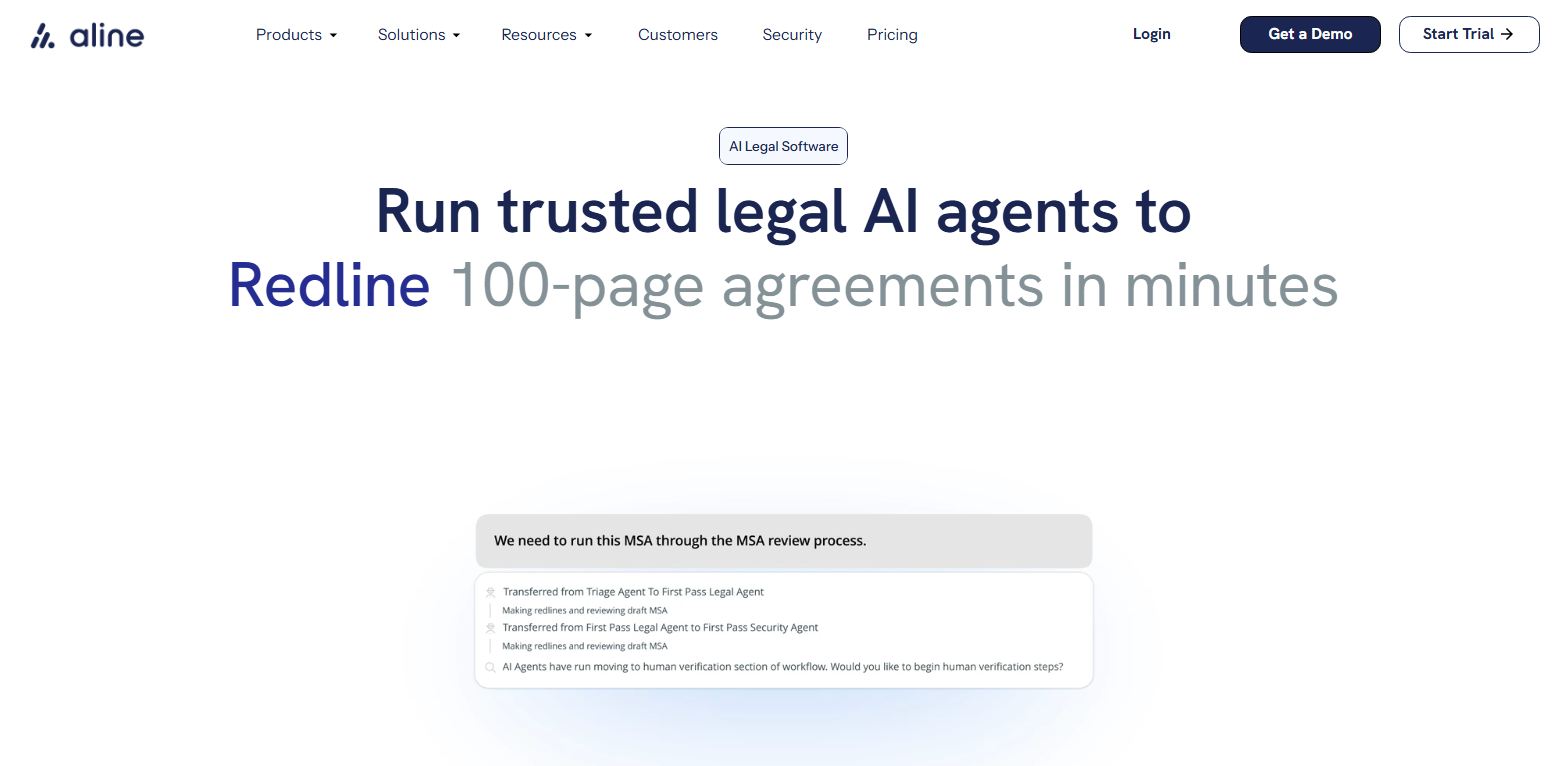
Aline is one of those platforms that understands contract negotiation is rarely just a legal task. Most agreements involve back-and-forth between legal, procurement, finance, sales, and external parties.
So the platform is built to manage the end-to-end contract lifecycle management, covering drafting, redlining, approvals, contract reviews, signatures, and negotiation tracking in one place. This helps replace 5+ separate legal workflow tools, helping companies save up to $40K annually.
Aline suits SMB and mid-market companies with 100–1,000 employees that manage growing contract volumes. It helps analyze up to 10,000 contracts in seconds and redline a 100-page agreement in minutes, contributing to 50–75% faster negotiations.
Aline is like having a lawyer on call for redlining. It’s incredibly valuable. The ability to use AI to draft new documents instantly, analyze legal language, and redline contracts brought unmatched speed and accuracy.
Collin Clifford, Head of Legal at Superhuman
Superhuman saved 15+ hours per week in reporting and reclaimed $40K annually by reducing dependence on external counsel by leveraging Aline.
$40K
Saved annually
Superhuman
15+
Hours/week recaptured in reporting
Superhuman
50%
Faster redlining
Superhuman
Core Negotiation Features
AI-assisted redlining: Negotiate and redline contracts 95% faster, saving 20+ hours per week using AI-assisted review workflows. This reduces the need for manual clause-by-clause review during negotiations.
Multi-model AI support: Uses Claude, ChatGPT, and Gemini. This supports drafting, review, negotiation analysis, and legal research workflows within the same system.
AI playbooks: Help teams standardize approved language, fallback positions, and negotiation standards across NDAs, MSAs, and templates, reducing contract redlining time from 45 minutes to under 2 minutes. This helps legal teams scale drafting, negotiation, and contract review without increasing headcount.
AlineSign: Keeps drafting, redlining, approvals, and signing embedded in one workflow with no tool switching, PDF re-uploads, or version drift. This reduces signing and document handling time by 30–40% while helping teams manage unlimited agreements without per-envelope pricing.
NDA Redline Time, With AI Playbooks
45 min
Manual review
→
< 2 min
With Aline
Aline customer deployments, NDA redline workflow
Questions teams ask before adopting negotiation software
Our contracts involve heavy negotiation with non-standard terms. Will software force us into templates and lose that nuance?
Not really. Aline is built to support negotiated contracts, not just static templates. The platform uses AI Playbooks, fallback positions, and approved language to guide negotiations while still allowing teams to review, edit, and negotiate non-standard clauses when needed.
We already redline in Word. What’s the actual business case for switching — better speed or better deals?
Both, in fact. Aline helps legal teams review and redline contracts much faster, with some teams reducing NDA review time to under 2 minutes. But the bigger advantage is visibility and consistency during negotiations. Approvals, negotiation history, signatures, and reviews stay connected in one workflow, reducing version confusion and helping teams maintain the same contract standards across deals.
We have a CLM for storage and tracking. Why do we need separate negotiation software — or does Aline replace the CLM entirely?
Though you may already have a CLM for storage and tracking, negotiations still often depend on Word documents, email threads, approvals, and disconnected review processes. Aline brings those negotiation workflows together with broader lifecycle capabilities in a single platform, including drafting, redlining, approvals, e-signatures, storage, obligation tracking, reporting, and searchable contract analysis. For many teams, Aline can replace a traditional CLM by keeping negotiations, contract visibility, and post-signature management in the same space.
Legal owns the negotiation process, but sales is pushing for faster turnaround. Can non-lawyers actually use this without creating compliance risk?
Yes. Aline is designed so sales and other business teams can move routine contracts forward without bypassing legal controls. AI Playbooks, approved language, fallback positions, and approval workflows help keep negotiations aligned with legal standards. Legal teams still maintain oversight on non-standard terms and higher-risk changes.
Our counterparties use their own Word documents and send tracked-change versions by email. How does software-based collaboration actually work when the other side isn’t on your platform?
Aline is built for teams that still deal with third-party Word documents and contract redlines over email. The other side does not need to use Aline for your team to use the platform effectively. You can review contracts against your playbooks, apply fallback language, route approvals, and keep track of the contract record. This eventually helps you move the final agreement into signing, storage, reporting, and post-signature analysis from the same workflow.
Best For
In-house legal teams managing a growing volume of repetitive commercial agreements with limited legal bandwidth.
Companies looking to standardize negotiation practices through approved language and structured review workflows.
Companies evaluating whether to consolidate negotiation, signing, and other contract lifecycle workflows into a single platform.
Not Ideal For
Companies that only need basic e-signature functionality without negotiation or CLM workflows.
Organizations operating from a single region with fewer than 20 contracts per month handled by a single reviewer, where dedicated negotiation workflows and AI review capabilities are more than they actually need.
Ivo
Ivo is mainly focused on AI-assisted contract review and redlining inside Microsoft Word. Instead of moving contracts into a separate review platform, lawyers can review agreements, compare clauses against playbooks, and generate suggested edits directly within Word.
User feedback around Ivo focuses on how much time the platform saves during contract review workflows.
“Ivo’s ability to quickly analyze, review, and suggest edits on contracts has significantly sped up our contract review process. Ivo’s interface is intuitive and easy to use, requiring minimal training to implement.”Source
Ivo also fits into existing legal workflows through its Microsoft Word integration and playbook-based review process. As a user review says:
“Word plug-in is what sets this app apart, along with playbook integration and AI document review. The team behind Ivo are also excellent, giving continuous updates and adding features.”Source
Core Negotiation Features
Surgical AI redlines: Generate practice-ready redlines by comparing agreements against internal playbooks, prior contracts, and external benchmarks directly inside Microsoft Word.
AI negotiation assistant: Allows teams to revise clauses, compare agreements, explain legal language, and generate negotiation summaries using natural language prompts.
Topic-level risk assessments: Assess negotiation risk across clauses like indemnity, confidentiality, and limitation of liability during contract reviews.
One-click reporting: Runs instant quality checks on agreements to clean up headings, fix inconsistencies, and standardize defined terms before or during negotiations.
Best For
Legal teams that primarily negotiate contracts inside Microsoft Word and want AI assistance without changing existing review workflows.
Organizations handling routine commercial agreements where reducing manual review is essential.
Teams looking for a relatively comprehensive AI contract review workflow without heavy onboarding, as implementation takes place in 1–2 weeks.
Not Ideal For
Companies looking for a comprehensive end-to-end CLM platform with deeper post-signature workflow management.
Early-stage businesses, as the platform offers custom pricing, with third-party estimates around $6,000 per user annually.
Aline vs. Ivo: Ivo is a feature. Aline is a platform.
Area
Ivo
Aline
Main use case
AI-assisted contract review
Negotiation workflow management
Core workflow
Redlining and clause analysis
Collaboration, approvals, and negotiation tracking
Primary users
Legal teams
Legal, sales, procurement, Legal Ops
Product scope
Point solution
Consolidated negotiation platform
Ivo is mainly built around contract review. Most of the workflow happens during redlining, clause analysis, and Word-based legal review.
But Aline approaches contract negotiations at the workflow level, which continues beyond the review stage. Teams can manage approvals, negotiation updates, internal collaboration, signing, and contract visibility from the same place instead of moving the process across separate tools and threads.
This becomes more noticeable once contracts start moving across multiple teams, as in many cases the delays come from approvals and coordination rather than the contract review itself.
Spellbook
Similar to Ivo, Spellbook also mainly uses Microsoft Word for contract drafting and review. In this tool, instead of uploading contracts into a separate review platform, lawyers stay in Word and use AI directly where they already negotiate agreements.
That Word-based workflow is one of the platform’s selling points in user reviews. A reviewer highlighted this experience, saying:
“The best part about Spellbook is that it works directly in Microsoft Word. I do not need to switch between multiple platforms while reviewing agreements.”Source
User feedback also mentions how the platform helps speed up contract review and reduce repetitive legal work.
“I like that Spellbook improves the speed and accuracy of contract review. It saves us time, allowing us to focus on more important things, and it helps us save money by reducing the need for outside counsel.”Source
Core Negotiation Features
Risk spotting: Flags missing terms, unusual language, and potential risks during contract review, while also suggesting improvements and redlines.
Contract Q&A: Lets users ask contract-specific questions in natural language while working inside Microsoft Word.
Benchmark comparison: Uses a library of contract types and Spellbook’s contract matching system to compare agreements against similar clause structures.
Multi-document review: Supports reviewing related agreements and connected documents together instead of analyzing each file in isolation.
Best For
Teams that handle most contract drafting and negotiation directly inside Microsoft Word.
Small and mid-sized teams looking for AI-assisted commercial contract workflows.
Teams reviewing contracts across multiple languages.
Not Ideal For
Teams looking for a complete contract lifecycle management platform — Spellbook is mainly an AI-driven contract drafting and review tool.
Companies that are litigation-heavy or require advanced customization options.
Aline vs. Spellbook: Browser-native vs. Word-only; Legal + Ops + Sales vs. Legal-only
Area
Spellbook
Aline
Main use case
AI-assisted drafting and review inside Microsoft Word
Managing contract negotiations across teams
Core workflow
Clause drafting, redlines, Word-based review
Browser-native collaboration, approvals, and negotiation tracking
Spellbook is built around AI-assisted drafting and review inside Microsoft Word. Most of the workflow happens while legal teams are inside Word: editing clauses, marking up redlines, and iterating through different versions of the same document.
But Aline is browser-native, so the workflow is not limited to Word-based review. Legal, sales, procurement, and business teams can work from the same shared workspace instead of passing documents back and forth across versions, email threads, and approvals.
Harvey
Harvey is mainly known as an AI platform built for legal teams that want to speed up research, drafting, and document review work.
User reviews on Harvey focus on how quickly it can summarize documents, draft clauses, and support legal research. A user review says:
“Harvey produces quick search results on a variety of topics. I utilize ‘contract provision’ searches most frequently. Harvey is a great tool as a jumping off point for contract drafting.”Source
Harvey works more as an AI legal assistant (not as a traditional CLM) that helps lawyers handle repetitive legal tasks faster.
Core Negotiation Features
Bulk contract review tables: Organizes extracted contract data into structured review tables during diligence workflows.
Integrations: Supports drafting and review workflows inside Microsoft Word. It also connects with LexisNexis, InTapp, Outlook, and more.
Workflow Agents: Build custom AI agents for multi-step legal workflows rather than using fixed prompts every time.
Internal legal knowledge search: Retrieve information from internal documents, precedent libraries, and connected datasets while drafting or analyzing matters.
Best For
Law firms and in-house legal teams handling large volumes of research, due diligence, and document analysis.
Teams already working across multiple legal practice areas instead of a single contract workflow.
Organizations looking to standardize legal research and drafting workflows across larger teams.
Not Ideal For
Workflows that depend heavily on negotiation coordination, approvals, and cross-functional business collaboration.
Smaller companies looking for lightweight contract management or simpler legal workflow tools.
Aline vs. Harvey: Full CLM platform vs. AI legal assistant
Area
Harvey
Aline
Main use case
Legal research, drafting, and document analysis
Contract lifecycle and negotiation management
Core workflow
Research, summarization, drafting, due diligence
Approvals, negotiations, signing, and tracking
Primary users
Legal teams and law firms
Legal, sales, procurement, Legal Ops
Product scope
AI legal assistant
Full CLM and negotiation platform
Harvey is mainly built for legal work like research, drafting, document analysis, and reviewing large sets of legal information. While it can support contract-related tasks, the workflow still focuses on legal assistance rather than managing the full contract lifecycle.
But Aline is structured as an end-to-end lifecycle management and negotiation platform, so the workflow continues beyond drafting and review into approvals, collaboration, signing, tracking, and contract management across teams.
How To Choose The Right Contract Negotiation Platform
Use these questions as a checklist to compare your requirements with the platform that best fits them.
Best fit question
Platform
Do you need a full contract lifecycle platform?
Aline
Do you want approvals, e-signatures, repository management, and AI workflows in one place?
Aline
Will multiple business teams use the platform beyond legal?
Aline
Is your biggest challenge speeding up contract review and redlining?
Ivo
Do you want AI-assisted playbook analysis inside Microsoft Word?
Ivo
Does your legal team spend most of its time drafting and negotiating contracts in Word?
Spellbook
Do you want lightweight AI adoption without changing existing workflows?
Spellbook
Do you need AI for broader legal research, drafting, and analysis beyond contract negotiations?
Harvey
Are you handling complex enterprise legal work at scale?
Harvey
Why a Full Contract Workflow Platform Beats AI Plugins
The biggest differences between contract negotiation platforms now come down to:
Platform vs. plugin: Some tools work mainly as drafting assistants inside Word, while others manage the entire contract workflow in one system.
Full lifecycle vs. point solution: Certain platforms handle only negotiation and review, while others cover intake, approvals, e-signatures, repository management, and post-signature tracking.
Multi-model AI vs. single-model AI: Some tools rely on a single AI model, while others use models like Claude, ChatGPT, and Gemini across drafting, review, and analysis.
Aline approaches this using its AI-first CLM platform, combining multiple AI models across drafting, review, approvals, negotiation, and contract analysis workflows to support end-to-end contract processes.
The platform is built to reduce the operational overhead that comes with managing contracts across Word, email threads, DocuSign, shared drives, and separate approval chains. Teams using Aline analyze 20,000 agreements in real time, save 20+ hours per week on reporting, and reclaim up to $60K annually by reducing manual contract search and analysis work.
If your team is evaluating contract negotiation software in 2026, one of the biggest considerations is how much operational complexity the platform can eliminate while keeping legal and business teams in a single workflow — which is exactly what Aline does.
Book a demo with us to see how well it fits in your contract negotiation workflow.
A master service agreement is a legally binding agreement that outlines the responsibilities and expectations of each party. Find out all about them here.