Enterprise legal teams are expected to move faster, work with better data, and keep legal risk easier to manage as the company grows. That becomes harder when the systems behind legal work are too scattered or too manual.
Enterprise legal operations software gives in-house teams a more reliable way to run the business side of legal. It helps bring everything into one place, making it easier to organize work and giving teams a clearer view of what’s happening across the function.
The work can include areas such as matter management, legal spend, compliance tracking, enterprise contract lifecycle management, outside counsel management, and reporting. When those functions are easier to follow, legal can support the business with more clarity.
In this guide, we’ll cover what enterprise legal operations software is, why it matters, which types of tools exist, and which platforms are worth comparing.
Enterprise legal management (ELM) is the way larger organizations keep legal work organized, visible, and easier to control. It covers the main parts of legal operations, such as legal spend, contract work, outside counsel, compliance, documents, reporting, and business requests.
For corporate legal teams, the challenge is usually scale. Legal has to support the business while keeping control of important elements like review timelines, outside counsel costs, contract risk, approvals, and reporting.
So, as requests increase, in-house legal teams need a system that gives legal work more structure as the company grows.
Enterprise legal management often includes areas like:
Once the broader legal management structure is clear, enterprise legal operations software becomes the system that helps turn legal strategy into daily execution.
In-house legal departments use it to manage legal operations with less reliance on disconnected tools or manual work. In practice, the software helps teams handle legal matters with clearer ownership, better visibility, and a more consistent path from request to resolution.
At enterprise scale, the volume of work can grow quickly. Legal teams often support business needs such as outside counsel relationships, contract review, spend control, and performance reporting.
And as that work expands, enterprise legal management software brings it into a shared workflow, so legal leaders can understand what is happening and where attention is needed.
Teams can also use the software to track active matters, route requests, manage documents, review invoices, and measure workload from one place. As a result, legal has a steadier way to respond to the business while staying clear on timelines, cost, and risk.
Enterprise legal operations software can support different parts of the legal function, depending on how the team works and where the workload is heaviest.
Many tools are built around a specific area of legal operations, while broader platforms bring several of those functions into one system.
Let's talk about the common types:
Matter management software helps legal teams organize the work connected to each legal matter. For corporate legal departments, that can mean anything tied to a dispute, internal request, investigation, contract issue, compliance review, or outside counsel assignment.
The main purpose is to give in-house teams a clear record of what is happening, who owns the work, and what comes next. Teams can manage matters through a shared system that brings together status updates, documents, deadlines, and related tasks in one place.
A comprehensive solution may include:
This type of software is useful when legal work has too many moving parts to manage manually. It helps teams keep each matter organized across its entire lifecycle, while giving legal leaders better visibility into workload and priorities.
Legal spend management software helps legal teams understand, control, and report on outside counsel costs. It covers the billing side of legal work, but it also gives legal ops teams a broader view of budgets, rates, vendor performance, and spending trends.
This software becomes especially valuable when legal invoices are difficult to review manually, when outside counsel costs require closer oversight, or in similar situations where visibility and control over legal spend are limited.
It helps teams:
Contract management software helps legal teams manage agreements from the initial request through signature, storage, renewal, and reporting.
In an enterprise setting, it can be one of the most useful legal management solutions because contracts often involve legal, sales, procurement, finance, and other internal stakeholders.
A strong contract lifecycle management system gives teams a more organized way to draft, review, approve, sign, and find agreements. In addition, CLM improves workflow efficiency by reducing manual follow-up and giving everyone a clearer view of where each contract stands.
It helps with:
Compliance management software helps legal teams keep policies, obligations, controls, and regulatory tasks easier to manage. In-house counsel can use it to create a unified system for tracking compliance work, assigning ownership, and keeping records ready for review.
Consistency becomes harder to maintain when internal teams need to follow the same process across different departments or locations.
The software can support risk management by making it easier to document requirements, monitor deadlines, and identify issues earlier. Plus, it can help teams enforce compliance through approval steps, audit trails, and reminders tied to key obligations.
For enterprise legal teams, one of the key advantages is having a clearer, more organized view of ongoing compliance efforts. This improved visibility helps legal teams stay aligned and make more informed decisions as work progresses.
In turn, that gives the team a more practical way to enhance compliance and proactively manage risk as the business grows.
If your legal team is handling more requests than ever, you’ve probably felt how hard it is to keep work organized in a way that stays useful day to day. Enterprise-level legal operations software gives you a more structured way to manage that growth.
It can help teams:
The right tool really depends on what your legal team needs to get under control first. It helps to start by looking at where your team is losing the most time, money, or clarity, and then to use that as a guide when you’re evaluating different solutions.
Here are five enterprise legal operations tools worth comparing:
Aline is an AI-powered contract lifecycle management (CLM) platform for in-house teams that need contract work to move faster through the business.
It brings intake, drafting, approvals, signatures, reporting, and contract data into one system, which is especially helpful when every deal, renewal, or leadership request has to pass through legal.
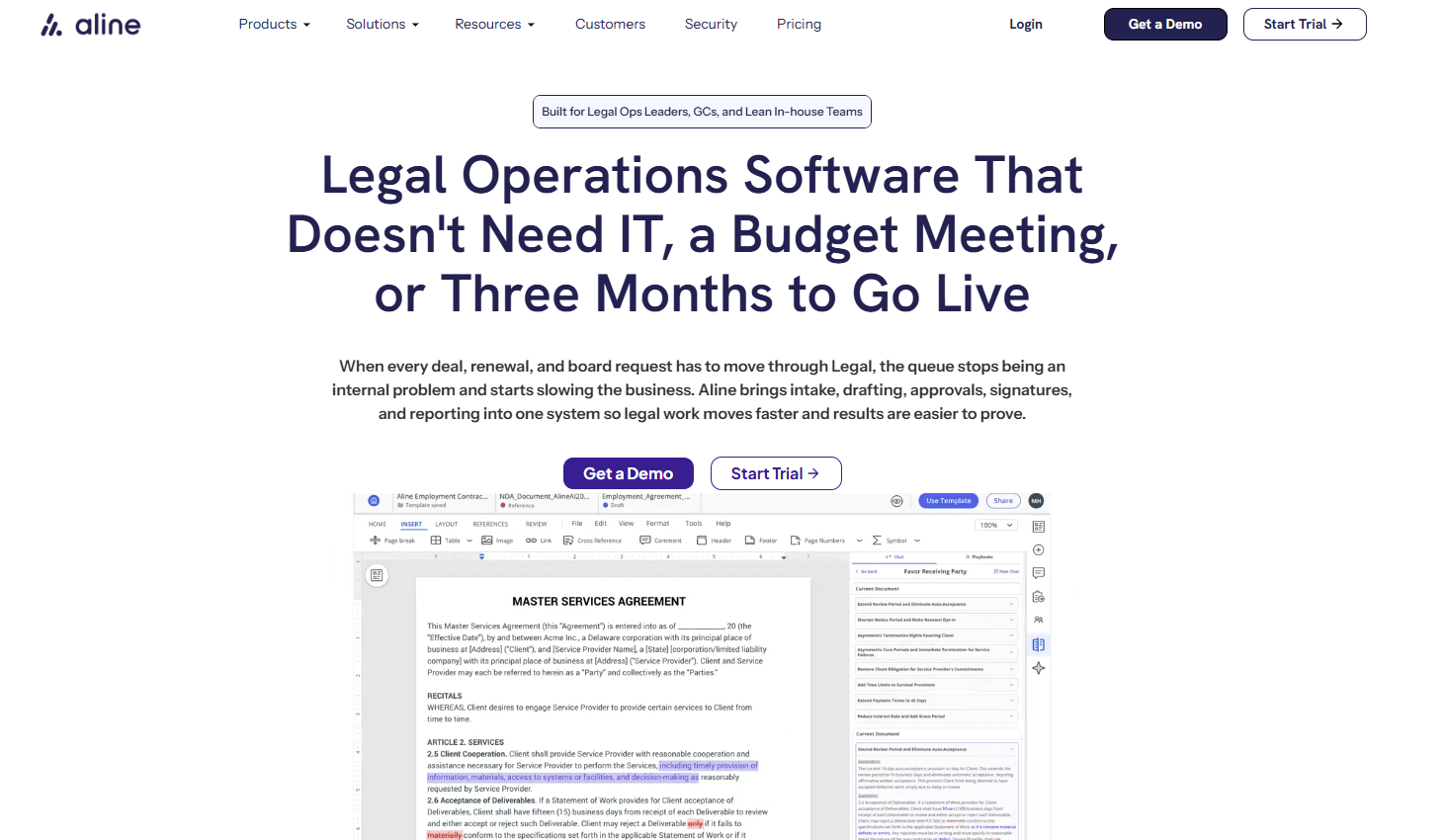
For enterprise teams, Aline delivers meaningful value by focusing on the contract work that often creates legal ops bottlenecks.
Teams can automate the path from request to signature, use AI to redline and apply playbooks, collaborate in real time, and turn signed terms into searchable data for reporting.
Aline also supports secure access, shared-drive sync, CRM integrations, and AlineSign for built-in e-signatures.
Book a demo or start your free trial of Aline.
Onit is ELM software for legal departments that want to manage legal processes in a highly configurable system.
It covers areas such as matter management, e-billing, vendor management, contracts, workflows, and reporting, so it's a broad option for enterprise legal operations.
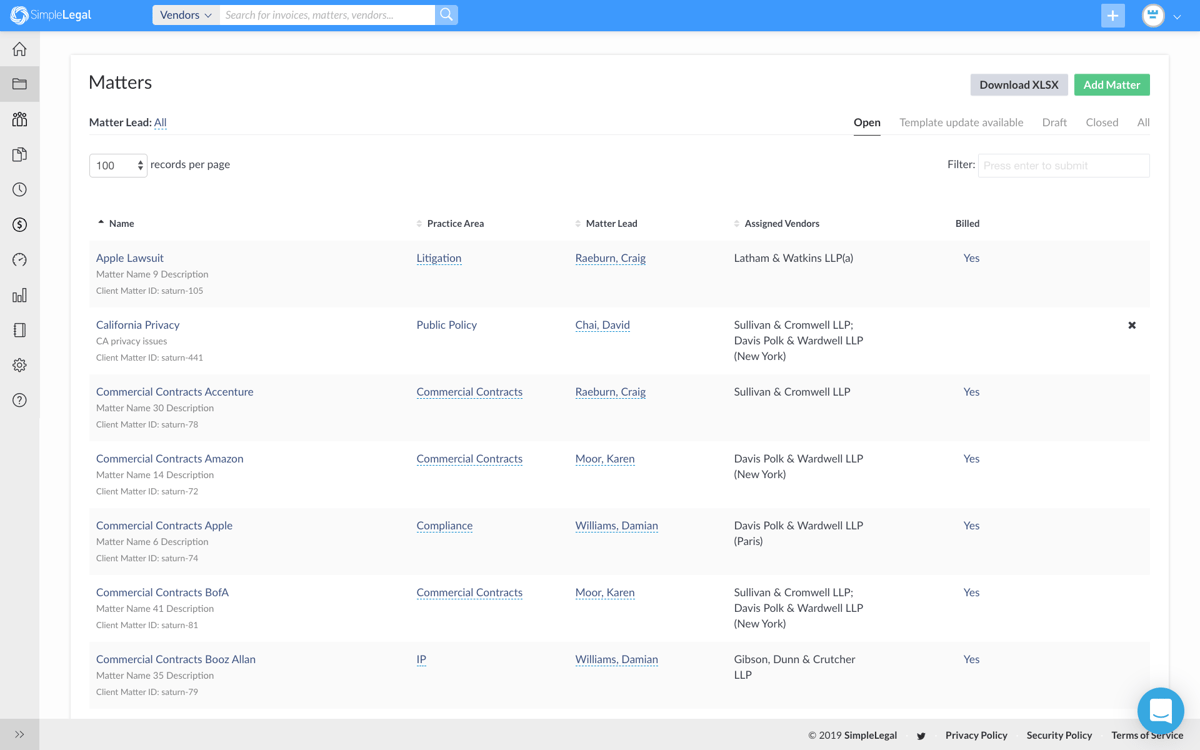
Organizations with complex legal workflows can use Onit to reduce administrative work through automation, connected data, and AI-supported review.
Its Unity platform brings matter, vendor, and financial data into one environment, which gives legal teams clearer visibility into work, spend, and outside counsel activity.
Brightflag is an AI-powered ELM platform focused on legal spend, e-billing, matter management, and outside counsel collaboration.
Legal professionals can use it to get a clearer view of legal work and spend, especially when several law firms are supporting different matters at the same time.
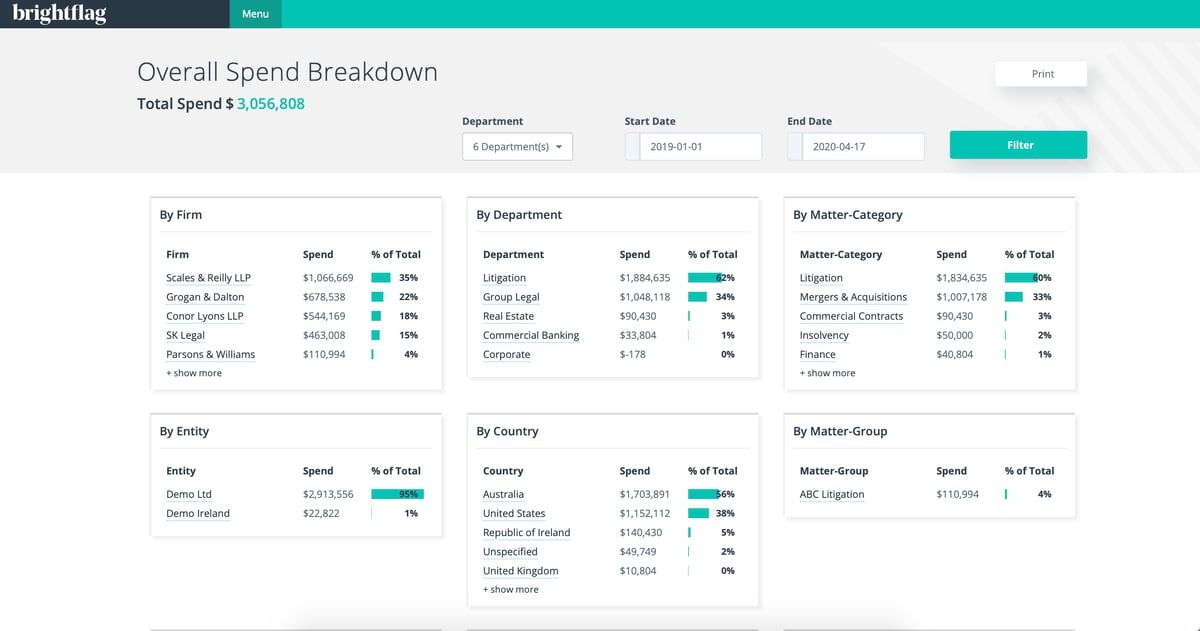
AI invoice review is one of its main strengths. The platform reviews invoice line items, connects spend to matters, and helps teams understand where legal costs are coming from.
Additionally, Brightflag supports budgeting, accruals, vendor management, and spend reporting, so legal and finance teams can work from the same cost picture.
Mitratech TeamConnect is an enterprise legal management platform built for legal departments with complex matter, spend, document, outside counsel, and compliance needs.
Matter details, deadlines, documents, outside counsel activity, and spend data stay easier to track from the same place.
Larger organizations can also use TeamConnect to connect legal work with enterprise systems and established internal processes. With real-time data tied to matters, invoices, vendors, and reports, legal teams get a clearer view of legal service delivery and overall performance.
LawVu is legal ops software built as a connected workspace for in-house legal teams. It brings matters, contracts, legal documents, spend, and reporting into a controlled environment, so the team has a clearer place to manage work that would otherwise depend on manual processes.
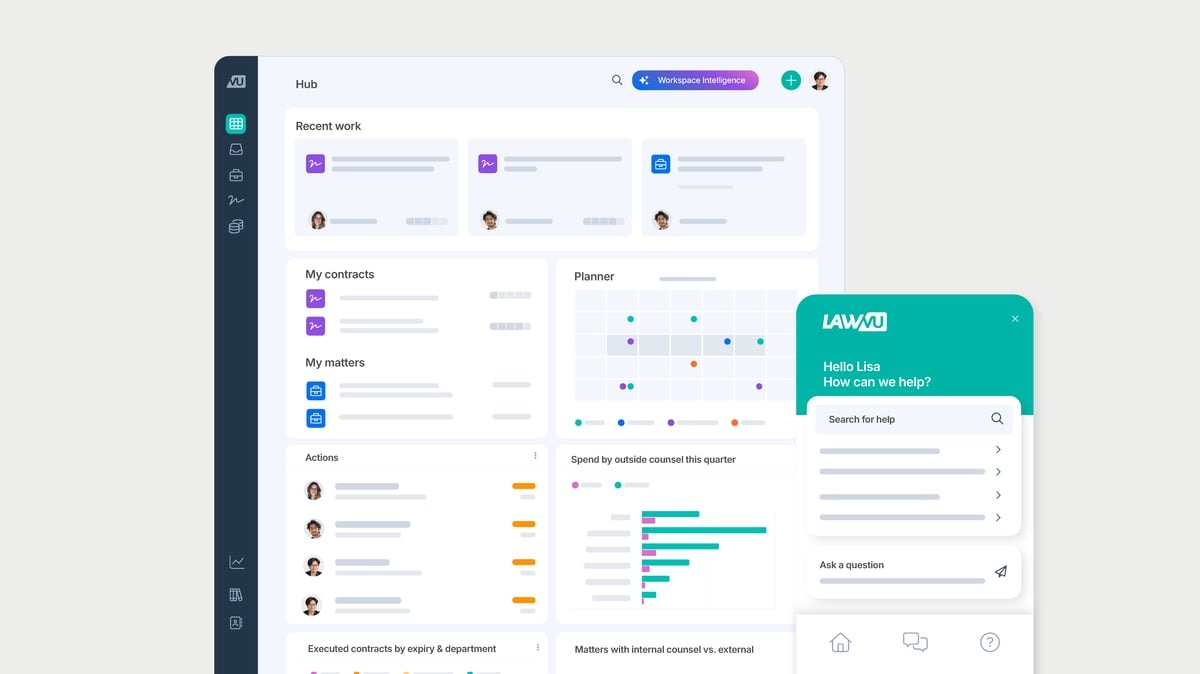
Its strength is the way it connects legal work with day-to-day business requests. Teams can manage intake, track matters, store documents, review contracts, monitor key performance indicators, and support notice management from the same workspace.
Plus, LawVu supports AI and workflow tools, which can help legal teams stay closer to workload, turnaround times, and service delivery trends.
Contract work is one of the easiest places for legal operations to lose time because every delay affects the business directly. A better system should help legal move contracts faster, answer status questions sooner, and turn signed agreements into useful data.

Aline gives contract-heavy legal teams a few useful edges. Teams can get operational in 3 to 4 days, analyze 10,000+ contracts in one run, and pull out details like renewal dates, liability caps, and missing clauses.
On top of that, Aline connects intake, approvals, signing, reporting, shared-drive sync, and CRM updates, so contract data keeps working after signature.
Aline gives legal a cleaner way to move from request to signed agreement while keeping the business better informed along the way.
Enterprise legal operations software helps legal teams manage the business side of legal work. It can support areas like matters, contracts, legal spend, outside counsel, documents, approvals, and reporting, depending on the platform.
It is usually used by in-house legal teams, legal operations leaders, general counsel, finance teams, and other business users who need to request or track legal work. Larger companies often use it to bring more structure to high-volume legal processes.
Legal operations software can turn legal activity into clearer data. Teams can use it to review workload, spend, contract status, matter progress, and similar performance details. Some organizations also connect legal data with business intelligence platforms for deeper reporting.
Teams should look for software that matches their daily legal work. Useful features may include intake, workflow automation, contract management, spend tracking, reporting, secure document storage, and tools that help streamline matter management.