Finance contract management is the practical work of keeping financial agreements organized, current, and usable, from the first draft through the life of the deal.
It’s how teams keep a clear handle on payment terms, renewal windows, notice requirements, and other contractual obligations that affect real money and real decisions.
A solid approach also creates consistency. The latest version is easy to find, changes are documented, and key terms can be confirmed quickly without second-guessing which file is right.
That matters when the same vendor relationship spans multiple agreements, when contracts renew year after year, or when someone new steps into a role and needs to understand what the business is committed to.
In this guide, you’ll see what makes finance contract management unique, the common contract types finance teams deal with, and the tools and best practices that help keep agreements organized and easier to manage.
In finance, contracts sit behind nearly every transaction. Loan agreements, vendor contracts, and investment deals all rely on clearly written financial contracts that define payment terms, responsibilities, and risk.
Because of this, the contract management process often sits close to financial operations and compliance work.
At the same time, finance contracts tend to carry a higher level of financial exposure. Many agreements control how funds move between parties, how revenue is recognized, or how liability is shared.
As a result, even a small wording change in a clause can affect reporting, payments, or contractual obligations.
Several factors make finance contract management more demanding:
Finance teams deal with a wide variety of agreements, each serving a different purpose. Despite these differences, most financial contracts want to clearly define the financial obligations and responsibilities of the parties involved.
Because many of these agreements involve large sums of money or strict regulatory requirements, careful contract management helps maintain transparency and protect financial health.
Here are some common types of contracts used in finance:
Many finance teams rely on CLM software to manage financial agreements and track contractual obligations more clearly. Here are some platforms often used for that purpose:
Aline is an AI-powered contract management software platform designed to help teams manage financial contracts from drafting and negotiation to signing and reporting.
Finance teams often deal with high-value contracts that contain payment terms, renewal schedules, and other contractual obligations that require close attention.
So, when those agreements are scattered all over, managing contracts becomes harder, and manual processes start to slow things down.
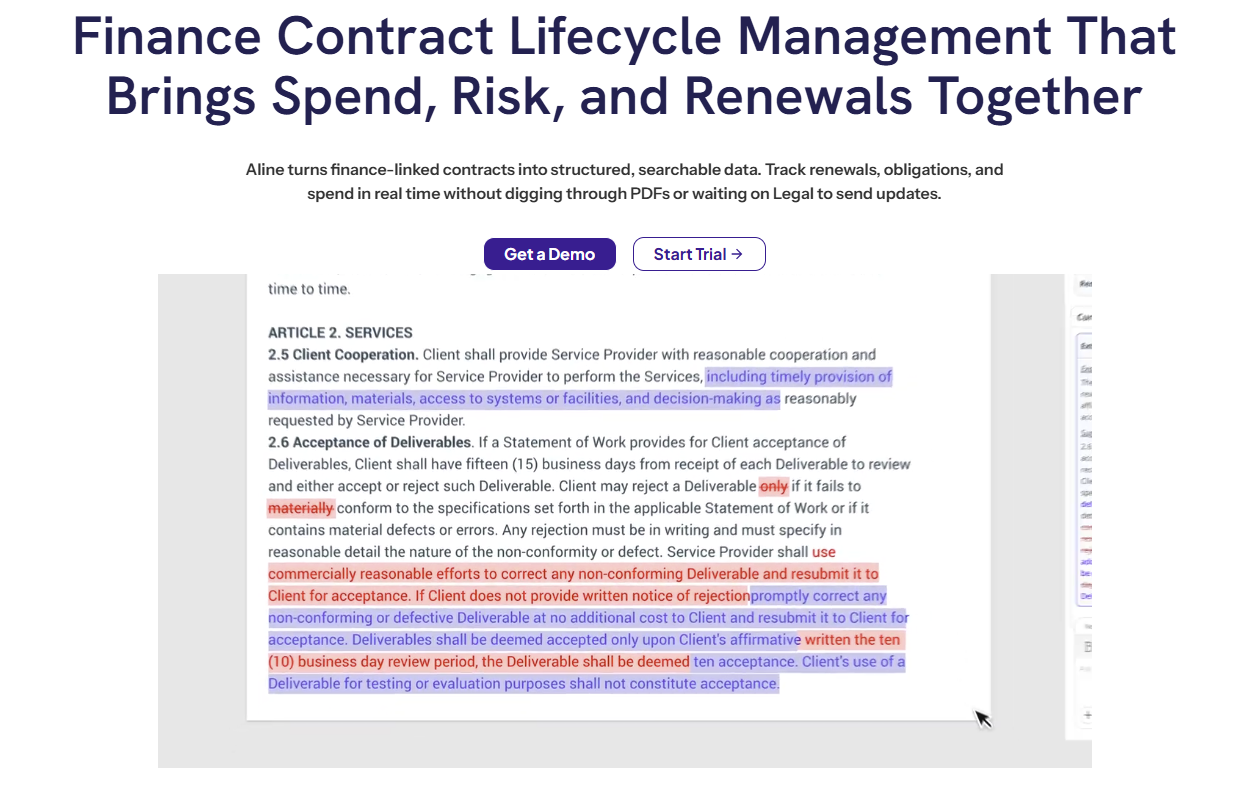
Aline brings those contracts into one platform so the entire contract lifecycle stays connected. Legal teams and finance teams can review agreements, track key terms, and monitor financial obligations without sorting through scattered files.
The platform also uses AI to analyze contracts, extract important data, and surface clauses tied to payments, liability, and renewals. The visibility Aline provides helps teams keep financial agreements organized while reducing the chance of legal disputes or missed obligations.
For organizations focused on effective finance contract management, Aline provides a structured way to manage contracts while giving finance and legal teams clearer insight into the agreements they oversee.
DocuSign CLM is a contract management solution that helps teams manage the full contract lifecycle, starting with contract creation and continuing through approvals, signatures, and post-signature tracking.
Many organizations already use DocuSign for electronic signatures, so adding CLM extends that familiar environment into a more complete system for managing contracts.
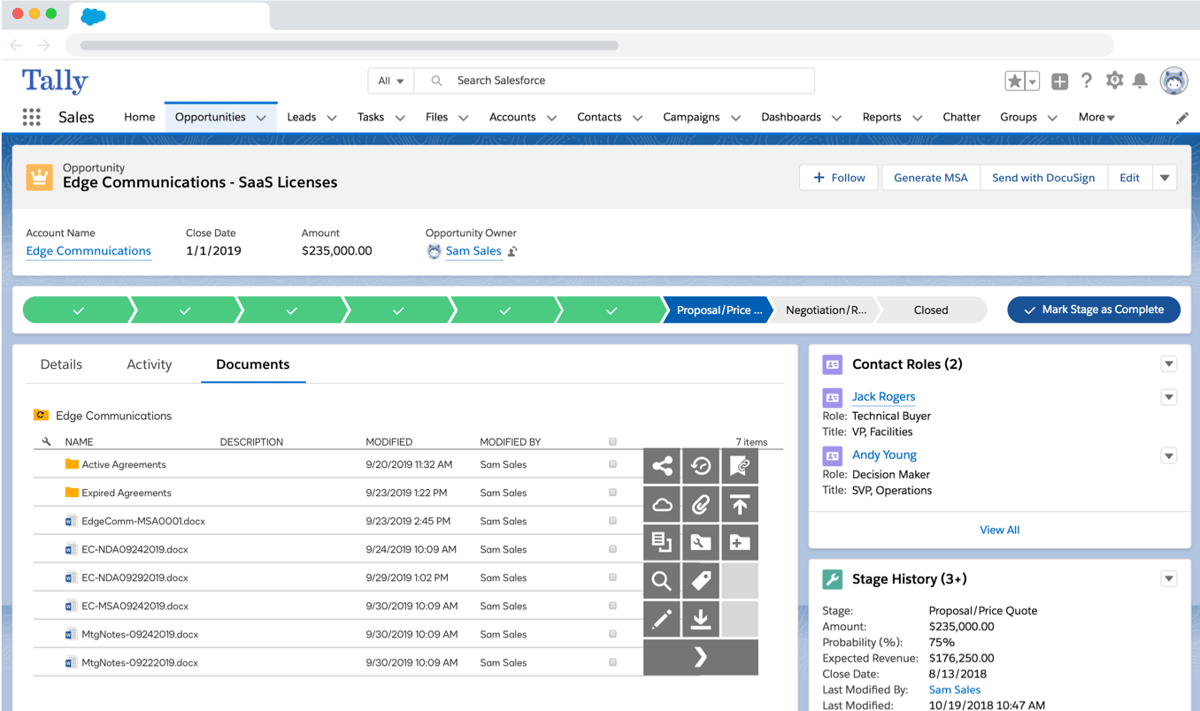
The platform allows multiple departments to work on agreements in the same workspace. Legal teams can review contract language, finance teams can check financial terms, and procurement or operations teams can confirm business details before anything moves forward.
Plus, DocuSign CLM includes tools designed to support legal compliance and internal governance. Contract approval workflows, permission settings, and detailed audit trails make it easier to document how agreements move through review and signing.
These records can help teams meet compliance requirements and maintain clear documentation of contract activity.
Many teams also rely on the platform to track obligations tied to active agreements. Renewal dates, financial commitments, and performance terms remain visible after a contract is signed, which helps keep contract management organized over time.
Ironclad is a contract management platform designed to help teams handle contract authoring, negotiation, approvals, and ongoing contract tracking in one system.
Many legal teams use it to keep the contract process organized while working with finance, procurement, and other departments involved in managing agreements.

The platform focuses heavily on collaboration and structure. Teams can create contracts using guided templates, track edits through version control, and move agreements through structured approval workflows.
This helps maintain consistency in contract language while making it easier to meet legal requirements during the review process.
Ironclad also helps teams monitor agreements after they are signed. Important contract terms, renewal dates, and obligations stay visible, which supports renewal management and ongoing contract compliance.
Instead of searching through folders or email threads, teams can access agreements and related data from a centralized system.
And because multiple departments often review contracts before they are finalized, the platform also keeps communication and document updates in one place. That can help teams save time while maintaining clearer visibility into agreements throughout the contract lifecycle.
Juro is a cloud-based contract management platform that allows teams to create, negotiate, approve, and manage contracts in one collaborative workspace.
The system focuses on keeping the contract process connected so legal, finance, and operations teams can work on the same agreement without passing documents back and forth.
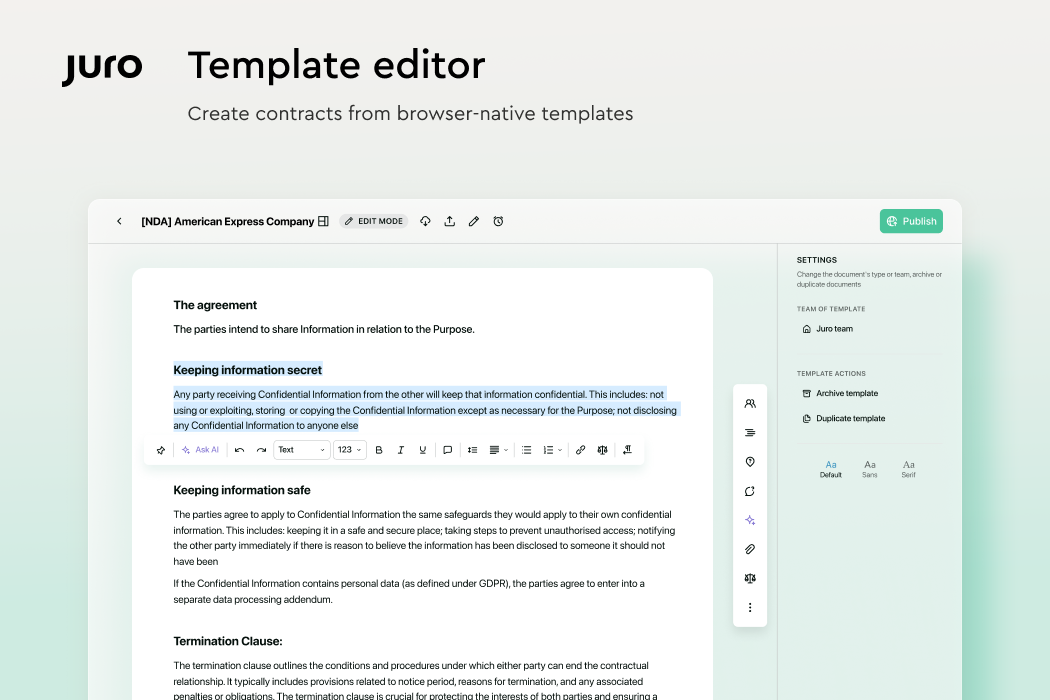
One of the main strengths of Juro is its browser-based contract authoring environment. Contracts are created and edited directly inside the platform, which helps teams maintain clearer visibility into edits and discussions.
Template libraries also help speed up drafting by storing approved language and specific clauses that teams frequently use.
Since contracts live inside the system rather than static documents, teams can monitor updates, approvals, and responsibilities more easily.
Authorized personnel can review agreements, approve changes, and move contracts forward without switching tools. That capability can help support operational efficiency, especially for teams that manage a steady flow of agreements.
Over time, the platform also builds a searchable contract record to make it easier to locate terms, clauses, and obligations tied to active agreements.
Conga is a contract lifecycle management platform used to create, approve, and manage agreements from the first draft through contract execution and renewal tracking.
The platform connects contract drafting, approvals, and storage so teams can keep agreements organized throughout the contract lifecycle.
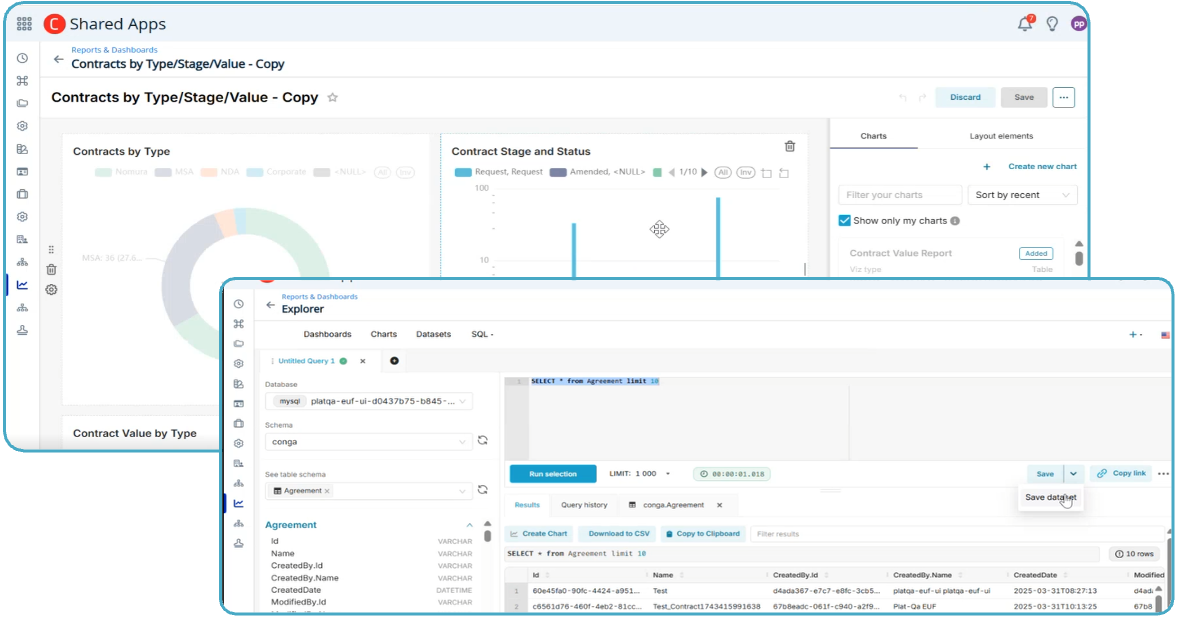
Many teams use Conga to generate new contracts using standardized templates, which helps maintain consistency across agreements. Once a contract is drafted, it can move through review and approval workflows before reaching the contract execution stage.
Those steps stay connected in one system, and it becomes easier to see how agreements progress and who is responsible for the next step.
Conga also supports contract monitoring after signature. Renewal dates, payment terms, and other obligations remain visible inside the system, which helps teams keep the contract renewal process on track and avoid missed deadlines.
As time goes on, the platform builds a centralized record of agreements that can be accessed whenever contract details need review.
Secure storage also plays a major role. Contracts and related data remain stored in one location, which makes it easier to locate agreements and confirm contract terms when questions arise.
The tools mentioned earlier highlight many capabilities modern financial contract management software offers. Still, some features tend to matter most when finance teams manage agreements tied to payments, obligations, and long-term commitments.
Some of the most useful capabilities include:
A few good habits can make managing financial contracts much easier. Here are some practices that help keep agreements organized and obligations clear.
Financial contracts often end up spread across email threads, shared drives, and individual folders. That fragmentation makes it harder to locate agreements or confirm the terms tied to them. And as the number of contracts grows, simple questions start taking longer to answer.
Research shows how common this issue has become. One industry report found that 71% of companies cannot locate at least 10% of their contracts. Missing agreements create real financial risk, including penalties, missed renewals, and overlooked commitments.
Keeping contracts in one system makes ongoing monitoring far easier. Teams can review agreements, track obligations, and confirm key details without searching through scattered documents.
Many financial contracts repeat the same core sections. Things like payment terms, liability limits, confidentiality clauses, and notice periods tend to appear in agreement after agreement.
Needless to say, writing those provisions from scratch each time creates unnecessary variation and increases the chance of errors.
Standardized templates solve that problem. Teams can start from an approved language that already reflects internal policies and legal requirements. As a result, contracts move through drafting and review faster while maintaining financial accuracy.
Consider a lending agreement as an example. If interest calculation language or repayment terms differ from one contract to the next without a clear reason, confusion can follow.
On the flip side, using standardized clauses helps keep those financial terms consistent while supporting compliance with internal rules and regulatory expectations.
Financial contracts often include payment schedules, milestone payments, revenue-sharing terms, or other obligations that influence financial performance. If those terms aren’t tracked carefully, small details can easily be missed.
Clear visibility into these commitments helps teams understand how agreements affect financial outcomes and operational planning.
Regularly reviewing contract obligations also makes it easier to confirm that both parties follow the agreed terms. Payment deadlines, reporting duties, and service commitments all become easier to monitor when the information sits in a structured system.
Some details worth tracking include:
Once a financial contract is signed, the timeline attached to it still needs attention. Renewal windows, notice periods, and reporting deadlines all sit inside the agreement, and those key dates shape what happens next.
Keeping those timelines visible makes everyday contract oversight much easier. It also supports contract compliance tracking, since many financial agreements require reporting or updates tied to specific deadlines.
When key dates stay on your radar, it becomes much easier to review contracts at the right moment and keep obligations under control.
Clear documentation gives teams a reliable record of how a contract moved through drafting, review, approval, and signing.
Audit trails capture edits, approvals, and signatures so the full history of an agreement stays visible. With that record in place, it becomes easier to understand how decisions were made and which version of a contract was ultimately approved.
This level of transparency also supports stronger risk management. A detailed activity log allows teams to review agreements carefully and identify potential risks tied to certain clauses or approvals.
At the same time, organized records help confirm that contracts follow internal policies and regulatory standards, which supports compliance during internal reviews or external audits.
At some point, most teams realize that contract work becomes much easier once everything lives in one place.
Financial contract management platforms help keep agreements organized, support compliance management, and mitigate risks tied to obligations, deadlines, and reporting requirements. Having quick access to contract data also makes reviews and updates far less time-consuming.

Aline was built with that goal in mind. The platform brings drafting, negotiation, approvals, signing, and reporting into a single system, so you can manage contracts in one place.
AI helps analyze agreements, surface important clauses, and pull key details from contracts, which makes large contract portfolios easier to review.
For teams working with financial agreements every day, those capabilities translate into real key benefits: clearer oversight, smoother workflows, and better control over contract activity.
Start your free Aline trial today!
Finance contract management refers to the process of creating, reviewing, approving, and monitoring financial agreements throughout their lifecycle. It includes activities such as drafting terms, managing the approval process, tracking obligations, and reviewing agreements over time. The goal is to keep contracts organized while supporting performance monitoring and reducing potential risks tied to financial commitments.
Financial contracts often contain payment terms, reporting obligations, and renewal timelines that influence business operations. Organized contract oversight helps teams stay aligned with relevant laws, maintain accurate records, and identify cost savings tied to contract terms or pricing structures.
Many teams struggle with scattered documents, inconsistent contract language, and limited visibility into obligations or deadlines. Contracts can also contain complex legal jargon, which makes reviews slower and increases the chance of misunderstandings between departments.
Contract management software helps organize agreements in one system so teams can track obligations, manage approvals, and review contract data more easily. Many platforms also include automation and reporting tools that help teams monitor contracts while confirming that agreements ensure compliance with internal policies and external regulations.