Ironclad is a very familiar name in contract management, but that doesn’t mean it’s the right fit for everyone.
Some businesses appreciate its automation and AI-powered workflows, while others find it expensive, complex, or too feature-heavy for their evolving needs.
If you’re looking for a contract management solution that’s more intuitive, budget-friendly, or better suited to your workflow, there are plenty of options to consider.
In this comparison guide, we look at Ironclad alternatives that focus on practical contract management, shorter setup times, and tools that support real workflows.
Ironclad is a contract management platform that helps businesses create, negotiate, sign, and track contracts efficiently.
It’s popular with legal teams and companies that manage a large number of agreements because it simplifies every stage of the contracting process and keeps operations running smoothly.
For organizations dealing with high contract volume, manual reviews and email-based approvals can become time-consuming very quickly. This is where Ironclad tends to stand out.

The platform includes legal contract automation, AI-powered insights, and integrations that connect with other tools businesses already use.
These advanced features are designed to reduce back-and-forth during reviews, surface important details earlier in the process, and help teams stay aligned as contracts move forward.
Each business manages contracts differently, and some may need a more adaptable or cost-effective solution.
Here are a few reasons you might be exploring alternatives:
If these challenges sound familiar, exploring other platforms could help you find a better match, one that keeps contract workflows efficient without unnecessary complexity or cost.
If you're not sure which Ironclad alternative you should try, we've rounded up some of the best competitors to point you in the right direction. These handpicked tools offer similar features while catering to different business needs.
Here’s a closer look at each one:
Aline is an AI-powered contract lifecycle management (CLM) platform designed for businesses, particularly startups and B2B companies, looking to automate and streamline legal contract processes.
The platform's main goal is to help legal, sales, and finance teams draft, negotiate, analyze, and sign contracts 5 to 10X faster using sophisticated AI.
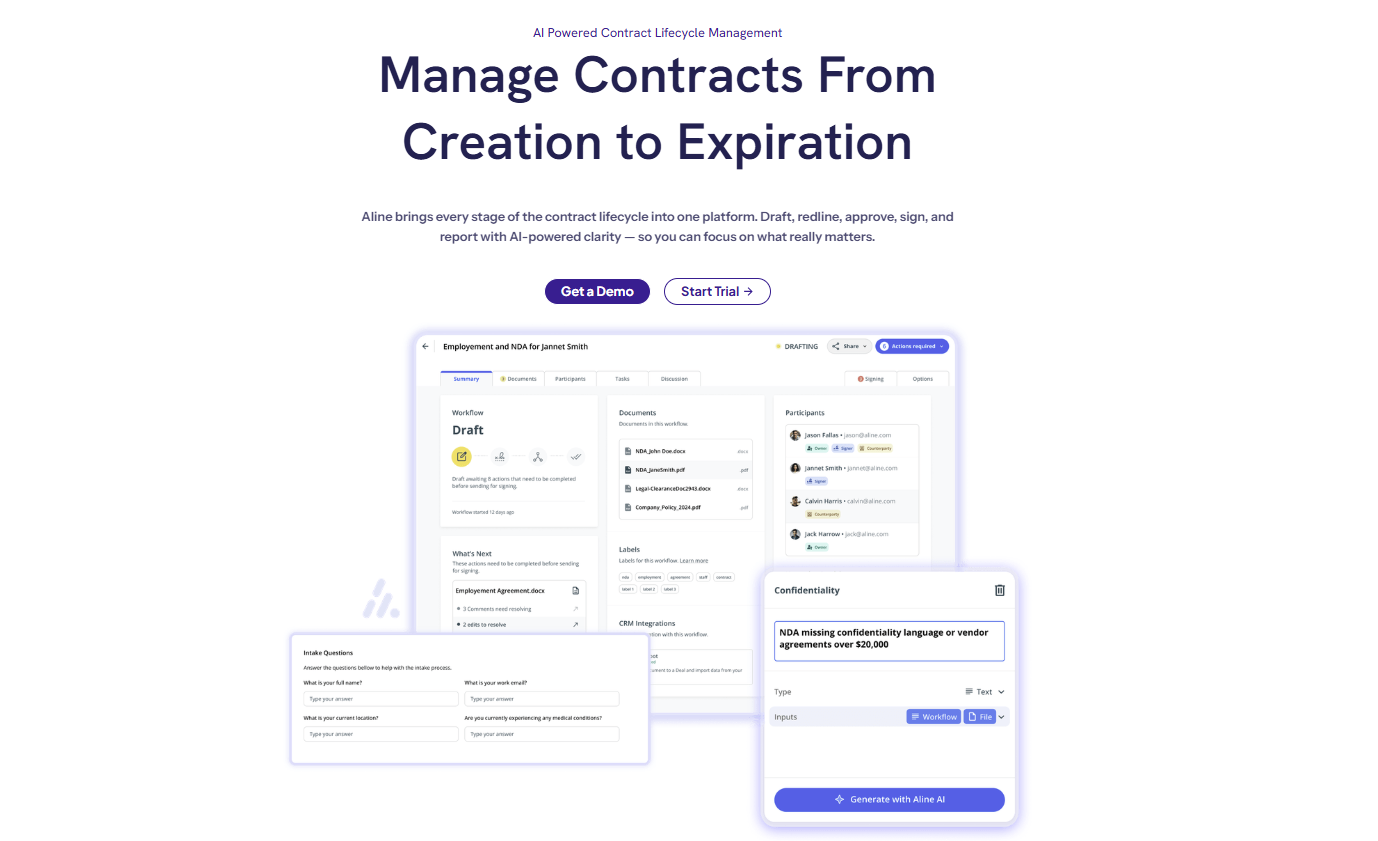
Aline replaces siloed tools like Word and DocuSign by offering an all-in-one solution with automated contract generation, AI-assisted redlining, built-in e-signatures, and compliance workflows.
Better yet, its intuitive no-code template builder, real-time insights, and detailed reporting tools help businesses close deals faster, onboard employees efficiently, and scale their legal operations seamlessly.
Aline offers many of the same automation features as Ironclad, but it's built with better speed and ease of use in mind.
While Ironclad caters to large enterprises, Aline is a better fit for fast-growing businesses that need AI-powered contract management without a steep learning curve.
Aline eliminates the need for multiple tools by integrating contract creation, negotiation, signing, obligation tracking, and other essential contract tools in one platform.
See how Aline can optimize your entire contract management process.
Juro is a contract management platform suitable for businesses that want a fast, collaborative, and straightforward way to handle contracts.
It replaces traditional workflows with a modern system that combines drafting, negotiation, approval, and e-signing in one seamless experience.
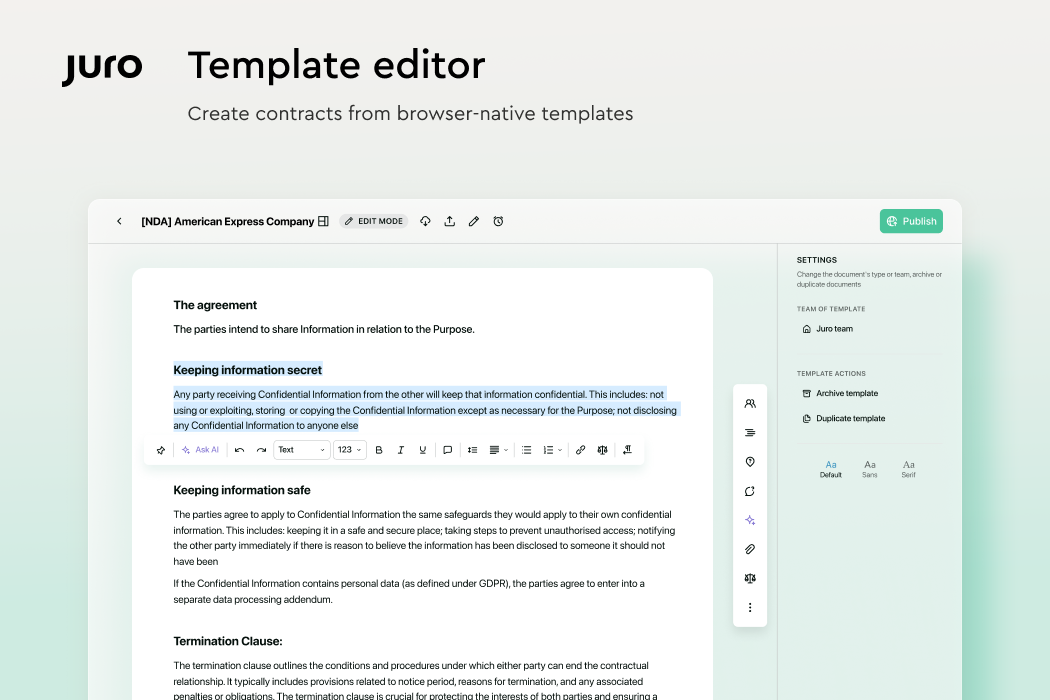
With a user-friendly interface and strong automation capabilities, Juro can be a good fit for legal, sales, and HR teams that need to move quickly without relying on multiple tools.
Juro takes a more flexible and user-friendly approach compared to Ironclad, which makes it suitable for teams that need a more intuitive contract management solution.
While Ironclad focuses on deep AI analytics and enterprise-level automation, Juro is meant for speed and simplicity.
Its real-time contract collaboration tools and no-code workflows make it a strong choice for companies that want to streamline contract processes but don't want complex configurations.
DocuSign CLM expands on the well-known e-signature platform to deliver a complete contract lifecycle management system.
The platform helps legal and business teams create, negotiate, approve, and store contracts efficiently. As a whole, its features can help improve organization and visibility across high contract volumes.
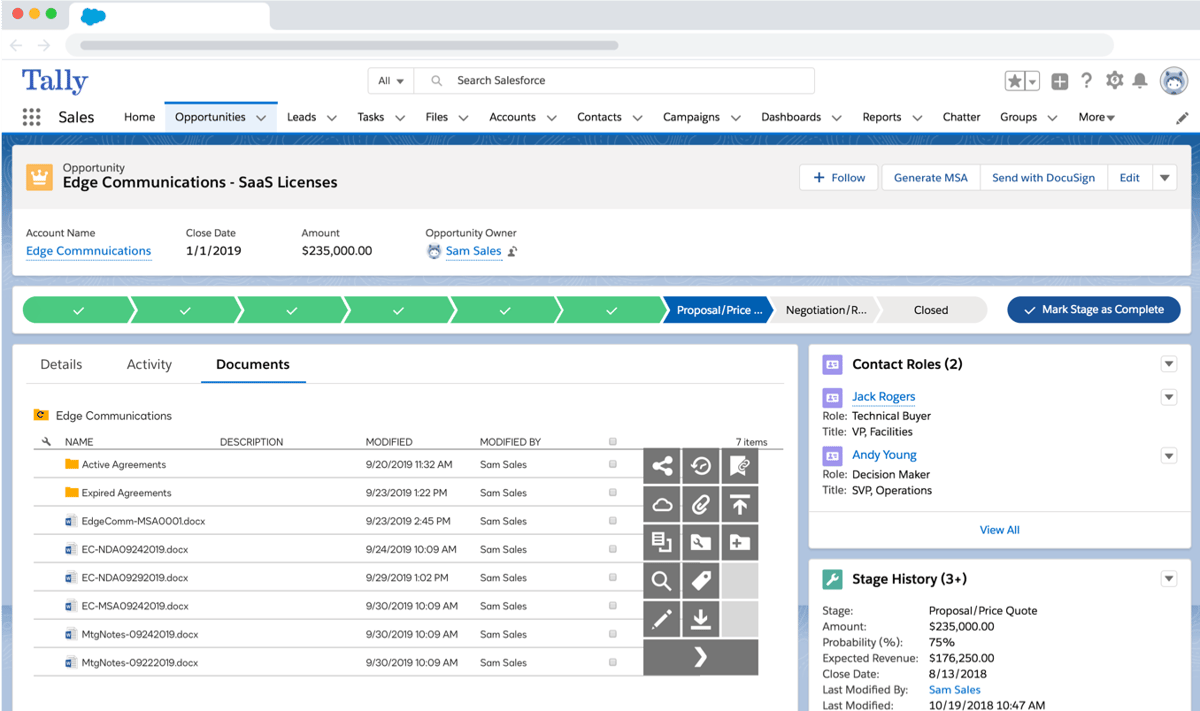
Built on DocuSign’s trusted signing technology, it offers a smooth e-signing process paired with automated workflows and contract insights that help reduce contract turnaround times and keep agreements moving forward.
DocuSign CLM is a solid alternative to Ironclad, especially for businesses that already rely on DocuSign’s e-signature software. Its strength lies in seamlessly integrating contract management with a trusted signing solution.
Ironclad focuses more on AI-driven automation and deep contract analytics, whereas DocuSign CLM prioritizes workflow efficiency and compliance tracking.
With all that in mind, companies looking for a secure and well-integrated contract management system with built-in e-signatures may find DocuSign CLM a better option.
ContractWorks is a contract management solution made for businesses that want a simple, secure, and cost-effective way to manage agreements. Its focus is on usability and offering quick setup, built-in e-signatures, and strong data protection.
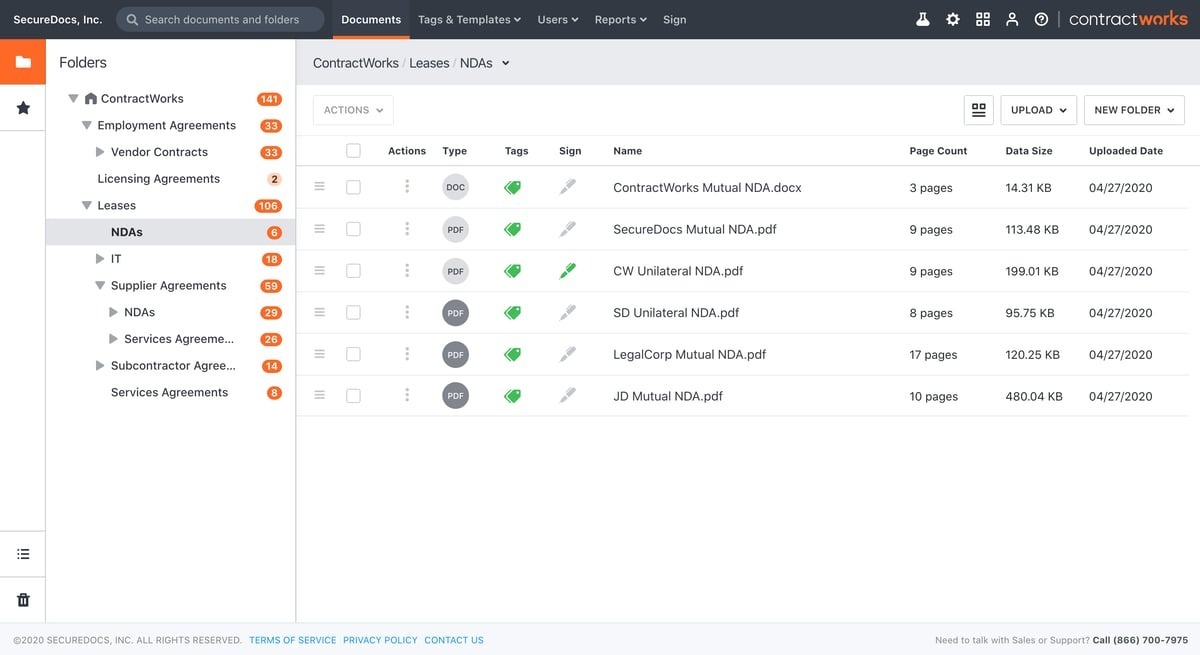
Unlike platforms centered on advanced workflow automation or large-scale customization, ContractWorks appeals to teams that need to store and sign contracts efficiently.
Moreover, its features help companies gain visibility into key obligations, organize related documents, and connect seamlessly with existing business applications without the complexity of a full clause library or enterprise-level setup.
ContractWorks stands out as a simpler and more affordable Ironclad competitor. It's a practical choice for teams that don’t require complex AI-driven features found in enterprise contract management software.
Ironclad caters to large organizations managing high-volume workflows. Meanwhile, ContractWorks focuses on accessibility for non-technical users who need a secure and straightforward way to handle contracts.
Plus, its clean interface, easy tracking, and emphasis on security make it suitable for legal and sales teams that value usability and cost efficiency over advanced automation.
Contractbook takes a digital-first approach to contract management to give teams complete visibility across the entire lifecycle of an agreement.
Essentially, this CLM software platform serves organizations in various sectors that need a clear, efficient way to manage complex agreements from drafting to signing.
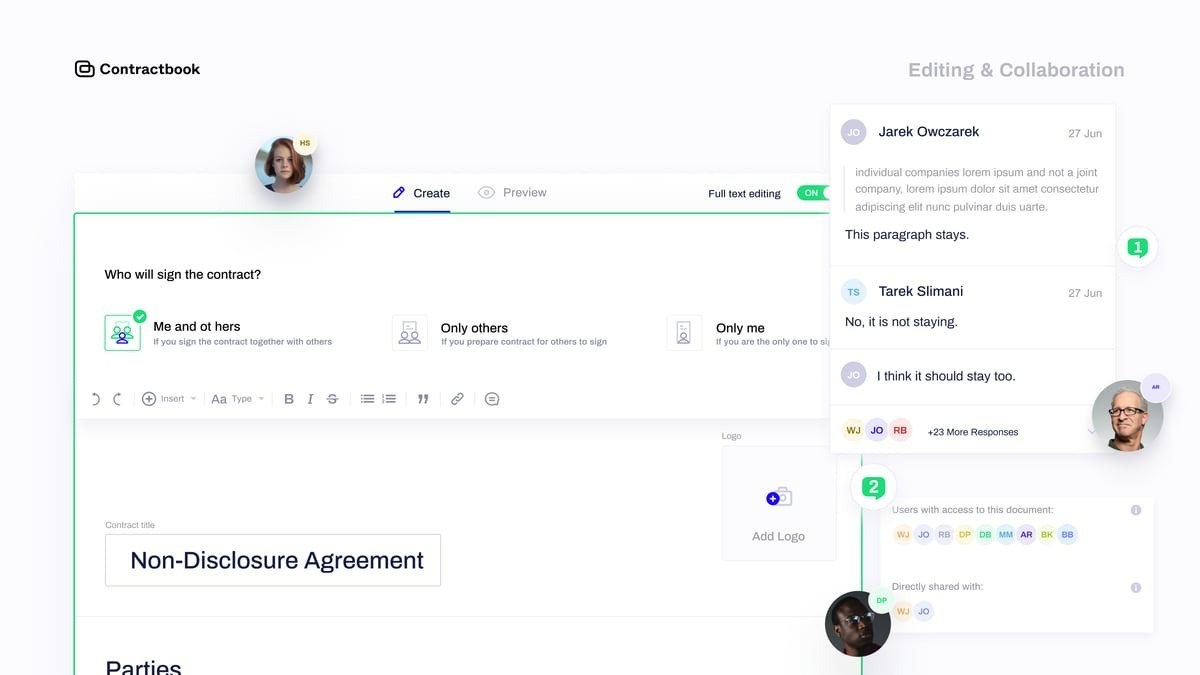
Thanks to pre-approved clauses, automated workflows, and built-in collaboration tools, Contractbook helps teams work faster and make better decisions through actionable insights, all without relying on scattered files or disconnected systems.
Ironclad is designed for enterprises with complex workflows and AI-powered contract analysis. Contractbook is better suited for teams that need a simple, structured process.
For smaller businesses, Ironclad’s advanced features can sometimes fall short of expectations when the goal is speed and ease of use rather than deep configuration.
On the flip side, Contractbook focuses on keeping contracts easy to manage while still connecting with other business systems that teams already rely on.
Choosing the best contract management software comes down to what your team actually needs.
Tools like Ironclad’s AI are great for large enterprise systems, but they can feel heavy for teams that want something more flexible.
On the other hand, Aline keeps things simple but doesn't cut corners.

It brings together AI-assisted drafting, automated approvals, built-in e-signatures, and compliance tracking in one connected platform. That means legal, sales, and finance teams can manage contracts from start to finish with better visibility and clear results.
You can also create custom workflows, route approvals automatically, and track obligations as they happen. Aline allows teams to stay aligned, which can ultimately improve customer success and reduce the time spent chasing contract updates.
If your team wants a smarter way to manage contracts and doesn’t want to deal with heavy enterprise tooling, Aline offers a modern, easy-to-use solution.
Ironclad focuses on workflow automation and ease of use, while Icertis is built for large enterprises with complex regulatory and data needs. Icertis works well for organizations that require heavy customization and strict governance to meet regulatory requirements, while Ironclad tends to appeal to teams that want faster adoption and simpler contract processes.
Intelagree positions itself as an AI native platform with a strong emphasis on analytics and reporting. Its data-first approach allows teams to extract thousands of data points across contracts, which can appeal to organizations focused on insights. Ironclad, on the other hand, emphasizes structured workflows and contract routing over deep analytics.
Ironclad and DocuSign operate in overlapping but different areas. DocuSign is best known for e-signatures and later expanded into CLM, while Ironclad entered the market as a full CLM vendor from the start.
Business users often look at how easily a platform supports new contracts, maintains version control, and connects contract work to sales and legal processes. Ease of implementation, access to a responsive support team, and the ability to adapt workflows over time tend to matter more than feature depth alone.
Yes. Some platforms offer tighter Salesforce integration and allow teams to collaborate in tools like Google Docs while keeping contracts structured and approved. These options appeal to teams that want contracts to stay connected to revenue workflows while still helping ensure compliance.
Ironclad’s pricing structure often reflects its enterprise focus, which can feel limiting for teams that want flexibility. Other platforms take a different approach, offering faster setup, clearer alignment with data needs, and new functionality over time without heavy manual tagging or complex configuration.