Healthcare contracts have quietly become a lot harder to manage. There are more of them, they change more often, and the stakes keep rising.
A recent SNS Insider report notes that the healthcare contract management software market is growing at a 22% annual rate, which says a lot about how teams are responding to that pressure.
Healthcare contract management software has stepped in to meet the needs of organizations across various segments within the industry. At a high level, this type of tech gives teams a clearer way to manage contracts and keep pace as requirements evolve.
And as healthcare continues to rely more on digital systems, contract management is becoming less of an admin task and more of a foundation for how organizations operate and grow.
If you’re evaluating healthcare contract management software or trying to figure out which tools actually fit your needs, this guide breaks it down. We’ll look at what healthcare contract management software is, why it matters, and which platforms are worth considering.
Healthcare contracts are the agreements that keep relationships in the healthcare industry running smoothly. They spell out concerns like responsibilities, payment terms, data use, and long-term commitments between healthcare organizations and their partners.
Some of the most common healthcare contracts include:
Healthcare contract management software helps manage these agreements through their full lifecycle. It supports everyday healthcare contract management processes like drafting, reviews, approvals, signatures, storage, and renewals.
There are two main types of tools teams look at. General contract platforms can handle most contract types, including healthcare agreements, with the right setup. Then there are tools built specifically with healthcare workflows in mind.
What many teams don’t expect is how limited the healthcare-only options really are. Most healthcare organizations choose flexible CLM tools that can adapt to healthcare rules and compliance needs, rather than tools designed only for hospitals.
Healthcare contracts involve many moving parts, and manual processes make those steps harder to manage at scale.
That is why the core goal of a healthcare contract management system is to give healthcare leaders a clearer, more reliable way to handle agreements while supporting effective contract management and ensuring regulatory compliance.
Here are the key benefits you can expect from these tools:
If you’re looking for the right healthcare contract management software, most of the best options are flexible platforms built to handle many contract types, including healthcare agreements. The tools below support healthcare needs without limiting you to healthcare-only workflows:
Aline is an AI-powered contract lifecycle management platform built to help healthcare organizations streamline healthcare contract management from start to finish.
It brings drafting, review, approvals, signing, and reporting into one system that supports the pace and complexity of modern healthcare operations.
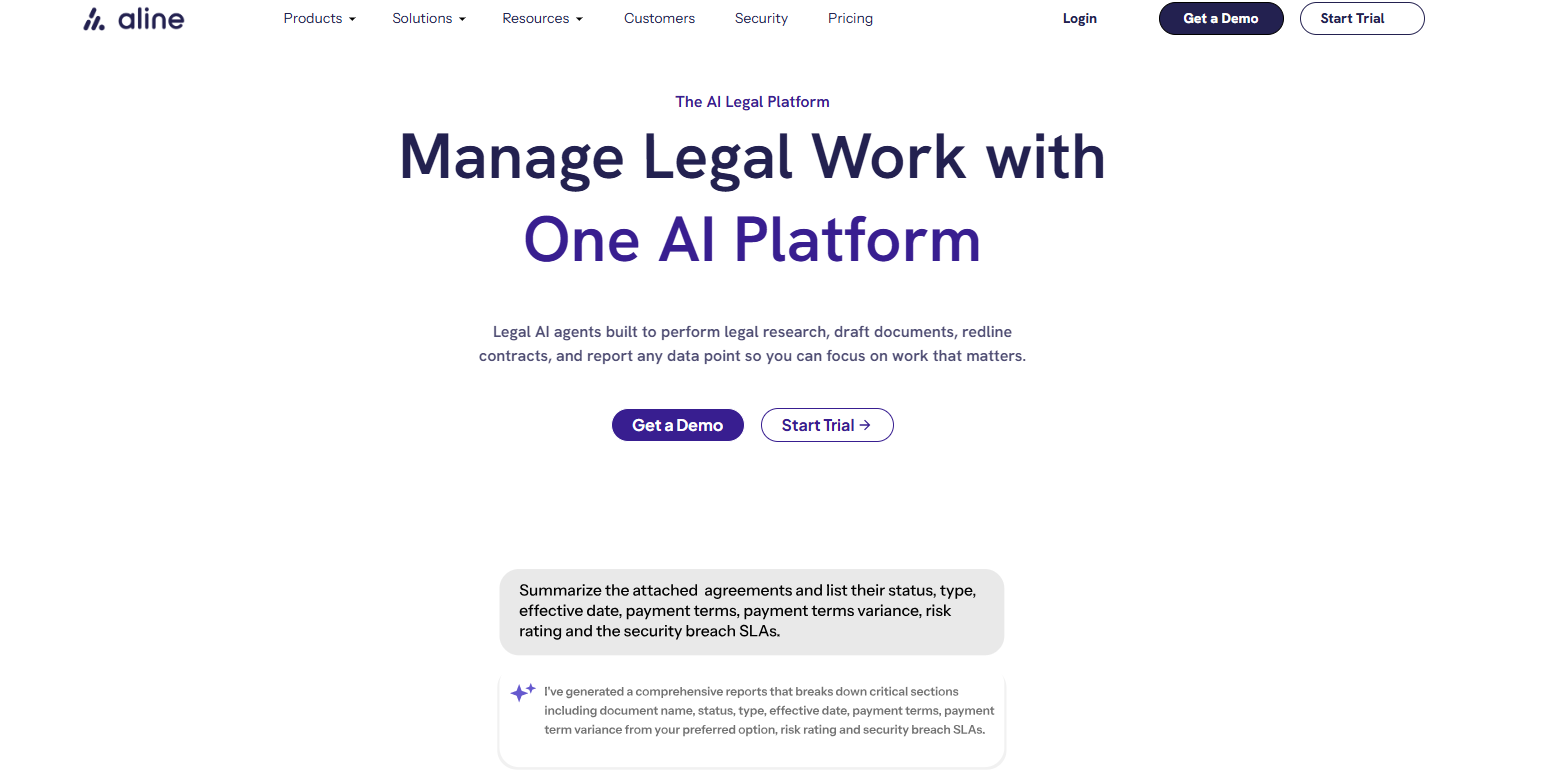
Healthcare teams often manage many agreement types at the same time, from BAAs and vendor contracts to employment and technology agreements.
Aline supports that variety while working smoothly with existing systems, which gives legal, finance, procurement, and operations teams a shared view of every contract and its status.
AI sits at the center of the platform. Teams use it to draft and redline faster, surface key terms, and generate reports within seconds. That makes it easier to manage contracts efficiently while keeping risk and compliance visible.
Aline has already shown results in the healthcare industry. At Xevant, a healthcare analytics company, the legal team cut redlining time from 45 minutes to under two minutes and saved roughly 15 hours per week.
Icertis is often used by large healthcare organizations that manage high contract volumes and complex contractual agreements.
It’s built to give healthcare contract managers visibility into contractual obligations while supporting detailed compliance monitoring across long contract lifecycles.
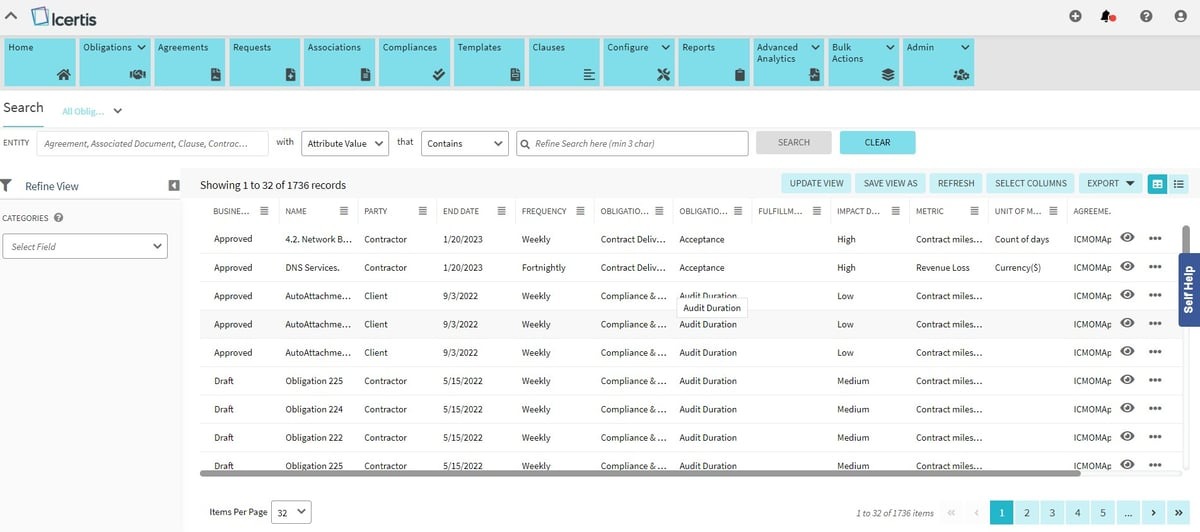
The platform places a strong focus on regulatory compliance, which appeals to healthcare teams dealing with layered approval structures, policy requirements, and ongoing oversight.
Contracts can be tracked well beyond signature, making it easier to monitor obligations, renewals, and compliance-related milestones over time.
Icertis tends to work best for enterprise environments with dedicated legal or contract management teams. Implementation and configuration can take time, but for organizations with strict governance needs, the depth of control can be worth the investment.
DocuSign CLM is a contract lifecycle management platform that extends DocuSign’s e-signature capabilities into drafting, approvals, and ongoing contract tracking.
For health systems that already rely on DocuSign's e-signature software, it often feels like a natural next step when contract needs grow beyond signatures.
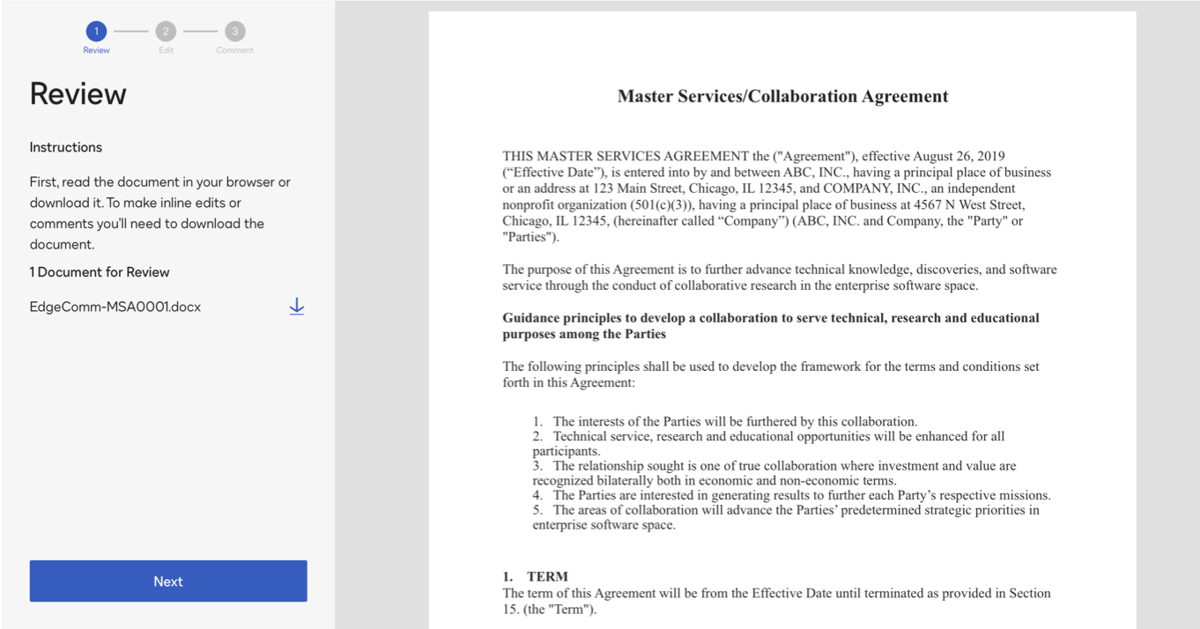
Healthcare teams use DocuSign CLM to support contract workflows tied to provider onboarding, vendor agreements, and contracts involving multiple parties involved in care delivery.
The platform helps keep key stakeholders aligned during reviews and approvals, which matters when contracts touch clinical, operational, and legal teams.
DocuSign CLM can support regulatory requirements common in healthcare, though much of that depends on how templates and workflows are configured. It works well for organizations that value familiarity and want contract processes to connect smoothly with existing DocuSign usage.
Ironclad is a contract lifecycle management platform designed to keep contract workflows moving while maintaining structure and control.
Healthcare providers often look to Ironclad when contract reviews and approval workflows start slowing teams down, and manual coordination becomes hard to manage.

The platform focuses on efficient approvals through automated workflows that route contracts to the right reviewers at the right time. That helps teams stay on top of contract terms while supporting compliance oversight tied to ever-evolving regulations in healthcare.
Plus, legal and operational teams can collaborate during reviews without losing visibility into changes or ownership.
Ironclad works best for organizations that value flexibility in contract workflows and want integration capabilities with tools already in use. While not built solely for healthcare, it can support healthcare-specific templates, structured reviews, and strong data security when configured carefully.
Conga is a contract lifecycle management platform often used by organizations that want tighter connections between contracts and business systems.
In healthcare environments, it supports teams focused on compliant contracts, operational efficiency, and visibility into how agreements affect day-to-day operations.
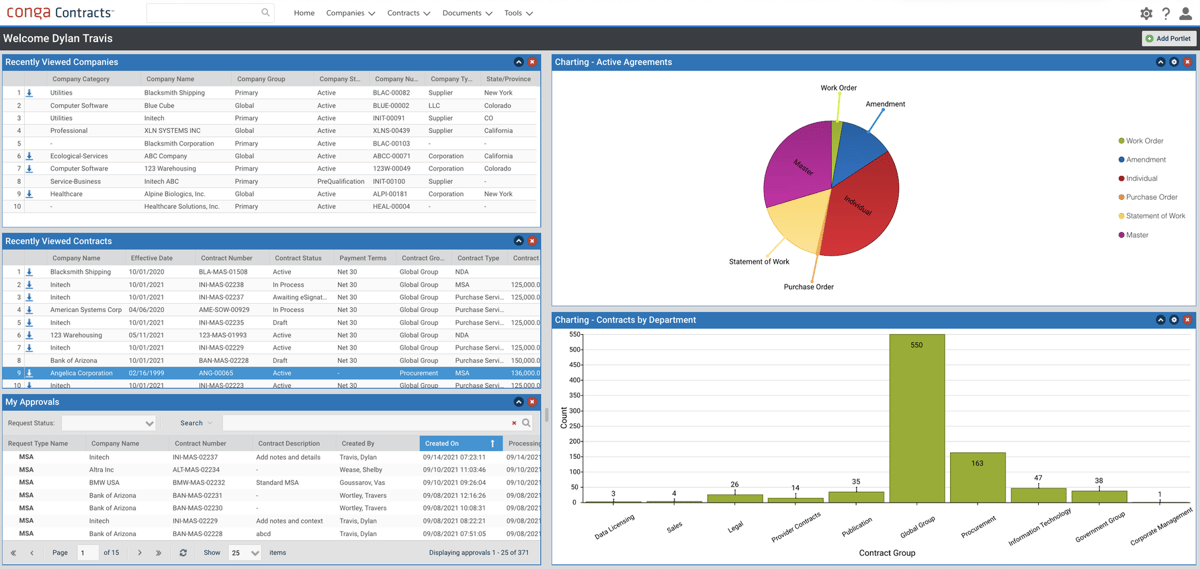
The platform helps healthcare teams track contract performance over time, which matters when agreements tie directly to revenue, vendor relationships, or service delivery.
With reporting tied to key performance indicators, teams can use data-driven insights to understand obligations, renewals, and risk exposure tied to industry regulations.
Conga is commonly paired with CRM and ERP tools, which makes it a fit for healthcare organizations that want contract data connected to broader business reporting.
Visibility like that supports more informed decisions while helping teams reduce risk tied to missed terms or unclear ownership.
Healthcare contracts touch compliance, operations, revenue, and long-term relationships, so the tools you use have a material impact. The right contract management software gives you visibility, structure, and confidence that nothing important is getting overlooked.

Aline stands out because it brings everything together in one AI-powered platform. Drafting, redlining, approvals, signing, and reporting all happen in the same place.
AI playbooks speed up reviews, workflows keep contracts moving, and reporting turns agreements into data you can actually use. Teams across legal, finance, procurement, and operations stay aligned without switching tools or chasing updates.
If contracts still feel harder than they should, it may be time for a different approach. How much time is your team spending on reviews that could move faster? How easy is it to see renewal dates or key obligations right now?
If you want a clearer, more efficient way to manage healthcare contracts, see how Aline fits your workflow.
The best software depends on how many contracts you manage, who needs access, and how much visibility you need after signing. Many healthcare teams, from hospitals to pharmaceutical companies, look for tools that support automation, clear workflows, and strong reporting so contracts stay organized and actionable.
CLM in healthcare refers to contract lifecycle management, which covers how healthcare contracts are created, reviewed, approved, signed, stored, and tracked over time. A CLM system helps manage key dates, expiration dates, and contract compliance while reducing manual work.
Healthcare contracts often involve insurance contracts, regulatory obligations, and long-term commitments. Centralized contract management helps teams strengthen compliance, track responsibilities, and avoid missed deadlines that can create risk.
Useful features include reporting capabilities, automated alerts for renewals and obligations, and visibility into key dates. These tools help healthcare organizations stay organized while supporting compliance and better decision-making.