Contracts can tell you plenty about risk, obligations, renewals, and revenue, but only if the right details are easy to find.
In many companies, the problem starts when signed agreements pile up in different places. You may know the answer is somewhere in the contract, but finding it takes too long.
All of that gets frustrating when you need to check a renewal date, compare contract language, confirm an obligation, or understand risk before making a decision.
A contract intelligence platform helps turn all that buried information into something your team can actually use.
In this guide, we’ll look at five contract intelligence platform options for 2026, what each one does well, and how to choose the right fit for your contract process.
A contract intelligence platform helps you understand what’s inside your contracts at a glance. It can use AI, search, automation, and structured contract data to pull key details from legal documents, such as renewal dates, payment terms, obligations, risks, parties, and important clauses.
Most leading platforms now include AI, but the depth of those features can vary. In one product, AI may help with redlines and clause review.
In another, AI may support reporting, contract search, obligation tracking, or workflow decisions. That makes it worth looking past the “AI-powered” label to see what the platform actually does.
For legal teams, contract review often takes longer than it should because the details are hard to compare, confirm, and reuse.
A contract intelligence platform brings those details into view, so reviewers can spend less time searching through legal documents and more time checking the language, risk, and business terms that need judgment.
You may need a contract intelligence platform if you want to:
Contract intelligence platforms can look similar at first, but the strongest option depends on how much support you need for AI review, workflows, reporting, storage, and contract visibility. Here are five platforms worth comparing in 2026:
Aline is an AI-powered CLM platform built to help teams manage contract management, document management, approvals, signatures, storage, and reporting in one connected system.
It uses artificial intelligence and structured contract data to give your team a clearer view of every agreement, from first draft to post-signature tracking.

For teams in legal, sales, operations, or procurement, Aline keeps contract work easier to follow. You can create contracts from dynamic templates, route them through automated workflows, review terms with AI support, sign with AlineSign, and store everything in a centralized repository.
That means your team gets total visibility into contract status, renewal dates, obligations, and contract performance without looking through separate files or tools.
Aline also supports contract analytics, so the data inside your agreements becomes easier to report on and act on.
While machine learning and artificial intelligence help with review and insight extraction, the platform also gives your team practical tools for approvals, collaboration, audit trails, and reporting.
If you want contract intelligence built into the full contract lifecycle, Aline is your best bet.
Book a demo to see how Aline works.
Ironclad is a contract lifecycle management platform built around structured contract workflows, review, negotiation, and storage. It’s often used when contract requests, approvals, and negotiations need a clearer process with fewer loose handoffs.

Its AI features support contract analysis by helping users find key terms, review contract language, and understand what needs attention before an agreement moves forward.
Ironclad also uses AI and natural language processing in parts of its platform to make contract data easier to search, compare, and report on.
Risk management is another major part of the platform. Ironclad can help standardize review steps, route approvals, and give stakeholders a better way to gain visibility into contract status.
Overall, it’s a practical option for companies that want to streamline processes and create structured workflows around contract work.
Icertis is an enterprise-focused contract intelligence platform built for large organizations with complex agreements, high contract volume, and deep connections to business systems.
This tool helps bring contract lifecycle management, contract data, compliance tracking, and obligation management into a more structured process.
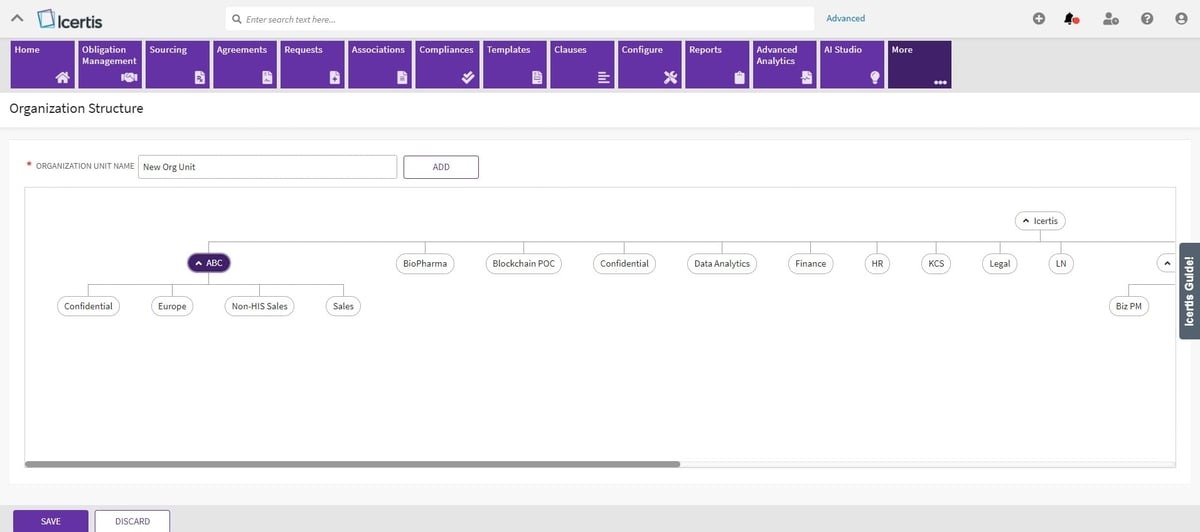
A major strength of Icertis is how it connects contracts with enterprise systems, including tools used for procurement, finance, sales, and supplier management.
This connectivity can help organizations understand how commercial terms, contractual obligations, spend data, and key contract terms affect the wider business.
Its AI and data extraction features can also support the review process by turning contract language into structured data. From there, users can find key insights, track obligations, monitor compliance, and report on contract performance with more confidence.
LinkSquares is a contract intelligence platform that puts a lot of focus on the contracts you already have.
After document upload, its AI models can read through unstructured documents, pull out key dates, flag renewal deadlines, and help surface terms that may need more attention.
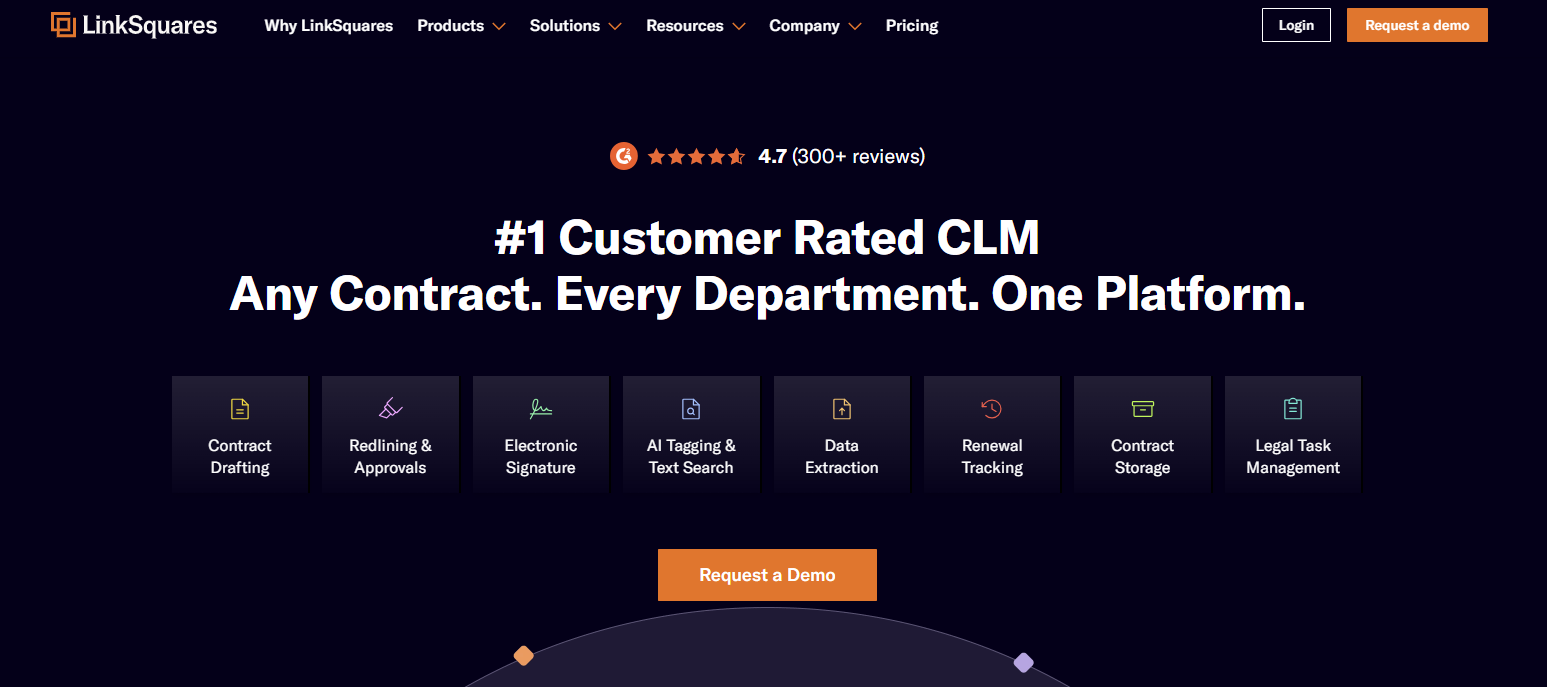
It’s especially useful when old agreements are hard to search or compare. Rather than sending someone through folders for every answer, LinkSquares helps extract insights from contract language so you can spot potential risks, identify opportunities, and make decision-making less dependent on manual contract review.
Additionally, the platform includes contract authoring, reporting, and repository tools, so it can support both new agreements and post-signature work.
If regulatory requirements, renewal tracking, or contract visibility are a priority, LinkSquares gives you a clearer way to work with the data already sitting inside your agreements.
DocuSign CLM is a contract lifecycle management platform from DocuSign, so it naturally works well for companies that already rely on it for e-signatures.
The platform helps users create, route, approve, sign, store, and track agreements with less dependence on manual processes.
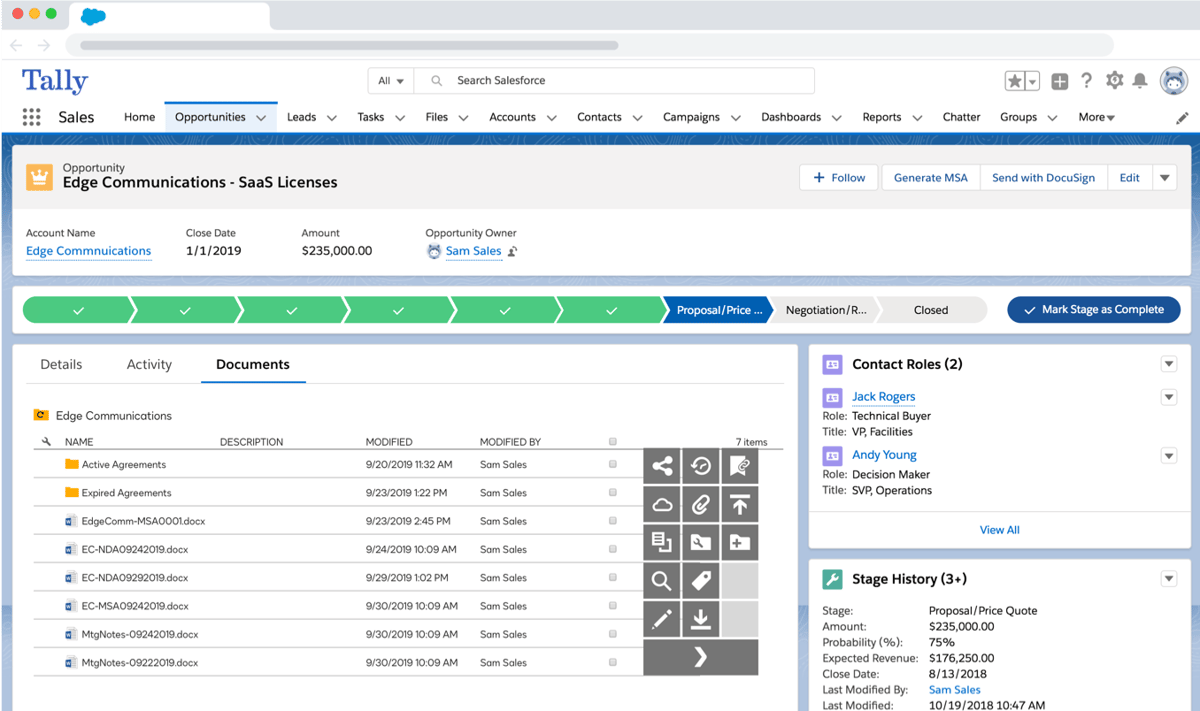
Its main strength is the contract workflow. You can use it to keep review cycles more organized, route agreements to the right people, and maintain a clearer record of what happened before signature.
Plus, DocuSign has been adding generative AI features to its agreement products, which can help users summarize contract content, find key details, and work with contract data faster.
DocuSign CLM may be a good option if your contract process already centers on DocuSign and you want to expand into broader contract management.
It supports compliance, workflow control, and document tracking, although teams looking for deeper contract intelligence should compare its AI review and analytics features closely against other platforms.
The right contract intelligence platform should help you do something practical with your contracts instead of just leaving you with another place to search for files.
You need a way to draft, review, approve, sign, store, and report on agreements, but without losing context between each step.

Aline gives you that in one AI native platform. You can handle contract administration with automated workflows, dynamic templates, AI review, AlineSign, a centralized repository, and contract analytics.
It also helps you uncover insights from contract data, track renewals, review obligations, and understand contract performance with less manual follow-up.
Even better, Aline's features can lead to real cost savings, especially when your team spends less time chasing approvals, rechecking terms, or hunting for signed agreements.
Ready for a cleaner contract process? Start your free trial with Aline today.
The best AI tool for contracts depends on how much of the contract process you want to manage in one place. If you want AI review, redlining, contract summaries, approvals, e-signatures, storage, and reporting together, Aline is a strong option. It helps you work with contracts before and after signature, so contract intelligence becomes part of your full workflow rather than a separate review step.
Contract data helps you turn agreements into information your team can search, track, and report on. Rather than opening each file to find dates, terms, obligations, or renewal language, a contract intelligence platform can pull those details into a more usable format. That makes it easier to spot deadlines, compare terms, and make better decisions.
Contract analytics help you understand what your agreements say at scale. You can use them to track renewal trends, review obligations, compare commercial terms, monitor supplier performance, and identify risks before they affect the business. They can also help improve future negotiations because you have clearer insight into past agreements.
A contract intelligence platform helps you review, organize, and use contract information with less manual work. It can support legal, sales, procurement, and operations by making key terms easier to find and act on. For example, you can track supplier relationships, ensure compliance, reduce risk, and catch renewal deadlines earlier.