Contracts are easy to store and harder to use. Even when every signed agreement is saved somewhere, your team may still struggle to find the right information when decisions depend on it.
That is why contract database software can be a practical starting point. While it is usually part of broader contract management software, the database side helps turn static files into searchable, organized contract records.
In this guide, we’ll break down what contract database software does, why your team may need it, and which tools are worth comparing if you want stronger contract storage and better visibility into your agreements.
Contract database software is essentially a system for storing, organizing, searching, and tracking contracts in one central place.
It is not always sold as a standalone software category. In most cases, the “contract database” is part of broader contract management software or a contract lifecycle management platform.
The main purpose is to help your team manage contracts without relying on things like scattered folders, email threads, or manual spreadsheets. A contract database makes signed agreements and related contract data easier to find and utilize.
That can include details like renewal dates, parties, contract value, obligations, approval status, and key terms. Stronger tools may also add AI search, automated reminders, permission controls, reporting dashboards, and links to workflows for review, approval, or signing.
So while contract database software may sound like a basic storage tool, the better version does much more than contract storage. It gives legal, sales, finance, and procurement teams a clearer way to understand what is in their agreements and take appropriate action based on accurate data.
You may not need a full contract management system yet. But if contract questions take too long to answer, a contract database can give your team a practical starting point.
Key benefits include:
Most tools on this list are broader contract management platforms with database features built in. Here are seven options worth comparing:
Aline is an AI-powered contract management platform for teams that want a contract database with a more practical range. It gives your team one place to create, review, approve, sign, store, and track agreements without forcing contract work through a patchwork of other tools.
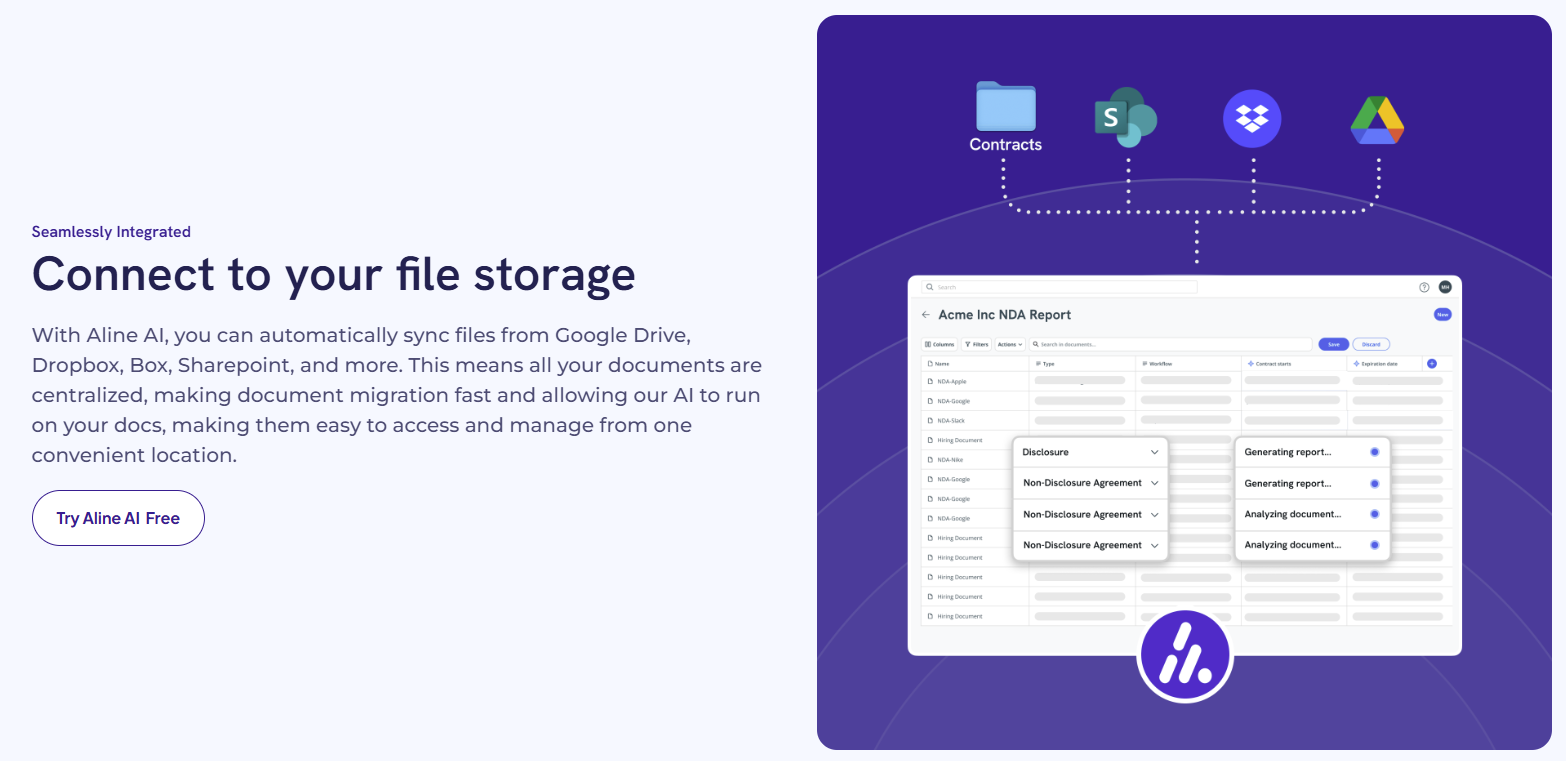
As a database, Aline helps teams organize signed contracts, search for key terms, capture contract data, and track important dates after signature. But it also supports the work that happens before contracts are stored, including contract drafting, redlining, approvals, and contract workflows.
That makes Aline a strong fit if you want a system that can support the entire contract lifecycle, not only the final archive. Its AI capabilities help teams review language faster, summarize agreements, and turn stored documents into useful contract information.
Book a demo or start your free trial today.
ContractSafe is a contract management platform built around simple, searchable contract storage. It is a good option for teams that want to organize existing contracts, track key dates, and find customer contracts without adding a heavy system to the contract management process.
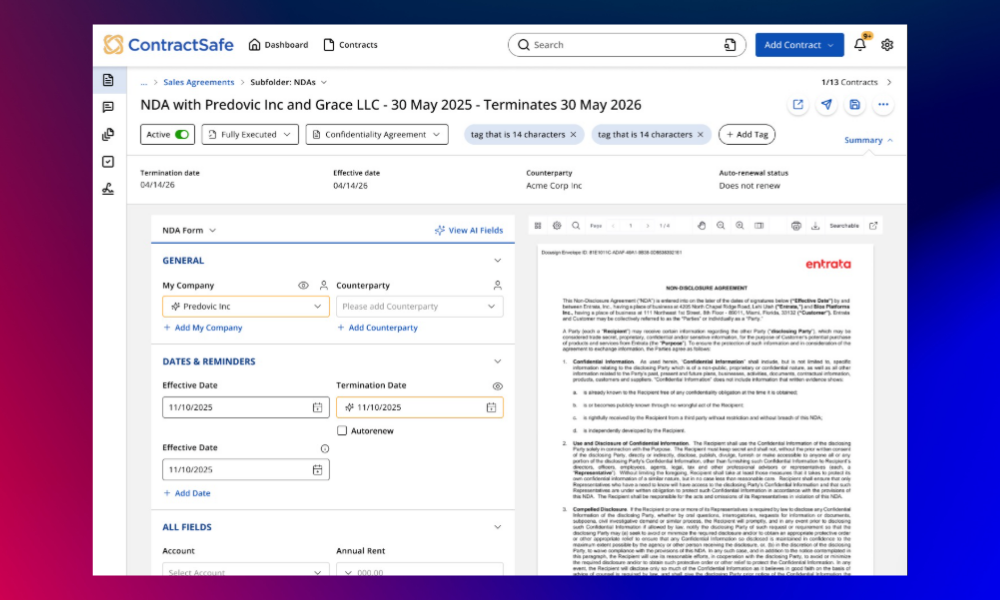
The platform is especially useful for legal teams and business teams that need a cleaner way to manage contract records after signature. Users can upload agreements, search contract text, set reminders, and create reports around important terms.
ContractSafe also includes AI features that help extract data from contracts, which makes it easier to turn stored documents into usable information.
LinkSquares is a CLM software option for teams that want contract storage, search, and analytics alongside tools for pre-signature work.
Legal teams can use the platform to organize existing agreements, review contract data, and keep a better track of important terms after signature.
As a contract management tool, LinkSquares also supports contract creation through features like pre-approved templates, clause libraries, and workflow tools. That makes it a stronger fit for teams that want their database to connect with the broader contract process instead of sitting apart from it.
Ironclad is a contract platform built for teams that need a structured way to handle high-volume contract work. It's widely known in the legal industry, but its value goes beyond storage because it connects the contract database with workflow automation, approvals, collaboration, and reporting.
For teams with a more complex contract process, Ironclad can work as a broader contract management tool. Legal and business users can create agreements, route them for review, track activity, and store executed contracts in a searchable repository.
Generally, the platform is a stronger fit for companies that want a highly configurable system rather than a lightweight database.
Icertis is an enterprise contract management solution built for large companies with complex contract needs. Large legal, procurement, and commercial teams can use the platform to manage contract terms, obligations, risk, and business relationships in a more structured way.
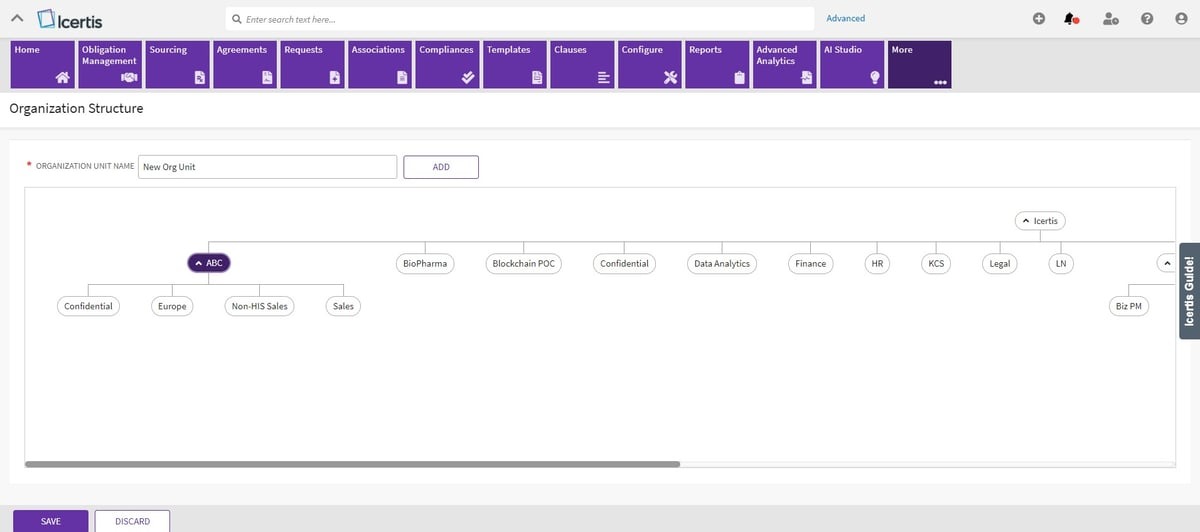
For contract managers, the value comes from having deeper visibility after contract execution. The platform can organize agreements, support portfolio-level reporting, and help teams understand what their contracts require as contract volume increases.
Docusign CLM is contract management software from a brand many teams already know for e-signatures.
For companies that already use Docusign to send agreements to external parties, its CLM product can add more structure around contract authoring, approvals, storage, and tracking.
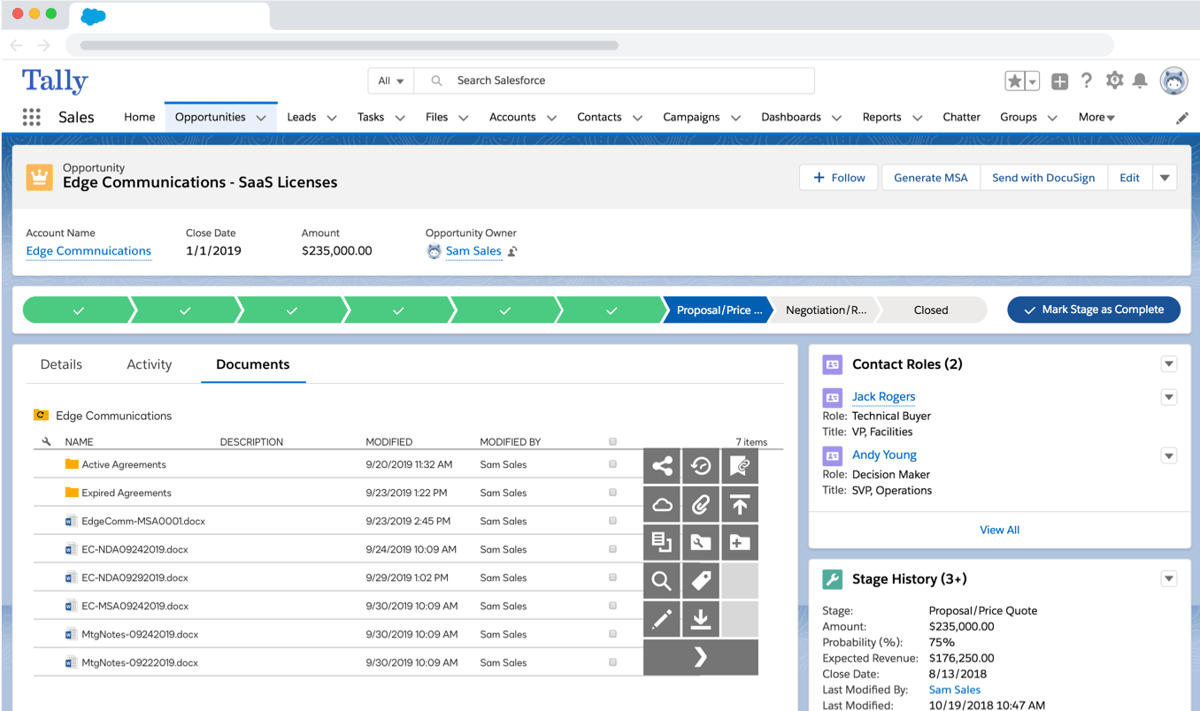
The platform is useful when signing is only one part of the problem. Teams can create contracts from templates, route them for review, manage contract negotiation activity, and keep detailed audit trails tied to the contract record.
That makes Docusign CLM a practical choice for businesses that want contract storage connected to a familiar signing experience.
PandaDoc is a document and contract management platform often used by sales teams and growing companies. The platform helps replace static documents in Microsoft Word with a more organized workspace for creating, approving, signing, and storing agreements.
Contract database needs are covered through searchable document storage, templates, status tracking, and e-signature tools.
PandaDoc also supports contract approvals, which helps teams review agreements before sending them out. And since e-signatures are built in, companies may not need a separate signing tool like Adobe Sign for every contract.
A contract database should help your team do more than find a PDF when someone asks for it. The right system should make contract information easier to search, track, report on, and use in daily decisions.
As you compare tools, look closely at how each platform supports your actual process. Searchable storage and reminders may be enough for a smaller team.
A growing contract operation may need AI review, approval workflows, reporting, templates, and e-signatures in the same place.

Aline is built for teams that want contract storage connected to the work around it. With AI-powered drafting and redlining, automated workflows, searchable document storage, reporting, and AlineSign, your team can manage contracts with better visibility from start to finish.
If you are evaluating contract management software and want a platform that can support the full contract lifecycle, start your free trial of Aline today.
Aline is a strong choice if you want contract data tied to the full contract process. It can help teams store agreements, extract key details, track important dates, run reports, and use AI to review contract language. The best contract management software should make stored contracts easier to search and use, not only easier to file away.
Popular options include platforms like Aline, Docusign CLM, Ironclad, Icertis, LinkSquares, ContractSafe, and PandaDoc. The right choice depends on how your team works. A sales-heavy team may care more about templates and e-signatures, while a legal team may need stronger review workflows, reporting, and contract data visibility.
A good contract database should include searchable storage, permission controls, renewal reminders, reporting, and a clear way to organize contract data. A stronger contract management software offers extra support for work around the database, such as approvals, templates, AI review, and e-signatures.
Yes, in many cases. Spreadsheets can track basic contract details, but they become harder to trust as contract volume grows. A contract database gives your team a cleaner way to store documents, update records, control access, and connect each agreement to the details that matter after signature.