What actually makes a contract platform feel right for your team?
It’s a question that comes up fast when approvals drag, documents live in too many places, and every draft feels harder to manage than it should. A solid platform should clear the path, keep your team aligned, and make each contract easier to move from one step to the next.
So what kind of support would make the biggest difference for your team?
This comparison gives you a clear look at how DocuSign, Icertis, and Aline approach contract work. You’ll see how each one handles creation, reviews, collaboration, and the day-to-day flow your team relies on.
Icertis is an enterprise-grade contract lifecycle management platform built for organizations that manage large volumes of complex agreements. Its goal is to give companies a structured way to keep contracts organized across different departments, regions, and business units.

Icertis excels at handling complexity at scale. Its strength lies in helping global teams follow consistent rules, maintain visibility, and meet strict compliance expectations without slowing down contract work.
A major differentiator is its focus on deep configuration for large organizations. Another standout is its ecosystem of add-on modules that support industry-specific contracting needs, which makes it appealing for companies with unique operational or regulatory requirements.
DocuSign CLM is a contract management platform that helps teams organize, create, and move documents through their full lifecycle.
It builds on the brand’s long history with electronic signatures, giving companies a structured system that connects contract preparation with signing and post-signature tracking.
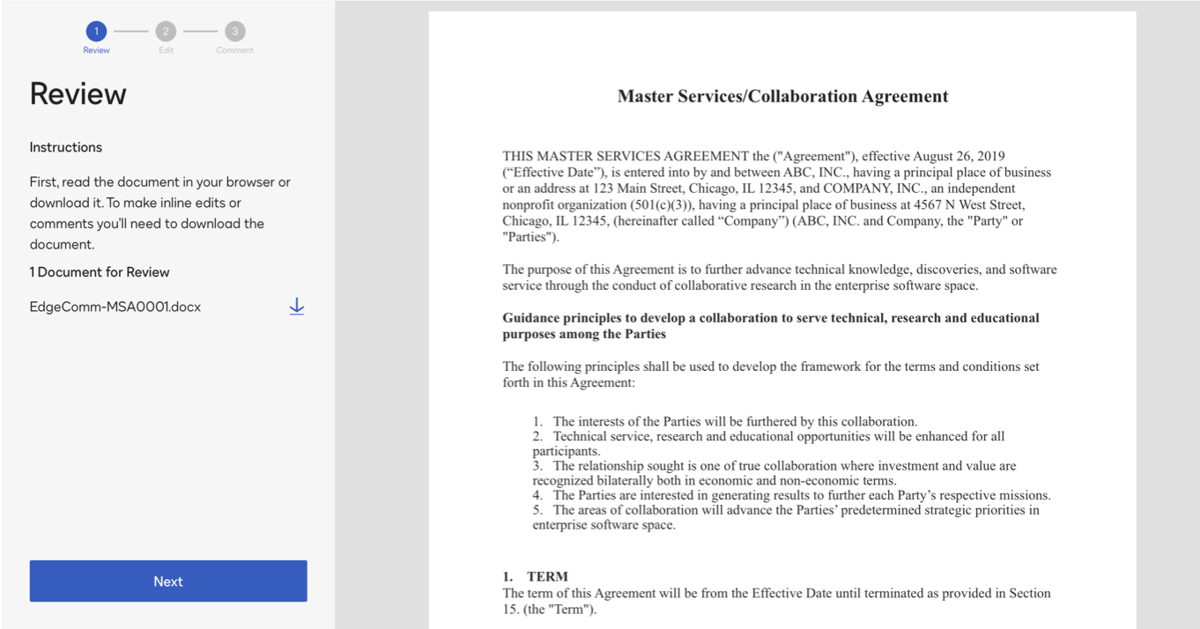
Most people know DocuSign for its signature workflows, and CLM expands that foundation. It links document generation, version control, approvals, and electronic signatures in one place, so teams don’t have to jump between separate tools to keep agreements moving.
DocuSign CLM often appeals to businesses that want a familiar, signature-first experience but need stronger coordination across contract steps.
It supports teams that want their agreements, reviews, and signatures connected to a clear and predictable process without taking on an enterprise-heavy setup.
Aline is an AI-driven contract management platform built to make contract processes feel lighter and easier to handle.
Drafting, reviewing, approving, signing, and storing agreements all happen in one place. That means teams don’t have to switch between multiple tools just to keep work moving.
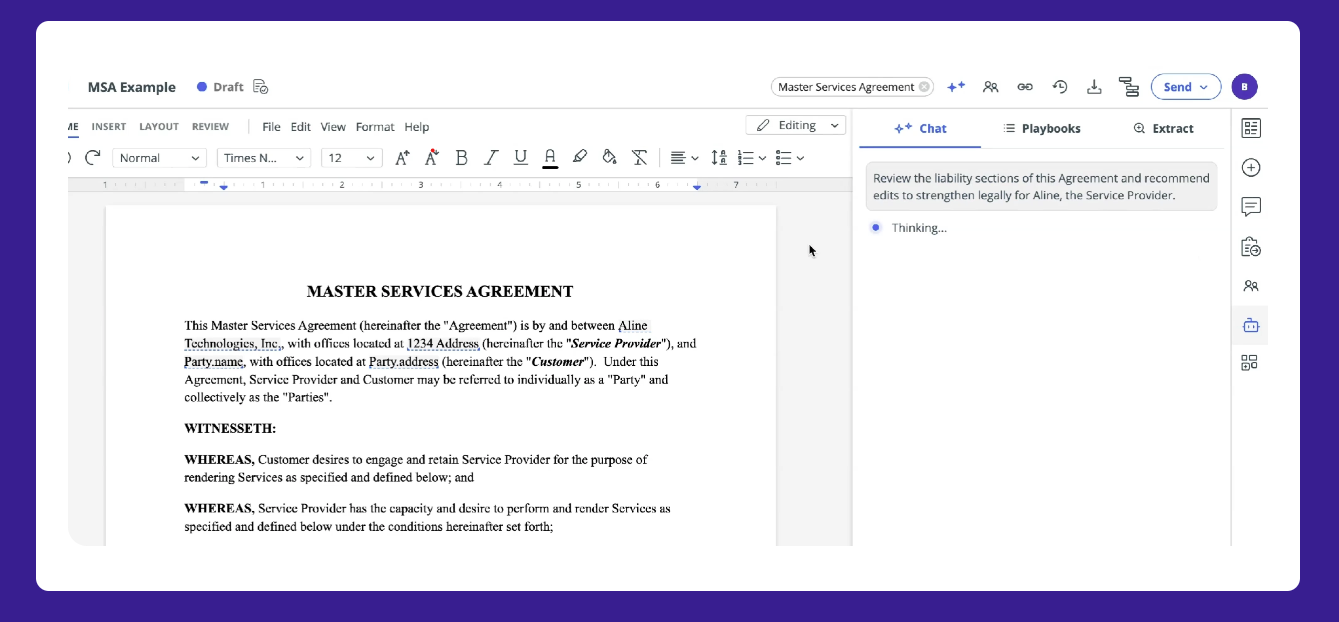
The big difference with Aline comes from how the legal AI supports real work. You can draft language, review clauses, generate redlines, and search your entire contract history through simple prompts.
It also facilitates collaboration by giving teams a shared space for comments, tasks, and real-time updates, which keeps everyone aligned from the first draft to the final signature.
Aline is often chosen by companies that want modern contract management without the heaviness of older enterprise systems. It feels straightforward, quick to adopt, and built for teams that care about efficiency and clean, coordinated workflows across all their agreements.
Picking the right contract management platform is one of the most important decisions you can make for your business.
If you’re comparing these three options, a quick side-by-side look can help you see which one fits your workflow and long-term goals.
Icertis is designed for companies that deal with complex agreements and need a highly structured system to keep everything organized.
If your contracting process runs across several departments, countries, or strict compliance rules, its purpose is to help you keep all those moving parts aligned. It focuses on consistency, governance, and configuration, which is why large enterprises often rely on it to manage contract work at scale.
DocuSign CLM centers on giving teams a smoother path from drafting to e-signatures. If you already use DocuSign for signing, its goal is to connect your documents, reviews, and approvals in a way that feels familiar.
It reduces the back-and-forth that usually slows down contracts, which makes it a fit for teams that want automation without the heaviness of a fully customized enterprise setup.
Aline aims to make contract processes feel faster, clearer, and more collaborative. If you want advanced AI to support your work without taking control away from your team, this is where Aline shines.
The platform helps you draft, review, comment, approve, and sign in one place, so your workflow feels connected from start to finish.
The purpose is simple: give you strong capabilities, better performance, and a more modern contracting experience that’s easy to adopt and easy to scale.
Here’s a quick look at the core capabilities each platform brings to your contract process, with a focus on what stands out most for real-day-to-day work.
Icertis generally suits large enterprises that manage complex agreements and need a tight structure across regions and teams. Customers with strict rules, long approval chains, or detailed compliance requirements often see it as the best fit.
Basically, it works well for companies with the time and resources to support training and configuration, especially when millions are tied to consistent governance.
On the other hand, DocuSign CLM fits mid-sized teams that want contract creation, routing, and electronic signatures in one familiar setup.
It’s helpful for companies that prefer predictable workflows and a lighter onboarding experience. Many organizations choose it when they want something practical without the depth or complexity of an enterprise-heavy system.
Aline is the best choice for teams that want a faster, more flexible contract process supported by AI. It works for businesses that want quick drafting, easy contract collaboration, and a workflow that’s simple to understand from the start.
Additionally, Aline appeals to companies that want strong capabilities without long training cycles or complicated setup work. It’s a clean, modern option for sales, legal, and operations teams that want a smarter way to manage contracts.
Choosing a contract platform often comes down to understanding what you’re paying for and how well each option supports your day-to-day work. Here’s a quick look at how each tool approaches pricing so you can find the setup that fits your budget and your workflow.
Icertis follows a custom pricing model built around enterprise needs. Costs depend on contract volume, modules, integrations, and the depth of configuration required.
DocuSign CLM also uses quote-based pricing. Costs vary based on workflow complexity, user count, and the level of automation a team needs. Businesses often pair CLM with DocuSign’s electronic signature plans.
Aline uses clear, tiered pricing that gives teams access to strong AI features without a long scoping process.
Plans are designed to support growing in-house teams and larger organizations that want automation, collaboration, and reliable contract management in one platform.
Team Plan – $200 per full user/month (billed annually): Perfect for growing teams that want powerful AI support and complete contract management tools.
Enterprise Plan – Custom Pricing: Built for large organizations with advanced requirements and higher volumes.
Want a clearer breakdown? Explore Aline’s pricing plans to see which option matches your workflow and team size.
If you’re comparing these platforms, you’re probably trying to fix issues that slow your team down. Long review cycles, hard-to-follow workflows, and tools that feel heavier than they should can turn contract work into a constant bottleneck.

Icertis and DocuSign CLM both serve specific needs, but if you want a platform that feels easier to use, quicker to adopt, and supported by practical AI, Aline stands out.
It gives you clear workflows, helpful automation, and a collaborative space that keeps everyone moving in the same direction without extra complexity or long training sessions.
If you want to see how much easier contract work can be, start a trial and experience Aline for yourself.
Contract lifecycle management is the process of creating, reviewing, approving, signing, storing, and tracking agreements in a structured system. It helps users stay organized, verify key details, manage dates, and keep every action connected from start to finish.
In the CLM space, Icertis is often seen as a primary competitor to DocuSign, especially for large enterprises. Other alternatives include platforms that integrate with tools like Salesforce or offer stronger AI support for in-house teams.
DocuSign CLM focuses on streamlining documents, approvals, and signatures in a familiar environment. Icertis centers on deeper configuration, governance, and large-scale enterprise contracting needs. The best choice depends on the complexity of your workflows and your overall selection process.
Competitors include Aline, DocuSign CLM, Juro, ContractPodAi, and other platforms designed to support contract creation, negotiation, storage, and compliance. Each serves a different type of customer, from lean teams to global enterprises.
DocuSign can feel limited for teams that need advanced oversight, flexible configuration, or deeper automation services. It’s strong for signature-focused workflows but may have limitations for users who want more human-in-the-loop collaboration, detailed reporting, or free customization options.