What really separates one contract platform from another?
It’s a fair question, especially when so many tools promise faster drafting, cleaner reviews, and smoother approvals. But once you look closer, the experience isn’t the same at all.
Some platforms feel light and easy to pick up. Others focus on structure and process. And then there are tools that try to bring everything into one place so teams don’t have to use half a dozen apps just to get a contract across the finish line.
If you’re weighing SpotDraft, Ironclad, and Aline, you’re probably trying to figure out which direction actually matches how your team works today.
In this article, we’ll break down the differences in a clear, straightforward way so you can see what each platform does best, and which one aligns with your needs as you grow.
SpotDraft is a contract management platform that helps legal teams handle contract creation, reviews, and approvals in a more organized way.
It first appeared in 2017 and grew quickly because it offered a smoother workflow than the older, heavier systems many companies were using.
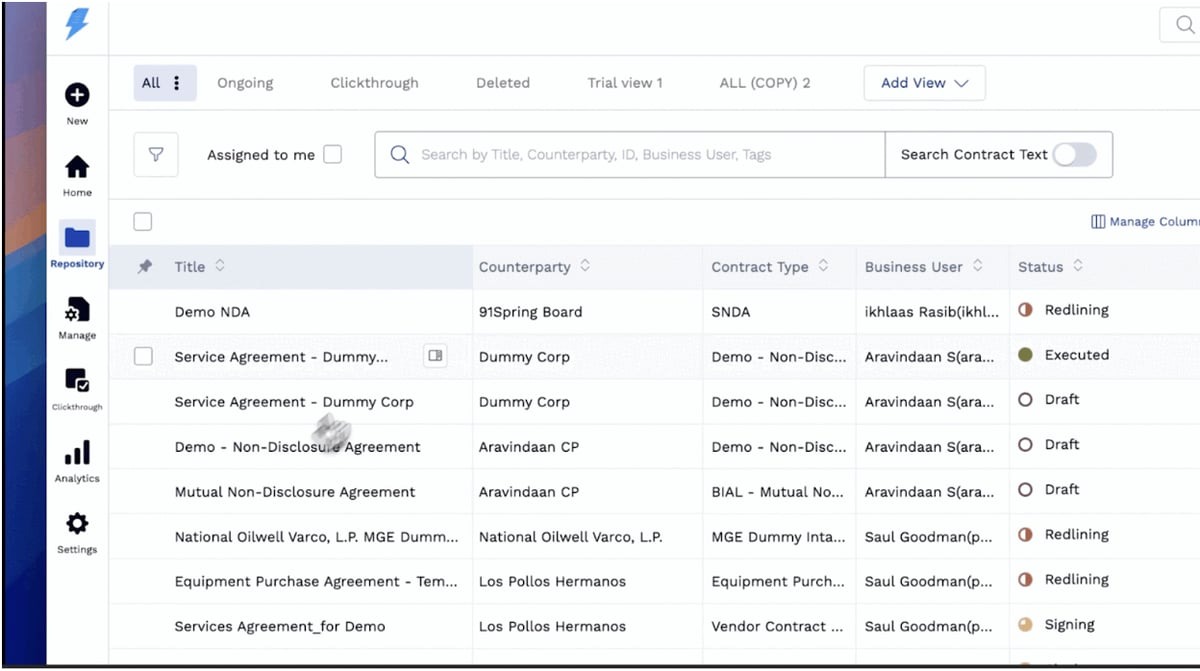
Its appeal comes from a clear interface, quick setup, and the way it gives teams one central place to manage contracts from end to end. People often point to its efficiency and ease of use, especially for companies that want something modern without a long learning curve.
SpotDraft also built a reputation for strong contract workflow automation around repetitive steps, which made it popular with teams that deal with a steady flow of agreements but don’t have time for manual oversight.
Ironclad is a contract management software platform designed to help business teams move contracts through drafting, review, approvals, and other contract phases with fewer delays.
It launched in 2014 and became well-known for its automated workflows for contracts, which gave companies a clear, repeatable way to handle high-volume agreements without relying on outdated systems.

Many teams use Ironclad because it brings structure to the contract process. Its workflow builder is one of the features people talk about most; it lets teams map out each step so everyone knows where a contract stands and what needs to happen next.
That focus on process made it a popular choice for fast-growing companies with complex approval chains.
Ironclad also gained momentum by positioning itself as a platform built not only for legal teams but for other departments involved in contracting, such as sales, finance, and procurement. The end result is a system built to support the entire business as contracts move from creation to signature.
Aline is a contract lifecycle management platform built to help teams create, review, approve, and sign contracts in one user-friendly workspace.
It combines AI features with structured contract workflows, which gives you a way to handle every stage of an agreement without jumping between other tools like Word, email, or separate e-signature software.

The platform stands out for its clean interface and its focus on simplifying work for both legal and non-legal users. You can draft new agreements, route them for review, collect signatures, and store everything in a searchable contract repository.
Aline also includes flexible automations that keep contract workflows moving, which makes it a strong fit for companies that want a modern alternative to older, fragmented setups.
Overall, it’s often chosen by teams that want a single system to manage contract operations from start to finish, with AI support built directly into the process.
Want to see Aline in action? Book a demo today.
Choosing the right contract platform can feel overwhelming when each one promises to fix similar problems in different ways. To make things easier, here’s a quick look at how SpotDraft, Ironclad, and Aline stack up so you can see which direction fits the way you work.
SpotDraft, Ironclad, and Aline all help teams manage contracts, but they each approach the job in their own way.
SpotDraft is designed to give organizations a simple, approachable system for contract creation and everyday reviews. Essentially, it offers a clean, uncomplicated legal workflow that appeals to business users who want something modern without feeling overloaded.
Ironclad focuses more on structure. Its automated workflows are built for companies that deal with a large volume of agreements and need every contract to follow a clear path from start to finish.
A big part of how Ironclad stacks up in this mix comes from that process-first mindset, which helps teams keep approvals and routing under control.
Aline brings everything together in one AI-supported workspace. Its purpose is to help organizations handle drafting, review, approvals, signing, and storage without relying on other tools to fill the gaps.
The platform aims to make contract workflows easier for legal and non-legal teams, offering a user-friendly experience that supports smooth contract collaboration.
Each platform brings its own strengths, and this feature comparison should give you a quick sense of the key differences before we dig deeper into the details later on.
SpotDraft, Ironclad, and Aline each suit different types of teams, and the best choice depends on how your organization handles documents and collaboration day-to-day.
SpotDraft is a comfortable fit for lean legal teams and scaling groups that want something simple to use. It’s popular with companies that don’t need heavy contract automation yet but still want solid collaboration tools and a cleaner way to move contracts forward.
Ironclad leans toward midsize and enterprise teams that deal with higher volumes and more layered approvals.
Groups that compare Ironclad to other platforms often do so because they need a stronger structure for vendor contracts and a predictable workflow that keeps multiple departments aligned.
Aline works well for teams that want an end-to-end workspace with AI built into drafting, review, and collaboration. It’s a strong match for organizations that expect to grow and want a single system that supports legal and non-legal users alike.
SpotDraft offers a fast, lightweight onboarding process that helps new users get comfortable right away.
The interface feels familiar, implementation is straightforward, and customer support usually steps in early to guide teams through setup. This makes it appealing for legal operations groups that want to get organized quickly without relying on a long configuration phase or extensive training.
Ironclad takes a more structured approach, which can lead to a steeper learning curve. Larger organizations often spend time mapping workflows, defining approval paths, and connecting existing tools before everything goes live.
The onboarding process is thorough, but it usually requires more planning and internal coordination to get the system fully aligned with how the business works.
Aline keeps onboarding practical for teams moving from multiple tools to one unified workspace. Most people can start drafting, reviewing, and collaborating soon after implementation because the layout is easy to follow and designed to reduce setup friction.
Plus, customer support is closely involved during this stage, which can help teams adopt the platform without slowing down their day-to-day work.
Let's take a look at how each platform approaches contract management software pricing so you can get a sense of what to expect before diving into plans or demos:
SpotDraft doesn’t publish detailed pricing on its website, but it typically positions itself as a mid-range option. Most plans vary based on contract volume, collaboration needs, and workflow requirements.
Ironclad focuses on midsize and enterprise teams, and its pricing reflects that. Costs depend on workflow complexity, approval volumes, and the number of teams involved.
Here’s how Aline structures its pricing:
Find the right Aline plan for you.
SpotDraft, Ironclad, and Aline each bring something different to the contract world, and the right choice depends on how your team works today — and how you plan to grow.
If you want something simple and approachable, SpotDraft will feel familiar. If your organization needs structure around heavy workflows, Ironclad handles that well.
But if you’re looking for an end-to-end system with AI built into contract drafting, review, collaboration, and signing, Aline gives you that full experience in one place.

If you’re curious how Aline fits into your workflow, the easiest way to find out is to try it yourself. You’ll get hands-on time with the AI features, the contract tools, and the full workflow experience.
A legal operations manager usually looks at structure, setup time, and how easily a team can move through legal work. SpotDraft feels lighter and faster to roll out, while Ironclad offers more built-in process control for organizations with layered contract workflows. Aline enters the conversation when teams want AI support built into drafting, reviews, and collaboration without adding complexity to onboarding.
Yes. Both platforms connect with popular storage apps like Google Drive, and most scaling teams rely on those integrations to keep documents organized. Aline also supports these connections and adds deeper workflow coverage so teams can work in one place instead of switching between systems.
Ironclad is often favored here because of its strong workflow structure, while SpotDraft appeals to teams that want something easier for the whole world of business users to adopt quickly. Aline gives general counsel a middle ground by offering full-cycle support with AI-driven guidance, which helps keep language and decisions consistent without strict complexity.
Yes. SpotDraft and Ironclad can both store and organize older agreements, with Ironclad offering more advanced filters for cleaner searches. Aline also handles legacy contracts and adds AI analysis on top, making it easier to find key terms or risks across older documents.