If you search for contract management platforms, you’ll find no shortage of confident claims. Faster workflows. Smarter automation. Full visibility.
On paper, most tools sound equally capable.
However, the real difference shows up once you look closer. Some platforms are built around AI. Others are designed for deep enterprise customization. A few prioritize sales teams. Others lean heavily toward legal governance.
That’s why simply knowing the names isn’t enough.
This list breaks down seven widely used platforms and looks at how each one approaches drafting, approvals, signing, reporting, and collaboration. At the end, you should be able to pick the platform right for you.
A contract management platform is a system designed to organize how agreements are created, reviewed, approved, signed, and stored.
Essentially, it gives structure to the full contract lifecycle management process so contracts move through a defined workflow.
In practical terms, it becomes the place where your contracts live. Drafts, redlines, approvals, signatures, and renewal data stay connected inside a single contract management system.
This means legal teams and business stakeholders can see the current version, track progress, and review history without switching between multiple tools.
Most platforms include:
Some platforms lean heavily into contract automation and AI, and others focus on configurability or enterprise controls. But what they share is structure. Contracts follow a consistent path from start to finish, and the information tied to them remains organized and searchable over time.
There’s no shortage of contract management platforms on the market, but they don’t all solve the same problems.
Not sure where to start looking? We've compiled seven platforms worth a closer look, depending on how your team handles contracts today.
Aline is an AI-powered contract management solution built for teams that want more than basic storage and signing. Rather than separating contract drafting, redlining, approvals, and reporting into different systems, it brings the entire contract management process into one connected platform.
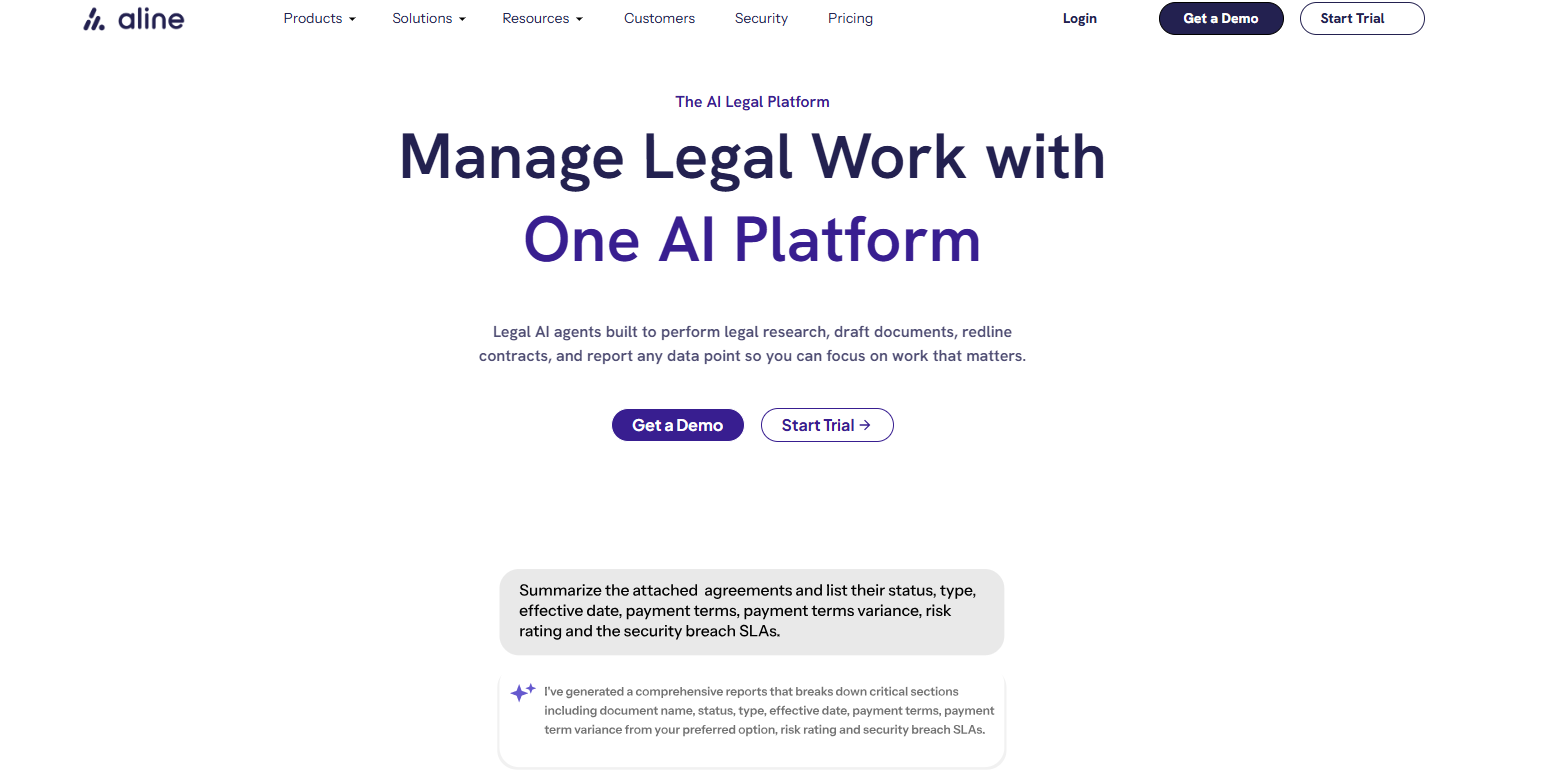
What makes Aline feel different is how naturally AI fits into the workflow. It’s not sitting off to the side as a chatbot you occasionally use. Instead, it's part of how contracts are drafted, reviewed, negotiated, and analyzed from start to finish.
That way, drafting moves more quickly, contract redlines come back more consistently, and large agreements can be reviewed in a fraction of the usual time.
And because everything lives in the same system, legal, procurement, finance, and sales don’t have to jump between tools to get work done. That shared environment keeps the contract management process steady and easier to follow.
Over time, the consistency that you get from Aline adds up. Faster contract cycles help deals move forward sooner, renewal data is easier to surface, and reporting feels far less manual.
Overall, Aline creates a real strategic advantage, especially for teams handling high contract volume.
Book a demo to see how Aline works.
DocuSign CLM takes the familiar DocuSign experience and extends it into full CLM software.
While many teams start with DocuSign for electronic signatures, this platform adds structure to the entire contracting process, including request intake, document generation, internal approvals, execution, and post-signature management.
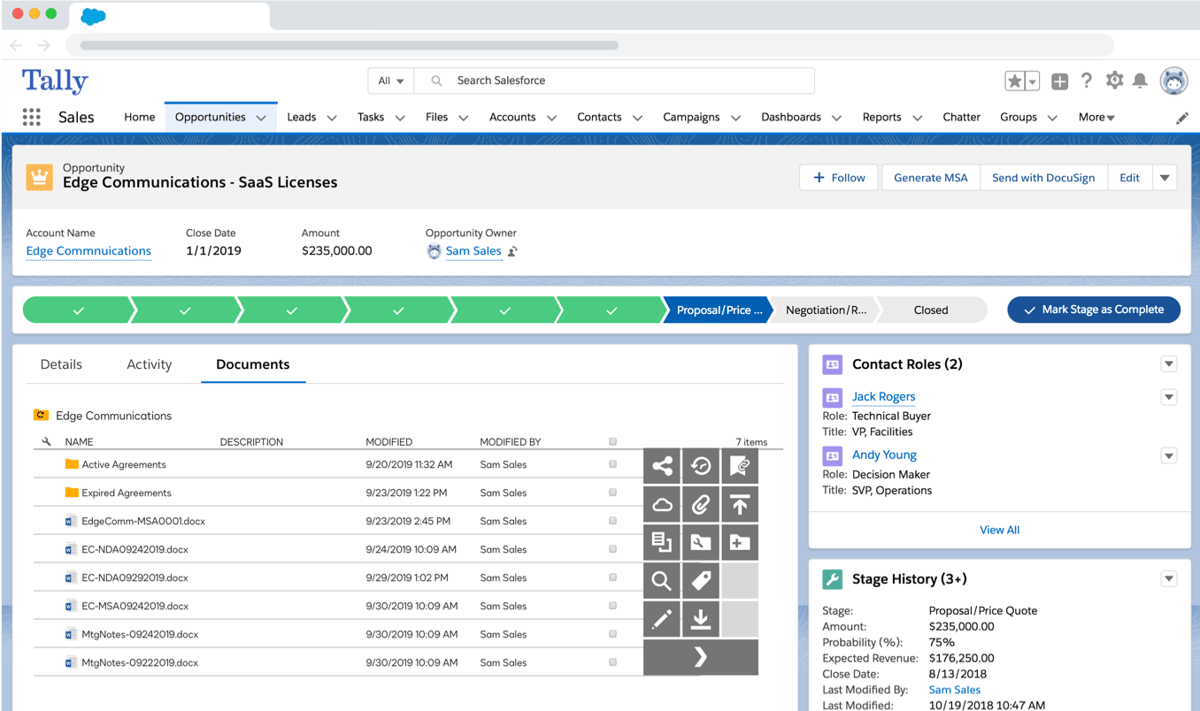
For organizations that already rely on DocuSign, the transition into its contract management software often feels straightforward. The interface builds on tools teams may already know, while adding workflow controls and centralized visibility.
Contracts can move through defined approval paths, connect to CRM records, and remain accessible in a searchable repository once signed.
Plus, DocuSign CLM tends to appeal to mid-sized and enterprise companies that want tighter control over how agreements move through the business.
It focuses on governance, consistency, and integration with existing systems, which makes it a practical choice for teams looking to formalize their contract lifecycle without rebuilding their tech stack from scratch.
PandaDoc is contract management software that blends document creation, approvals, and e-signatures into one platform. It’s especially popular with sales-driven teams that want to manage contracts and proposals in the same place.
The interface also feels modern and approachable, which makes it easier for non-legal users to jump in, minus the heavy onboarding.
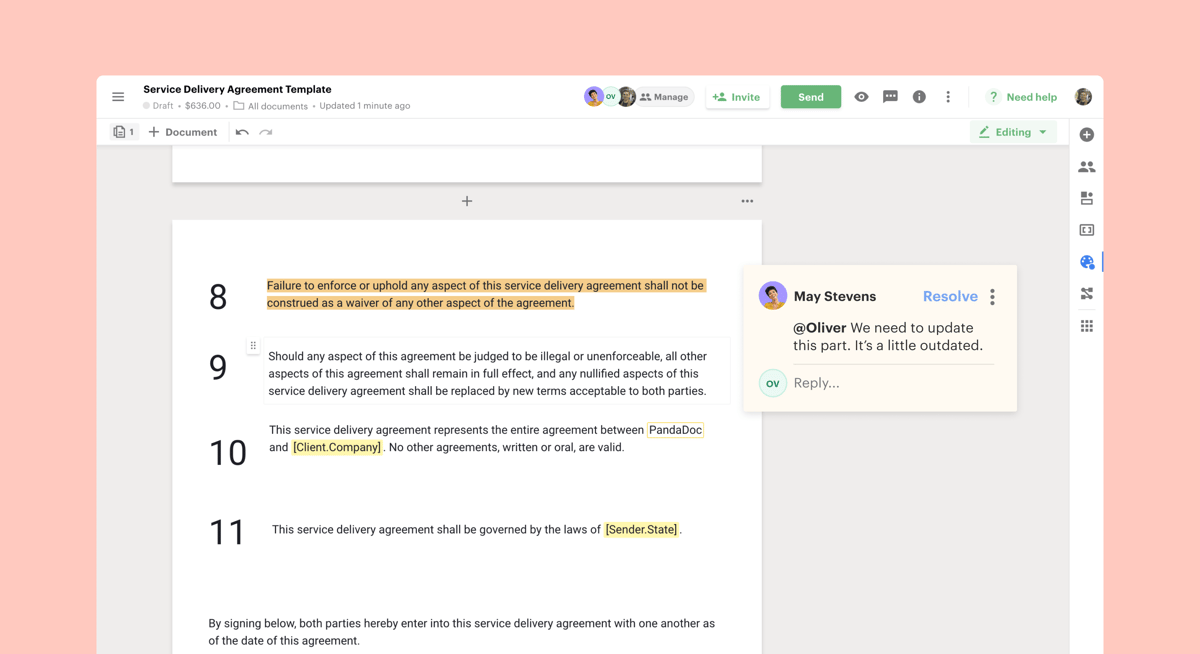
A big part of PandaDoc’s appeal is how it simplifies contract drafting. Users can build documents from customizable contract templates, pull in pricing tables, and send agreements for signature within the tool. For growing companies, this can significantly reduce manual work tied to repetitive documents.
While PandaDoc supports incoming contracts and basic tracking, its strength leans toward outbound agreements such as proposals, quotes, and standard sales contracts.
Teams that prioritize speed and ease of use often find it a practical solution for keeping documents organized and moving.
Juro approaches contract management with a strong focus on simplicity and collaboration.
The platform runs entirely in the browser, which gives teams direct access to live contracts rather than static documents being passed around. The experience feels closer to working in a shared document than operating traditional CLM tools.
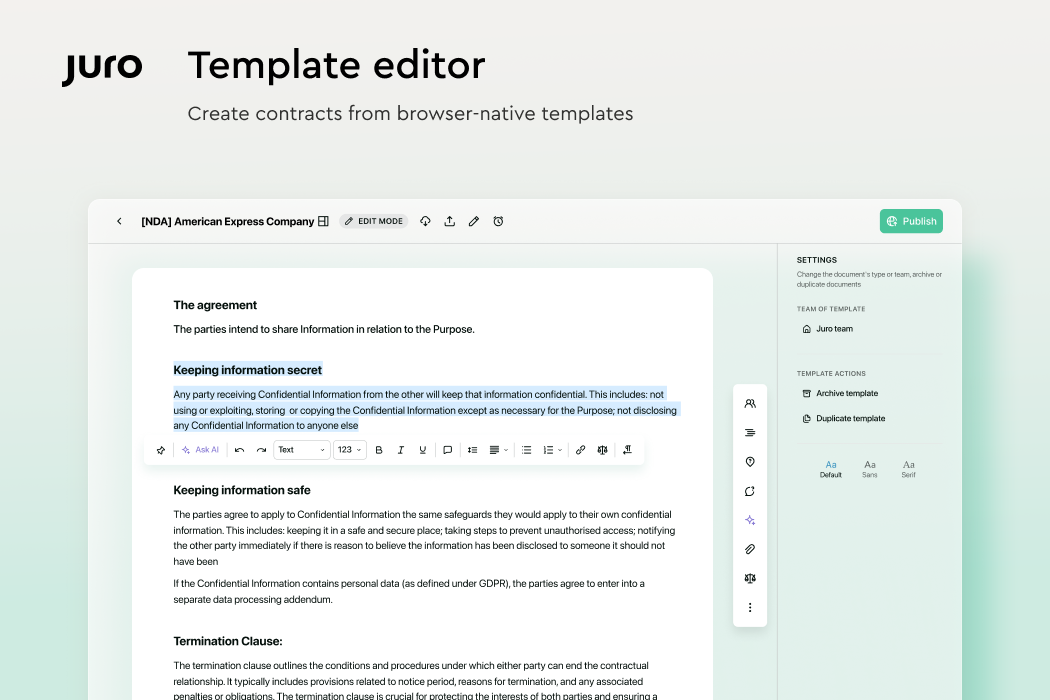
One of Juro’s strengths is how approachable it is. The interface is clean, the editing experience is intuitive, and business users can comfortably participate in drafting and reviewing.
Legal still maintains oversight, yet the broader team can move agreements forward without heavy reliance on email chains or version tracking.
Juro also emphasizes seamless integrations with tools like Salesforce and HubSpot. Contract data can flow into existing revenue systems to help sales and operations stay aligned with what’s agreed in the contract itself.
Conga is built with enterprise environments in mind, especially organizations that already operate inside Salesforce. It focuses on bringing structure and consistency to complex contract negotiations, where multiple stakeholders and detailed contract terms are involved.
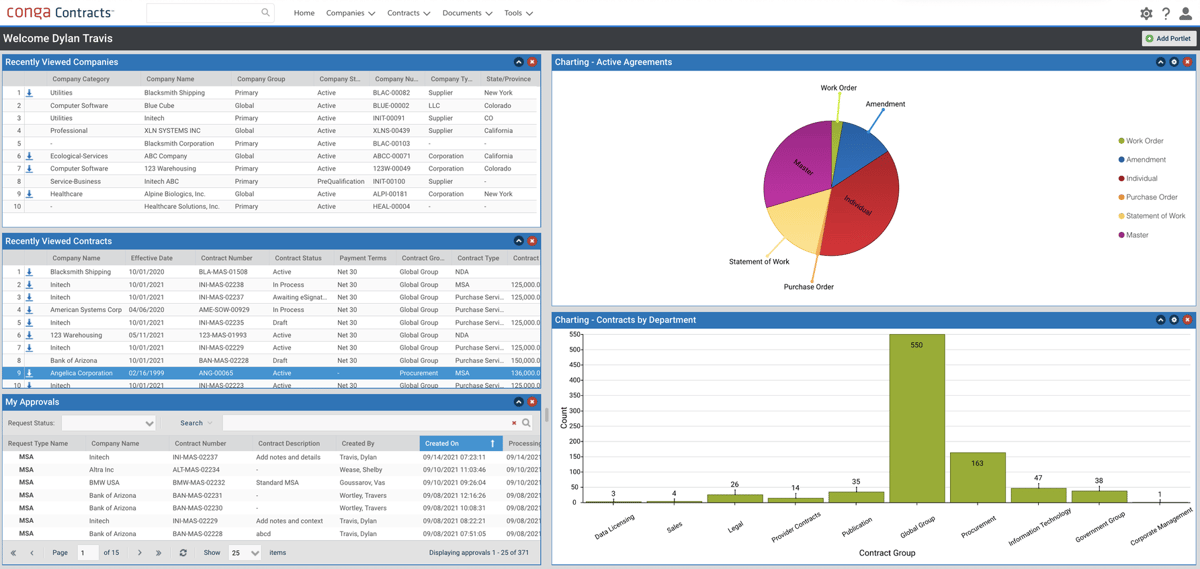
The platform supports document generation, clause libraries, approval routing, and post-signature tracking.
Teams can standardize language, guide users toward approved provisions, and keep tighter control over deviations. That helps minimize risk while still allowing flexibility during negotiations.
Conga also aims to shorten review cycles by reducing back-and-forth and centralizing visibility into what has changed.
For businesses managing high contract volume or large deal sizes, that efficiency can protect valuable time and improve the overall value derived from the contracting process.
Ironclad is a contract lifecycle management platform built to structure how agreements move through an organization. It covers the full process, starting with a contract request and continuing through drafting, negotiation, approval, signature, and storage.

A key part of Ironclad’s approach is intake. Users begin with a guided contract request form that gathers the right details upfront. That early clarity helps legal teams allocate resources more effectively and reduces confusion later in the review cycle.
The platform also places strong emphasis on compliance requirements. Approval logic, audit trails, and standardized clause controls create consistency in how contract terms are handled.
At the same time, the interface remains user-friendly, which encourages business teams to participate directly in drafting and review rather than relying solely on legal.
Ironclad aims to balance oversight with usability. Contracts move through structured workflows, customers gain visibility into status, and legal maintains control over language and risk management.
Agiloft is a highly configurable contract lifecycle management platform known for its flexibility and depth. It has long been recognized by industry analysts for its strong customization capabilities and ability to support complex enterprise requirements.
The platform is often chosen by organizations that want to shape the system around their existing processes rather than adapting their processes to the software.
That level of configurability can require thoughtful implementation, but it also gives teams control over workflows, data structures, approval logic, and reporting frameworks.
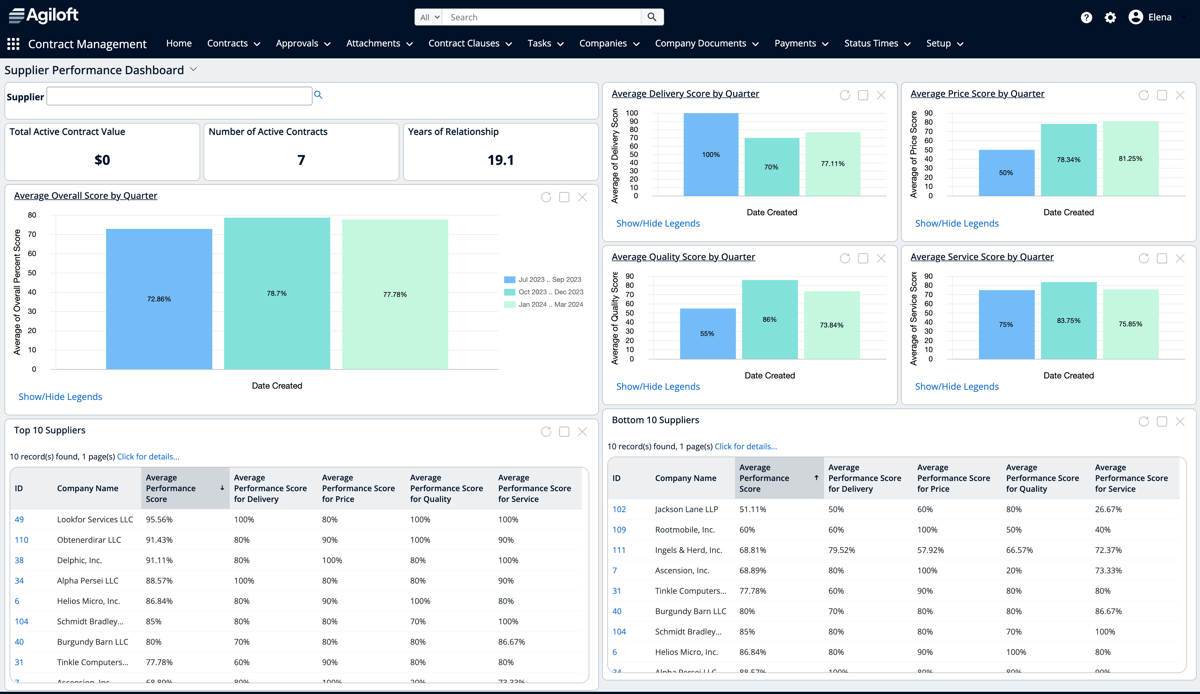
Agiloft also places emphasis on using contract data to surface insights. Detailed contract management reporting and dashboard tools help legal and operations teams analyze obligations, renewal timelines, and performance metrics.
When structured properly, the system can free up time for more strategic work by reducing manual tracking and improving visibility into contract trends.
It tends to suit enterprises with dedicated internal resources or implementation partners who want a tailored environment built around their specific compliance and operational needs.
Even after reviewing the leading platforms, choosing the right contract management system can still feel unclear. Feature lists often look similar, and demos tend to highlight the same capabilities. So how do you narrow it down? A more practical approach helps.
Here are a few tips to guide your decision:
Picking a contract management system isn’t only about features. It affects how quickly you move, how confident you feel in your data, and how much time your team spends reviewing the same language again and again.
Once you’ve looked at the options, the real question becomes simple: which platform actually fits how you work?

Some tools handle storage well, and some focus heavily on workflows or signatures.
Aline brings those pieces together and layers in advanced AI capabilities that actively support drafting, redlining, and reporting. Contracts don’t sit idle after signature either. You can search, analyze, and surface insights in seconds, which makes ongoing oversight far easier.
If speed, visibility, and consistency matter to you, it’s worth seeing how Aline performs in your own environment. You can test the drafting tools, workflows, and reporting features with your real contracts. That hands-on experience will tell you more than any feature list ever could.
A contract management system is software that organizes how agreements are created, reviewed, approved, signed, and stored. It provides structure to the full lifecycle of a contract, helping teams track versions, manage approvals, and maintain visibility into key dates and obligations.
Most platforms centralize contract data in a searchable repository and automatically capture key terms such as renewal dates, payment terms, and liability clauses. More advanced tools can analyze large volumes of agreements and generate reports that support forecasting, compliance reviews, and even revenue recognition analysis.
Google Drive works well for document storage, but it doesn’t provide structured workflows, approval tracking, or clause-level reporting. A contract platform builds on storage by adding automation, audit trails, and deeper visibility into obligations and third-party paper.
It depends on contract volume and complexity. If agreements involve multiple stakeholders, frequent revisions, or ongoing compliance oversight, a dedicated system can bring clarity and reduce manual coordination as your organization grows.