Procurement contracts sit in the middle of operational work. They affect major pieces of the supplier relationship, especially pricing, payment terms, renewals, and liability, long after signature.
The problem is that the procurement process itself tends to stretch across multiple stages and teams, with different steps often happening in separate systems. That makes it harder to keep the process moving and harder to get a clear view of what has already been agreed.
Procurement contract management software gives your team a more organized way to handle the process from start to finish, which is a big reason contract management in procurement has become more important as teams take on more supplier work.
It helps centralize drafting, approvals, signing, storage, and reporting, while also making it easier to track the contract elements that still matter after the agreement is signed.
In this guide, we’ll look at seven procurement contract management software options for 2026 and what each one does well.
Procurement contract management software helps you manage contracts tied to purchasing, supplier relationships, pricing, approvals, renewals, and vendor obligations.
Basically, it gives procurement a clearer structure for handling the full contract lifecycle management process, from intake and drafting to review, signing, storage, and reporting.
Some vendors market themselves directly as CLM for procurement or procurement-focused CLM, with features and workflows built around things like supplier contracting, purchasing approvals, and vendor oversight.
Others position themselves as broader contract lifecycle management platforms but still work very well for procurement teams, especially when they include approval workflows, supplier agreement tracking, searchable contract data, and collaboration tools for legal and business teams.
A strong system usually helps with:
For procurement, the goal is to move purchasing work forward without losing visibility into key terms and dates. With that in mind, the next step is looking at which platforms actually give you the right mix of control and day-to-day usability.
The best procurement contract management software should give you a clear way to manage supplier agreements as efficiently as possible. Here are seven tools worth looking at:
Aline is an AI-powered procurement contract management platform for creating, reviewing, approving, signing, and reporting on vendor agreements in one system.
If procurement, finance, and legal are still passing contracts through disconnected platforms, Aline pulls that work into a single contract management process with one record of what changed, who approved it, and what still needs action.
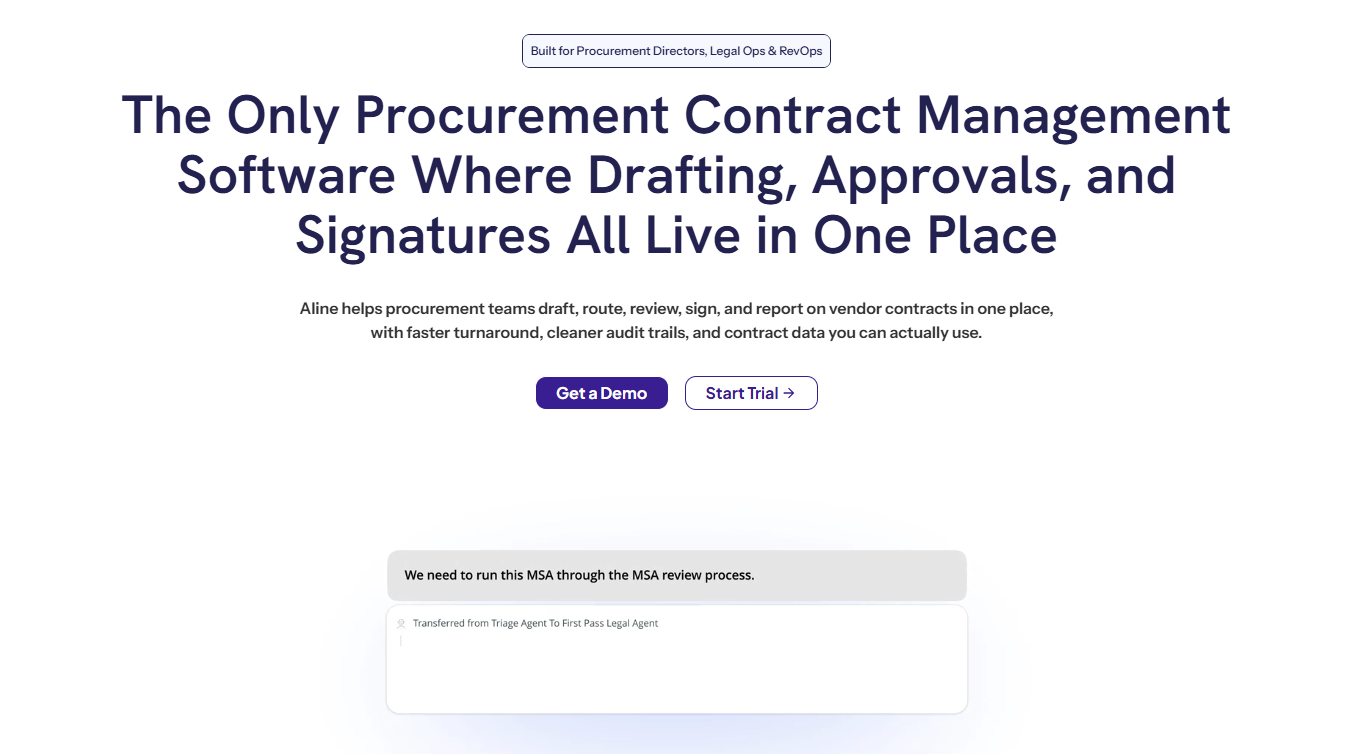
Aline speaks directly to procurement use and not procurement as a side note. It highlights vendor drafting and redlining, procurement-ready NDA, MSA, and SOW setup, cross-team approvals, structured repository search, clause-level reporting, renewal visibility, and native e-signature.
The platform also includes AI playbooks, multi-model AI, and analysis of large contract volumes, including testimonials of 50% to 70% less review time, 10K plus contracts analyzed at once, under-two-minute redlines, and go-live in one week.
For your team, the practical value is pretty easy to see. You can generate vendor contracts from approved templates, route them to the right reviewers, surface renewal dates and obligations, and pull usable contract data for reporting after signature.
All these capabilities make Aline a good fit for teams trying to cut administrative burden and get more value from the contract repository after the deal is signed.
Try it today and see it firsthand!
Icertis is an enterprise contract management system built for companies that need tighter control over supplier agreements, compliance, and post-signature contract visibility.
In procurement, it is geared less toward lightweight document handling and more toward structured source-to-contract work, with a big focus on supplier relationships, spend control, risk, and connected business data.
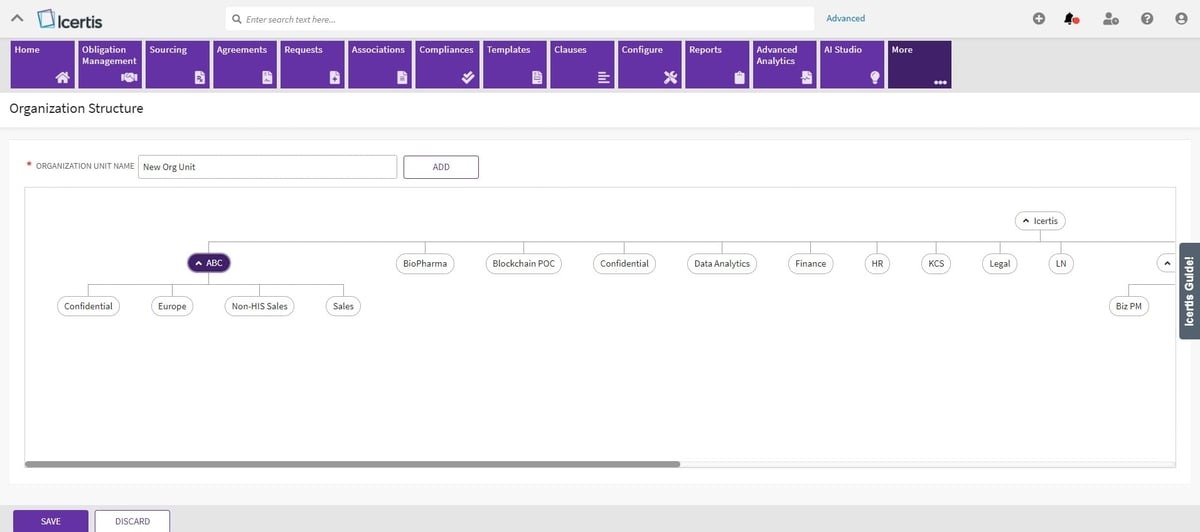
If your process pulls in procurement, finance, operations, sales teams, and in-house legal teams, Icertis has the depth to support that kind of setup.
The platform is positioned around contract intelligence, which means it treats contracts as connected business records rather than simple document storage.
That connectivity is useful when your team needs to track obligations, flag contract risk, support contract negotiations, and tie supplier terms back to wider procurement workflows.
Additionally, Icertis puts a lot of weight on AI-native features, business context, and integrations that connect agreements, data, and systems in a broader enterprise environment.
SAP Ariba Contracts is procurement-focused CLM software designed to manage contract creation, approvals, compliance tracking, reporting, and post-signature visibility inside the wider SAP spend ecosystem.
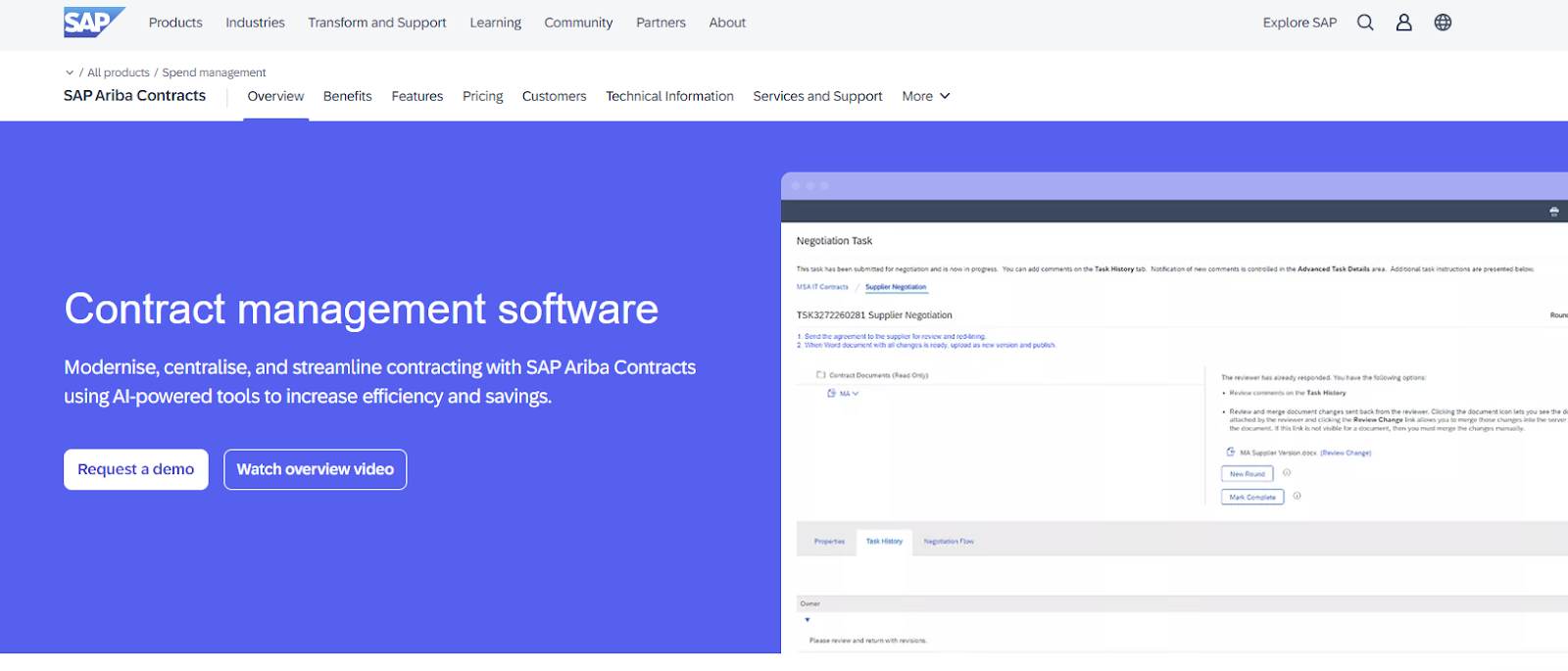
If your procurement work already sits close to SAP, this tool makes a lot of sense because contracts are tied to source-to-pay activity rather than treated like isolated files.
SAP also emphasizes operational control, with a single contract workspace, real-time monitoring of spend history and compliance, powerful search, and workflow support that helps teams keep contract processes moving with a full audit trail.
Procurement teams can use contract management software like SAP Ariba Contracts to connect sourcing, purchasing, compliance, and reporting in one environment, which helps reduce risk exposure and spot missed value earlier.
Coupa Contract Management connects contracts with sourcing, purchasing, supplier activity, and spend management, which is a big reason procurement teams consider it in the first place.
You are not only storing agreements or sending them for approval. Instead, you are tying negotiated pricing, supplier terms, and contract data back to the buying process so procurement can get more value from the work after signature.
For companies already using Coupa, that can also mean faster time to value because contracts sit inside the same wider procurement environment.
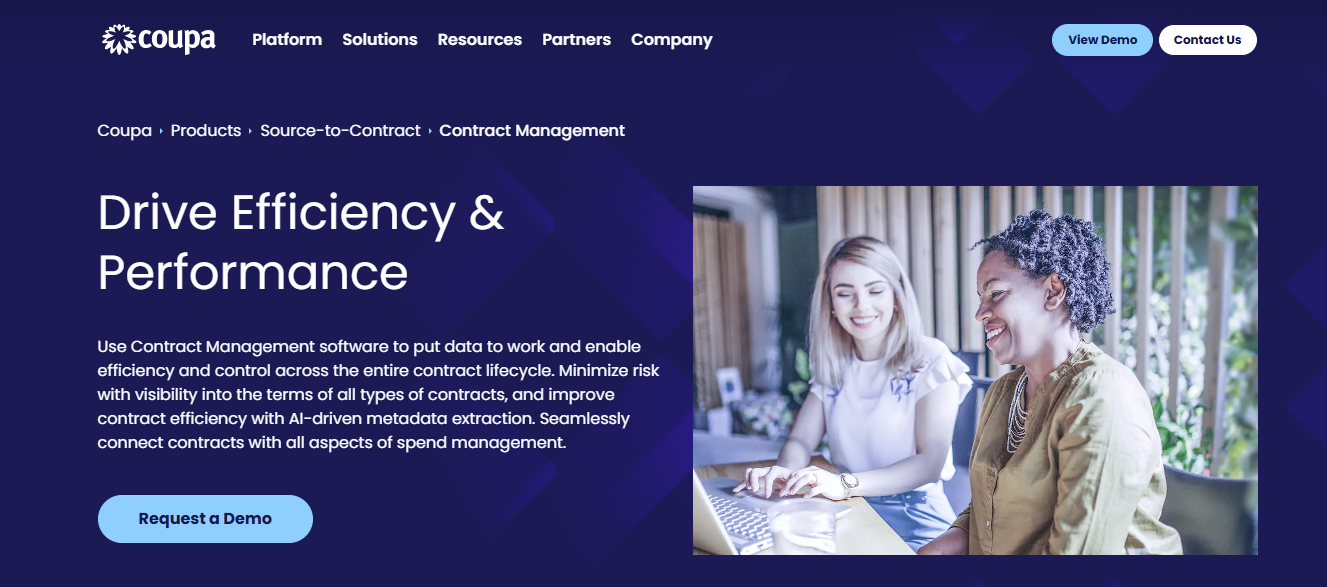
Coupa treats contracts as part of procurement operations and not as a separate legal archive. The platform highlights AI-driven metadata extraction, visibility into the terms of all contract types, and links to spend management, which gives procurement teams a better shot at spotting missed value and using approved supplier terms more consistently.
Coupa also supports collaboration on third-party contracts, version history, and supplier-side review, so contract review can move with more structure when outside paper comes in.
Gatekeeper is a contract and vendor management platform that gives procurement teams a central place to handle supplier records, contracts, renewals, risk checks, and workflow steps together.
That mix is a big part of its appeal. Procurement rarely needs a CLM tool for document storage alone. You also need visibility into key dates, notice periods, obligations, approvals, and supplier status after the contract is signed.
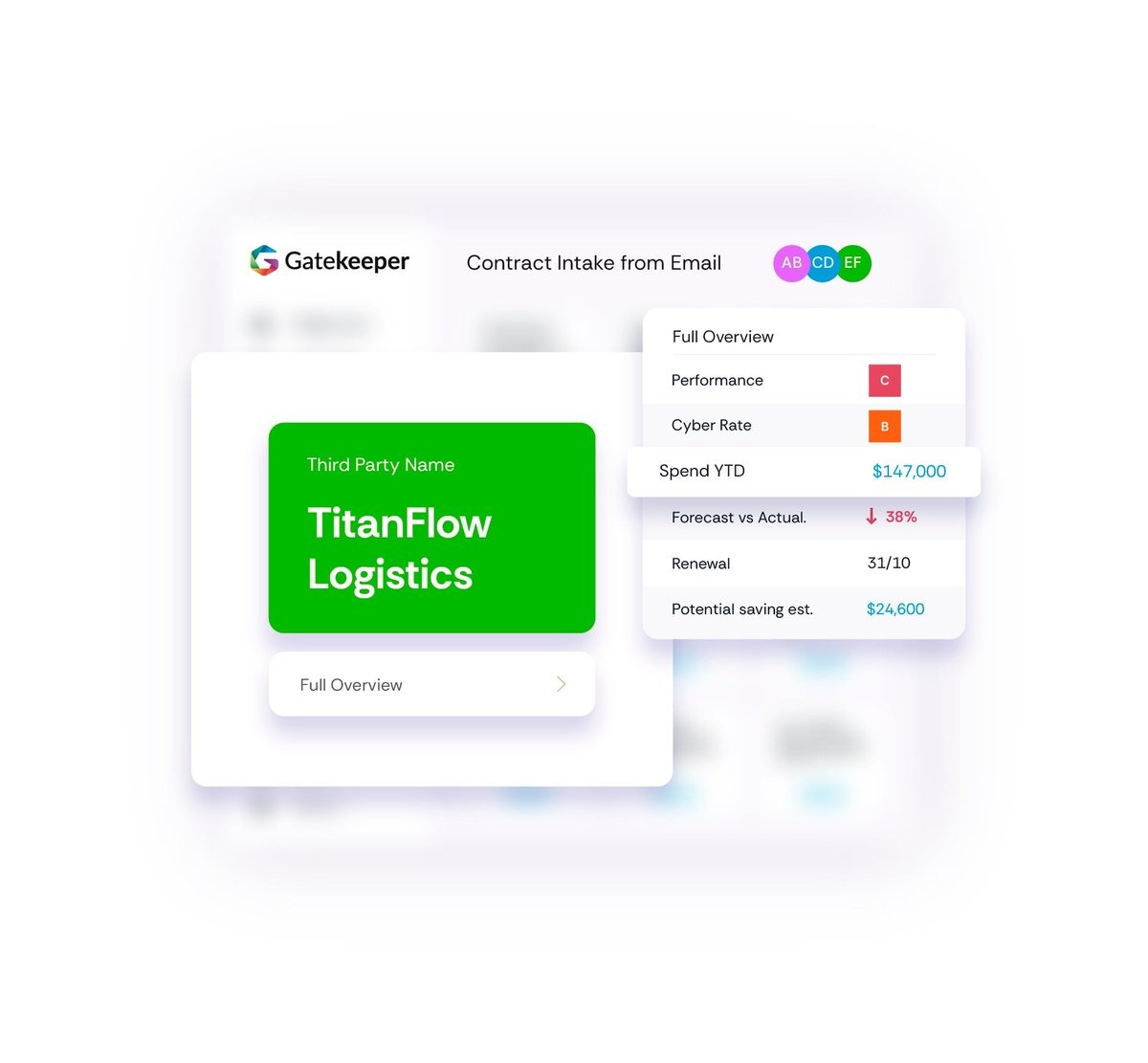
Gatekeeper leans into that broader procurement view by linking contracts to vendor records, spend controls, onboarding, and compliance activity in one system.
It also supports the entire contract lifecycle, from intake and sign-off through renewal and closeout, with automation aimed at cutting manual admin and keeping work moving.
Another reason procurement teams look at Gatekeeper is control. The platform supports complex workflows, configurable phase access, approvals, conditional owners, SLA timers, and automated reminders tied to contract events.
These features give you a more structured process to approve contracts, track obligations, and stay ahead of renewals or review cycles that can easily get missed in a more basic setup.
Ironclad is a contract lifecycle management platform for creating agreements, routing approvals, reviewing third-party paper, storing signed contracts, and reporting on contract data in one system.
It works well for procurement teams that need legal and finance in the process, but still want business users to move requests forward without getting stuck.

Ironclad offers AI-assisted contract drafting, review, and post-signature visibility. Procurement teams can use it to generate contracts, review vendor paper, extract structured data, track renewals, and search key terms later.
The platform also includes a clause library, which helps teams keep fallback language and approved terms easier to manage during review.
DocuSign CLM is a contract lifecycle management platform that handles document generation, workflow routing, approvals, storage, and post-signature tracking.
For procurement teams, the main draw is that you can create supplier agreements, ingest third-party paper, route work through reviews, and keep an eye on upcoming deadlines from a system a lot of teams already know.
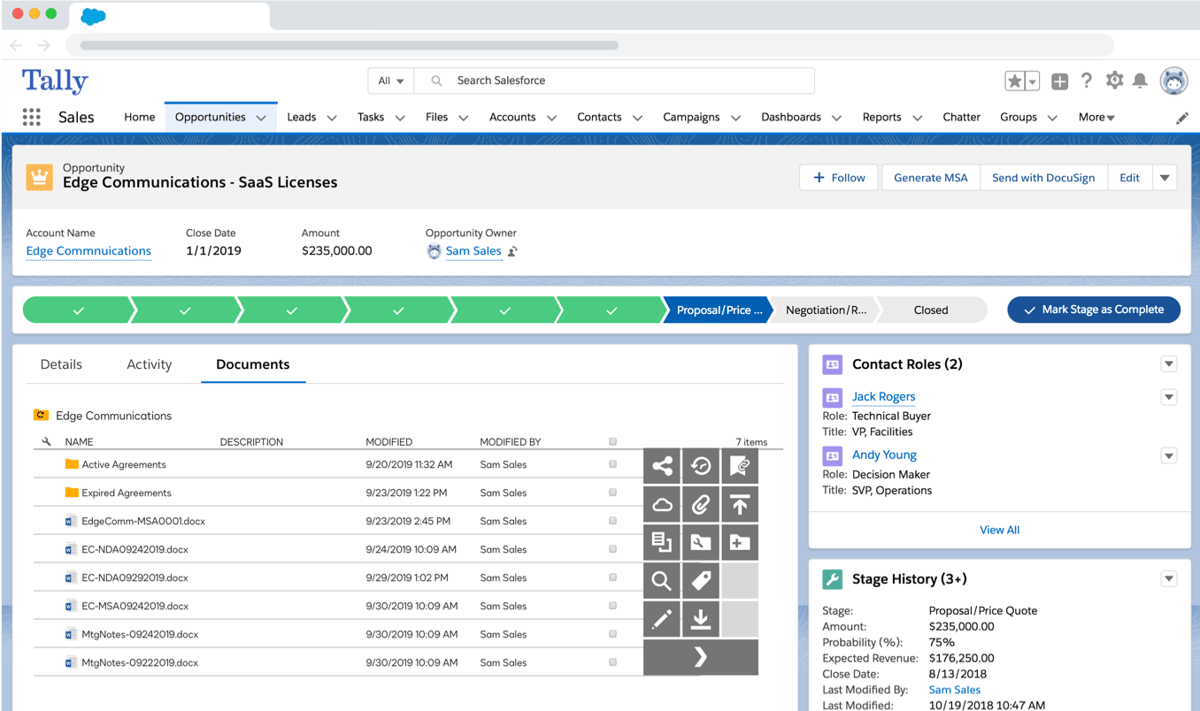
DocuSign connects CLM with tools like SAP Ariba, Coupa, Salesforce, and Workday, which makes it easier to keep contract work tied to the rest of the business instead of treating it like a side process.
Plus, DocuSign CLM uses AI workflows to surface contract metadata, which cuts down on manual data entry and makes agreements easier to search, report on, and manage later.
DocuSign has also been expanding its AI layer with contract agents in IAM, though those AI agent experiences sit in the wider DocuSign agreement platform rather than CLM alone.
If you are serious about implementing contract management software, Aline makes one of the strongest cases here because it covers the full process in one place and backs it up with genuinely powerful AI.

You can draft, redline, approve, sign, search, and report from the same platform, which gives procurement a much cleaner way to manage vendor agreements from start to finish.
This end-to-end setup is a big reason Aline stands out from tools that focus more narrowly on enterprise complexity, supplier management, or signature workflows.
Aline also brings a more complete AI layer to the table. AI playbooks, multi-model AI, contract data extraction, clause-level reporting, and fast review support all help turn contracts into something your team can work with.
If your goal is to move faster, cut admin work, and get stronger visibility before and after signature, Aline feels like the most holistic option on this list.
For teams comparing the best contract management software, it has the broadest mix of procurement workflow coverage and practical AI value.
Procurement contract management software helps your team create, review, approve, sign, store, and track supplier agreements in one place. It also helps you keep up with renewals, obligations, approval history, and contract data that would be harder to manage in email threads or shared folders.
Start with your process. Look at who needs to be involved, how many contracts you handle, how complex your approval flow is, and how much reporting you need after signature. It also helps to check for AI features, repository search, integrations, and any implementation services offered if your team wants extra support during setup.
They can be, especially for review, redlining, search, and reporting. Some platforms use natural language processing and other AI tools to pull key terms from contracts, flag risky language, summarize agreements, or help teams find clauses faster. The real value depends on how well those features fit your workflow.
It helps to look at usability, permissions, reporting depth, integrations, and how well the system can grow with your team. You may also want to ask about ongoing maintenance, storage limits, or unlimited storage, and how easy the platform will be to keep current as your process changes, so your setup stays future-proof.